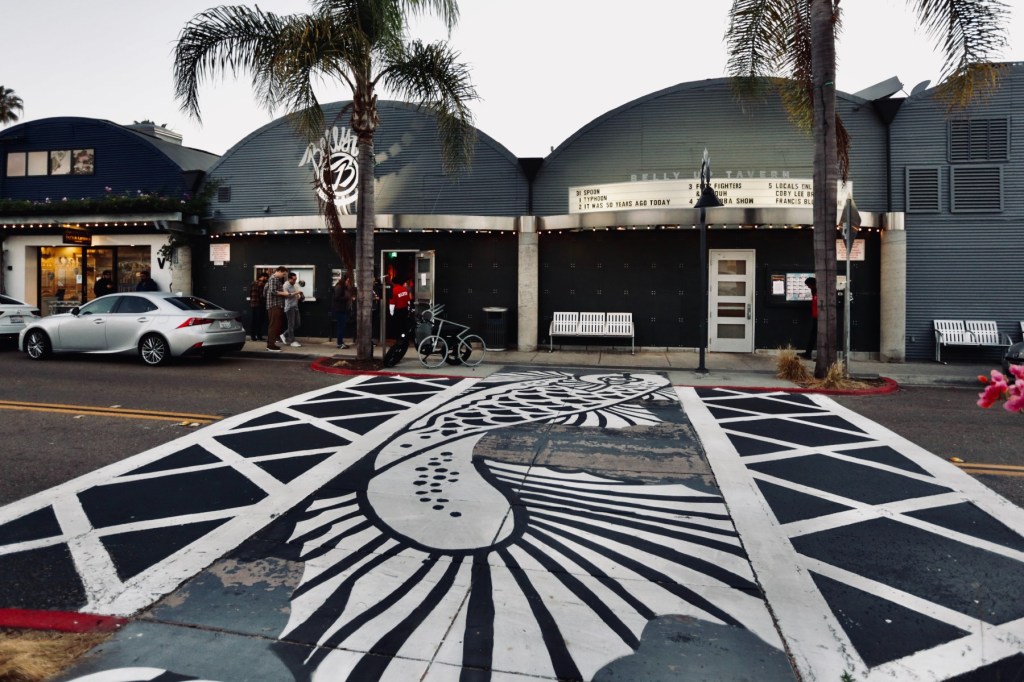
Trending on Billboard For four full months in 2015, the head honchos at Solana Beach, Calif., club The Belly Up were forced to keep a big secret: The Rolling Stones would soon be playing the 600-capacity venue. “We made a vow within the [those] of us who knew that we’re not telling our spouses, we’re not telling anyone until the week of the show, and we stuck to that,” says Belly Up Entertainment president Chris Goldsmith, who held the secret alongside The Belly Up owners Steve Goldberg and Phil Berkovitz. What Goldsmith did do was tell his wife to save the date for what would go down as one of the legendary band’s most exclusive gigs on that tour. “I think [my wife] appreciated not having to try and keep that a secret herself for four months,” he says. “I did her a favor.” Related The gig was scheduled for May 27, 2015, at the beginning of the Stones’ Zip Code stadium tour — three days after Mick Jagger and company played to more than 40,000 fans at nearby San Diego’s Petco Park. The underplay was especially under wraps since tickets wouldn’t be sold to the general public; instead, former Hewlett-Packard chairman Ralph Whitworth had hired the band to play The Belly Up for a private event benefitting immunotherapy cancer research. After news of the private event began to leak the week of, The Belly Up added privacy screens along the chain link fencing behind the venue, “so Mick could do his little jog back and down the alley,” Goldsmith adds. In order to play the room, Jagger asked that the stage be extended by four feet — and the addition has remained since. “It worked for the Stones,” says Goldsmith. “It should work for everybody.” The Rolling Stones at The Belly Up in 2015 Courtesy Belly Up Entertainment Goldberg and Berkovitz were happy to accommodate The Stones, as they are with all artists and their teams. It’s an ethos that has been part of The Belly Up since its inception in 1974, when Dave Hodges and Greg Gilholm opened the bar in the now-iconic Quonset huts — arch-style metal structures — on Cedros Avenue that were formerly a waterbed manufacturing and showroom space. The bar served beer and wine, as well as Polish sausage sandwiches and pickled eggs, to patrons playing ping-pong, pool and board games. In 1976, the tavern pushed aside some of the ping-pong tables to welcome its first live band, Squatters Last Rights. The success of that first live show encouraged Hodges to build a small stage from scrap material left over from the waterbed warehouse, and he continued to book live acts, especially artists who played blues, jazz and rock’n’roll. Related Hodges, who passed away earlier this year at 79, “was definitely a blues lover, and there wasn’t really anybody else doing blues” in San Diego in the ‘70s and ‘80s, says Goldsmith. “He really wanted a place where he could see the artists that he liked. When they were coming to L.A., he would go after them.” Hodges succeeded in bringing legends including Johnny Lee Hooker, Big Mama Thornton, Lightnin’ Hopkins, Albert Collins, Junior Wells, Buddy Guy and Etta James to The Belly Up, the latter of whom also requested an addition to the stage — a small manual lift that she used for many of the subsequent shows she played there. In Goldsmith’s estimation, The Belly Up’s history of snagging bold-faced acts is emblematic of its various owners’ appreciation of the fact that music is a relationship business. In the case of the Stones, the booking only came about because the venue built a years-long relationship with Whitworth. Former talent buyer Mac Falk also built strong relationships, including with managers like Carl Stubner, who brought Mick Fleetwood to The Belly Up on countless occasions. “There’s two aspects to relationships in the music business,” says Goldsmith. “One of them is relationships with the artists that are coming through. Take really good care of them. You feed them. You don’t argue with them about their ridiculous rider requests that you don’t understand. You just get it for them.” The other aspect, he continues, “is good relationships with the agents and with the managers. What that means is not so much a lot of personal conversation with them, but it’s about taking care of the business in a responsible way. If an agent calls you and wants a hold, you give them the hold. If they want an offer, you send the offer in a timely way. They send you a contract, and there’s a due date on the contract? You send them the contract back before they have to call you and ask you about it.” The Hives at The Belly Up Courtesy Belly Up Entertainment This culture has landed The Belly Up some of the biggest names in music for a market that major tours often bypass. Stars like Willie Nelson, Snoop Dogg, Neville Brothers, George Clinton, Curtis Mayfield, B.B. King, The B-52s, Jimmy Cliff, The Hives, Jimmy Buffett and Billy Idol have all performed at the venue. It’s also landed future stars early in their careers, including Jack Johnson, the Red Hot Chili Peppers, No Doubt, Maroon 5, The Black Eyed Peas, Daughtry, Mumford & Sons and Childish Gambino. And private shows like the Stones concert have brought bona fide superstars to the venue, including Foo Fighters, Lady Gaga, Tony Bennett and The Killers — the latter of which, in 2016, decided to extend its time there. Related “[The band was] doing a private event at the club and decided the day of the show that they wanted to play for their own fans as well,” says Goldsmith. “They asked us if we would be willing to do a show at midnight for free. No ticket price and no fee to them.” The Belly Up made one announcement about the impromptu Killers show at 9 p.m. on the radio that night. By 11 p.m., there was a line of roughly 1,000 people at the door. The staff counted off the first 600 people and regretfully informed the rest that the event was full. “They were having a good experience,” Goldsmith says of why The Killers requested to do an additional set, giving credit to the Belly Up staff for creating a welcoming environment for artists. The band “had already loaded in. They had sound checked. They were in a very positive headspace, and you never know what comes out of those situations.” The caliber of artists The Belly Up has been able to land is a testament to the scrappy venue’s tenacity in a major city that is not a huge music town. For example, despite having a smaller population than San Diego, San Francisco has more music fans, Goldsmith says. “Most people [who] live in San Diego, and especially people who move to San Diego, are here because of something other than music and culture. They’re here for the outdoor lifestyle, the beach in particular,” says Goldsmith, who points to the prevalence of military families due to Camp Pendleton, the nearby Marine Corps base, and the influx of bio science employees working for Pfizer, Dexcom and more. “The kind of things that drive San Diego on a macro level don’t have a lot to do with art and culture. A lot of art and culture organizations in San Diego have to fight against that.” Related Today, Belly Up Entertainment promotes roughly 800 shows per year, at both its namesake venue and other local spots including The Music Box, The Observatory North Park, Humphrey’s Concerts by the Bay and The Rady Shell at Jacobs Park. The company also exclusively operates and books The Sound, a 1,900-capacity venue on the local Del Mar Fairgrounds that opened in 2023. The Sound is owned by the state of California, and Belly Up Entertainment works with Goldenvoice, Live Nation and some local venues to promote shows there, bringing acts like Jack White, The Flaming Lips, Modest Mouse, The Stray Cats and more to the stage. Goldsmith remains in awe of the team (Belly Up GM Jeff Keeping, lead talent buyer Pete McDevitt, talent buyer Chad Waldorf and marketing director and comedy talent buyer Alejandra Carcam), who manage to juggle various shows and venues. That success, he says, comes from the fact that “we have a lot more invested in our talent buying, marketing and ticketing operation than a lot of clubs our size.” In the warmer months, The Belly Up must deal with competition on a couple of different fronts: a tendency for residents to want to enjoy the outdoors, and nearby spring and summer festivals (The Belly Up has a good relationship with promoter Goldenvoice and often snags a handful of side shows from Coachella, so the event’s infamous radius clause isn’t an issue). Year-round, it must also compete with headlining tours routing to L.A. and the Bay Area, skipping the San Diego region entirely. Rising ticket prices at festivals and concerts at larger venues can also put a damper on business. “It’s hard when entertainers are commanding — on their own or on the secondary market — $1,000 for a ticket. That’s somebody’s entertainment budget for the year. Then they don’t go out to see the club shows,” says Goldsmith. “It has a chilling effect. Festivals too. If you’re going to see Coachella, you’re gonna bypass eight club shows. We battle against that a bit, but the momentum swings back to us.” Goldsmith believes live entertainment at the club level is still one of the best entertainment values available to people. The Belly Up continues to have free parking, free coat check and neighborhood bar drink prices, and it tries to keep ticket prices as low as possible. “At the Belly Up, we’ve seen when economic times are harder, there’s a return to value. We tend to do pretty well in those times — almost better than boom periods,” he says. “It’s not really about making money. It’s about doing something great and fun…and having faith that the money is going to work out. And it has for us.”
Why The Belly Up in San Diego Is a Magnet for Music Royalty — From The Rolling Stones to Snoop Dogg
Full Article
Original Source
Read the full article at Billboard →KhanList aggregates and links to publicly available news content. We do not host full articles from third-party sources. Always verify important information with original sources.