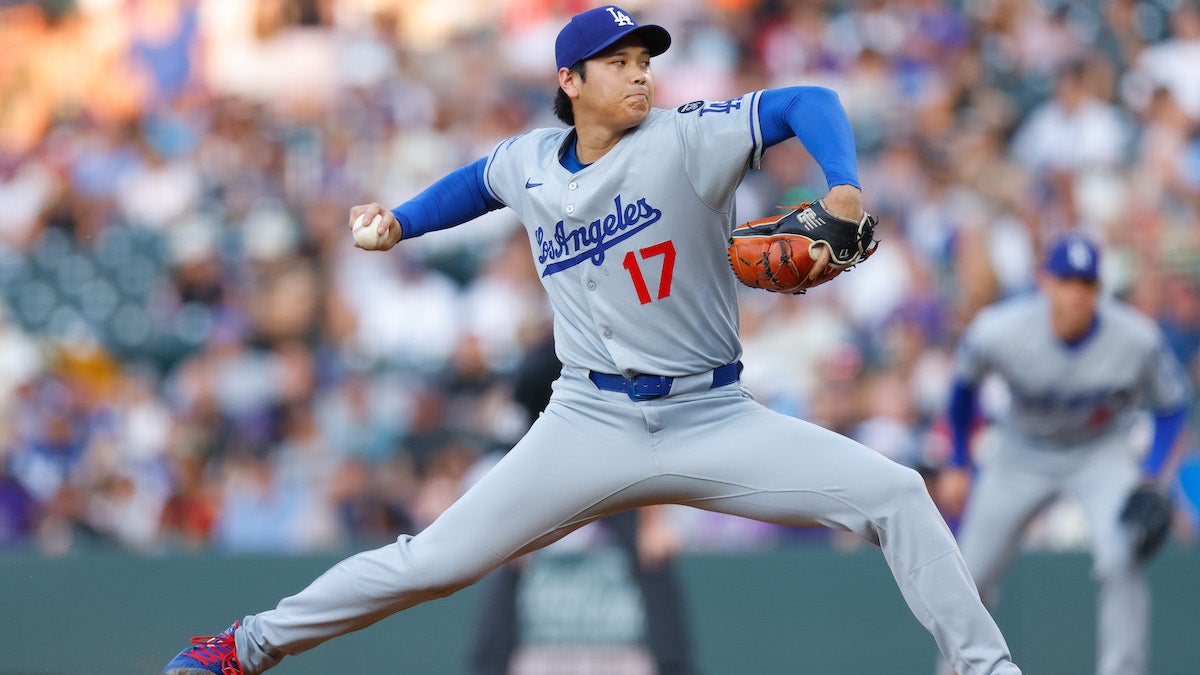
You might not think of the talent agency business as a sound investment. But headlines surrounding Casey Wasserman’s sale of his stake in The Team (née Wasserman until he screwed up with Jeffrey Epstein’s girlfriend) highlighted the fact that investors see agencies as a low-risk, high-reward way to participate in the entertainment business. Below, experts explain why agencies are a hot commodity right now, and how those investments might shake out in the future. It’s also been a busy week on the deal front with FIFA making headlines fresh off of the World Cup and media mogul Barry Diller contemplating his next move. Thanks for reading this week’s The Ledger column, and if you want this newsletter directly to your inbox every Friday morning, check your WrapPRO newsletter settings. THE DEEP DIVE Crestview’s Brian Cassidy (Photo courtesy of Crestview) Talent Agencies Are Hot Investing in Hollywood’s dealmakers has itself been a boffo deal for private equity firms. While they aren’t publicly traded, nearly all of the major talent agencies are controlled by investment companies. Why are they good bets? Talent agencies provide investors with healthy cash flow and less downside risk than investing in specific projects or studios. Valuations for talent agencies have risen as they’ve expanded their involvement in sports. But at some point, some agencies might go private as their current owners look to unwind their investments. “Investing in talent agencies was a more diversified, downside-protected way of investing behind the growing value of content and talent,” Brian Cassidy, president and head of media investing at Crestview Partners, told The Ledger. Cassidy should know. His firm owns Gersh and previously owned ICM before selling it to CAA. “The only other way to get exposure from a private equity perspective was to invest in movies or a production company, which comes with its own set of risks,” he added. “Today, the investment thesis is more about getting exposure to the growth trends in sports.” Agencies also have strategic value. Their industry connections help investment companies spot trends that could lead to other investment opportunities in the entertainment space. Investors see talent agencies as a way to get a line into athletes like Shohei Otani. (Credit: Getty Images) The value of talent agencies has been rising as they get more involved in the thriving sports business, negotiating lucrative media deals and signing marketing deals with sponsors. “Talent agencies are one of the most interesting plays in the creator economy and sports right now,” said Alex Michael, senior managing director, global head of sports and entertainment, at LionTree. “They give investors levered exposure to athlete and influencer monetization and the growth in sports rights, without the price tag or scarcity of owning a team outright.” One financial source said that the earnings before interest, taxes, depreciation and amortization multiples for talent agencies have increased from the low double digits to the mid-teens. The value of talent agencies moved into the spotlight when agent Casey Wasserman showed up in the Epstein files. The controversy ultimately forced Wasserman to sell his stake in what’s now called The Team to Providence Equity Partners, which already owns 60% of the agency. The deal is set to close in the second half of the year. Financial terms were not disclosed, though Puck previously reported an estimated valuation of $3.4 billion — slightly higher than the roughly $3 billion valuation floated when Wasserman first began exploring a sale back in February. Notably, Providence wasn’t the only one eyeing that stake. “The robust interest in the company throughout this process only reinforced our belief in the business and enthusiasm for its next phase of growth,” Davis Noell, Providence’s co-head of North America, said in announcing the deal. “Our additional investment also reflects our conviction in the long-term growth in demand for in-person experiences across sports, music, and entertainment and the brands, talent and partnerships that bring those moments to life,” he added. There are only a handful of major agencies, and investment firms have scooped them up. Endeavor Group Holdings, which owns WME, was taken private by Silver Lake in a $25 billion deal. A minority stake in CAA was sold by TPG to the French holding company Artemis for $7 billion. Excel Sports Management sold a majority stake to Goldman Sachs Alternatives for about $1 billion. A stake in United Talent Agency was bought by EQT Private Equity from Investcorp and the Public Sector Pension Investment Board. The relatively short list of major agencies and the difficulty of starting a new one with global clout only increases the price investors are willing to pay. Private equity has helped the agencies expand globally. When Crestview invested in Gersh in 2023, it issued equity to key agents and employees to keep them invested in the firm. During its investment, Crestview funded a series of acquisitions that built Gersh’s lucrative sports business and grew its digital and brands businesses. While the investments in agencies have been successful (despite downturns during COVID and the Hollywood union strikes), eventually investment companies will look to cash out. In some cases, that could mean going public. “I think you will probably see another agency go public in the next few years, but I think it’s got to be of scale,” said Crestview’s Cassidy. “It would take a firm to have EBITDA of at least $300 million for an IPO to make sense,” he said. “Also likely are more deals in which one investment company sells a stake in an agency to another investment company,” he said. DEAL SHEET Disney plans to sell its 50% stake in AMC Networks to Hearst, which owns the other half, in a $1 billion all-cash deal. The deal is expected to be formally announced next week when Disney reports its quarterly earnings. FIFA plans to raise $4.2 billion by selling as much as a 21% stake in a new company, FIFA Forward Enterprise, that will run the World Cup and other commercial operations for the organization. Joshua Kushner’s Thrive Eternal fund is expected to be the lead investor group, while J.P. Morgan is FIFA’s chief advisor on the project. European nations opposed the plan and threatened to boycott the World Cup if stakes in the tournament are sold. Concacaf, which represents North American, Central American and Caribbean nations, is reportedly taking a similar tack, according to The Athletic. Barry Diller’s People Inc. is considering selling “The Daily Beast,” TheWrap has learned. The site has reportedly turned profitable under Ben Sherwood and Joanna Coles, according to Axios. Diller wants to focus People on core assets and is looking to buy the roughly 74% stake in MGM Resorts International it doesn’t already own and take the company private. Banijay on Wednesday denied reports that it is considering taking over Lionsgate. Instead, the French entertainment company is focusing on integrating other recent acquisitions and reducing debt, according to a report from Reuters. “We are not on a shopping spree,” said CEO François Riahi. Eventual, a news and analysis platform, is launching in partnership with Polymarket. The new media company will feature top traders in the prediction market. Founded by podcast producer and writer Alex Keeney, Eventual is backed by a seed round of financing with LightShed Ventures, Riverside Ventures, Juniper Ventures and BDG Media founder Bryan Goldberg among the participants. Polymarket will serve as its launch sponsor and exclusive data partner. Bloomberg said its founder Michael Bloomberg has no plans to sell the company after Semafor published a report that Bloomberg executives talked with investment bankers about a possible IPO or another strategic transaction. Semafor reported that the talks with the bankers were in an early phase and might not result in a deal. WRAP 20 INDEX Earnings gave the Wrap 20 Index some slight gains, although the index is still down sharply for the year. EARNINGS HIGHLIGHTS AMC Global Media reported a net loss of $21.9 million, or 51 cents a share, for the second quarter, but raised its revenue and operating income guidance for the full year after reaching a $500 million five-year deal to license all of its “Walking Dead” series to Netflix. Cinemark took in $1 billion in worldwide revenue for the first time in its history during the second quarter, and CEO Sean Gamble said the momentum will continue with “The Odyssey” and the launch of “Spider-Man: Brand New Day.” Amazon reported that net sales in the subscription services segment, which includes Amazon Prime memberships, as well as digital video, audiobook, digital music and e-book subscriptions, rose 12% to $13.73 billion. Advertising services revenue jumped 16% to $19.81 billion. Apple said revenue for its services businesses, including Apple TV, Apple Music, iCloud and the App Store, rose 12% in the second quarter, hitting $30.74 billion. iPhone sales soared 22% to $54.3 billion. FINANCIAL ROUNDUP Inside Outside High prices, including the price of gas, are putting pressure on out-of-home entertainment, which lately has been one of the big winners for investors in showbiz. After Comcast’s warning that attendance at its Universal Orlando theme park was being impacted, analyst Robert Fishman of MoffettNathanson decided to look at how exposed the entertainment companies he covers are if elevated costs cause consumers to scale back. “In our view, discretionary, higher-ticket, out-of-home spending (concerts, theme parks) is relatively more exposed than theatrical or low-cost in-home entertainment,” he said in a note. Among specific companies, Live Nation and Cinemark were most vulnerable, with nearly all of their revenue coming from out-of-home entertainment. With their theme parks, 39% of NBCUniversal’s revenue and 37% of Disney’s comes from out of home. Only 28% of TKO’s revenues come from its live events. For Warner Bros. Discovery and Paramount, out-of-home represents only a single-digit share of revenues. Across his coverage universe, Fishman still sees out-of-home revenue up 6% to $87 billion through 2027 despite the near-term pressure. The Paramount-WBD Saga (Continued) After agreeing to delay the close of the acquisition of Warner Bros. Discovery, Paramount CEO David Ellison this week sent a memo to staffers saying he expected the transaction to be completed. “I know this additional uncertainty has been challenging, and I want to thank you for your continued patience, commitment and collective contributions,” Ellison wrote, signing off by saying, “Let’s go!” The delay in closing the deal led Seaport Research analyst David Joyce to downgrade Warner Bros. Discovery stock to “neutral” from “buy.” Joyce noted that while the legal machinations work their way through the courts, “integration processes between PSKY and WBD are being halted which means synergy realization could take longer.” He added that “Supergirl,” WBD’s big summer release, underperformed and while the advertising market has been strong, WBD hasn’t had any major sports events on its networks this summer. Joyce cut his second-quarter earnings estimate by $236 million to $9.07 billion and adjusted earnings before interest, taxes, depreciation and amortization by $219 million to $1.83 billion. FROM THEWRAP Can a Copyright Risk Detector for AI-Created Media Protect Artists and Studios? Is NBCUniversal Really a Buyer After Comcast Split? Can Marvel Get Its Groove Back? HEARD AROUND How Jay Shetty Is Turning a $100 Million Podcast Deal Into a ‘Conscious Empire’ Serena Williams Wants to Find the Next Trillion-Dollar Company Jeff Zucker Is Banking on the UAE to Help Build his New $8 billion Entertainment Empire I Was Spotify’s First Analytics Lead. Here Is What VCs Get Wrong About Data
Why Talent Agencies Are Hot With Investors
Full Article
Original Source
Read the full article at Thewrap →KhanList aggregates and links to publicly available news content. We do not host full articles from third-party sources. Always verify important information with original sources.