
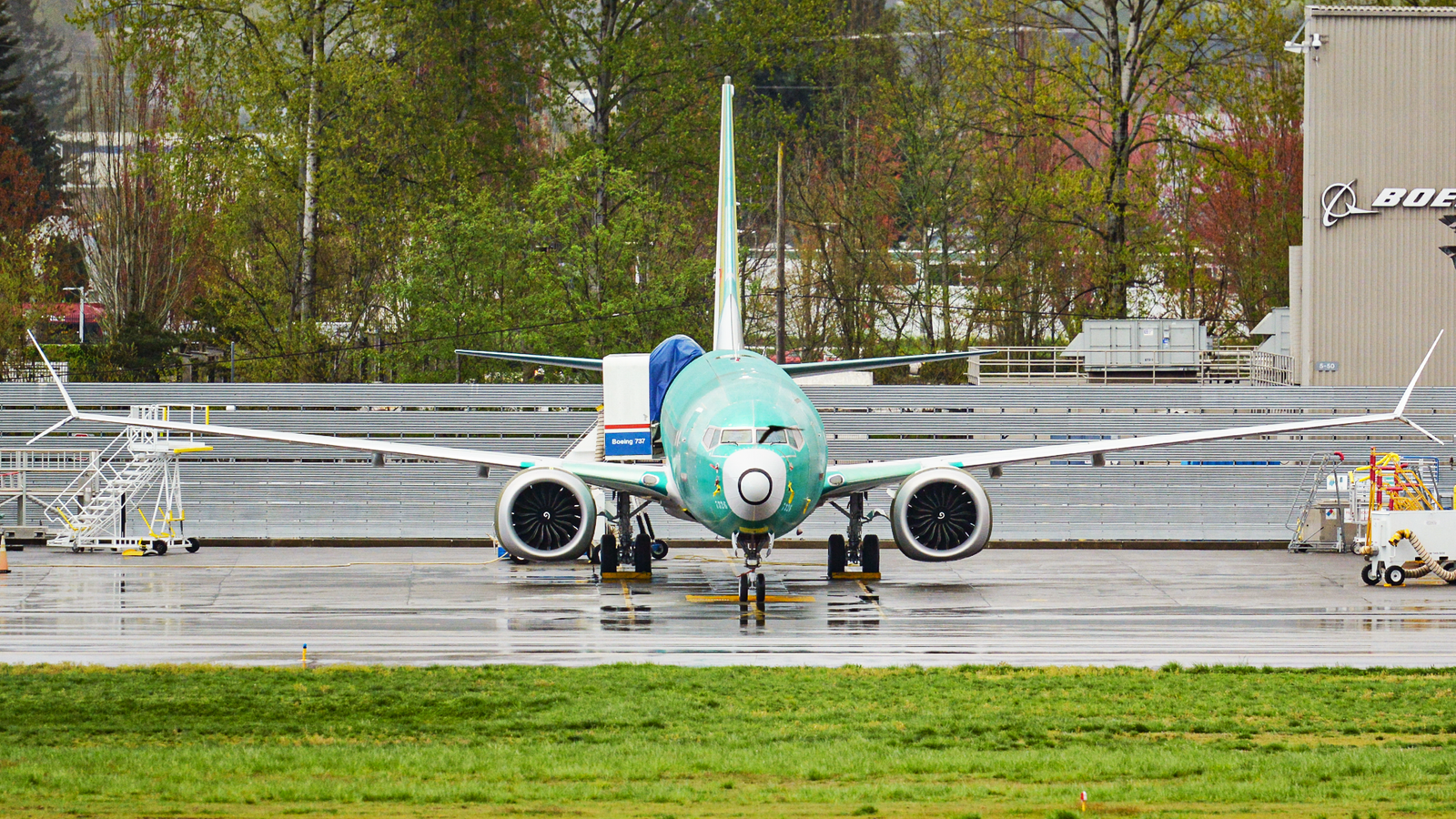
Published Nov 24, 2026, 10:06 AM EST Paul has had a career of 25+ years focused on the international technology sector, which has taken him to over 100 countries. Along the way, he developed a deep love for aviation, with a travel bucket list measured by aircraft types flown rather than destinations reached. Now he brings that avgeek passion, along with the journalism experience he accumulated early in his career, to write insightful pieces for Simple Flying. Boeing's long-delayed 777X program has encountered an unusual problem: some of its largest customers do not want the aircraft it built first. Emirates has rejected its earliest examples, while Lufthansa is negotiating over which aircraft it will accept. The issue is the extensive modifications necessary to bring older airframes up to current production standards, following years of development and certification delays. However, Southwest Airlines is taking a different approach with the Boeing 737 MAX 7. Following the aircraft's certification in August, the carrier is preparing to accept 27 previously manufactured examples that have spent years in storage. The contrasting responses raise an interesting question: why is Southwest willing to take aircraft built before certification when major 777X customers are rejecting theirs? Why Emirates & Lufthansa Are Rejecting Boeing's Earliest 777Xs Credit: Coby Wayne | Shutterstock Emirates President Tim Clark confirmed in July that the airline would refuse delivery of its first ten Boeing 777Xs, citing the extensive modifications required to incorporate design changes. The airline subsequently revealed that it had informed Boeing of its decision approximately three years earlier. Clark reiterated his position during an October interview with Aviation Week, explaining that some aircraft had been sitting on their wheels since 2019: "We made it absolutely clear to Boeing some years ago that we won't be taking those, and that's both verbal and written to them. Our new aircraft will be newly built." Lufthansa has adopted a similar position, with CEO Carsten Spohr confirming in August that the German airline was negotiating with Boeing over its earliest 777-9s. Some would be rejected outright, while others might be accepted following modernization, provided Boeing contributed financially. The development followed concerns about accepting older-production aircraft, particularly given the extent of modifications accumulated during certification. The airline nevertheless continues to expect its first 777-9 deliveries in 2027. Boeing has approximately 30 completed early-production 777Xs requiring modifications. On this front, CEO Kelly Ortberg acknowledged that the work could take years. The manufacturer faces the expensive task of updating aircraft manufactured before the design was finalized, with each aircraft being a bespoke project. Its latest financial filing specifically identifies modifications to completed aircraft among the program's larger risks. Boeing's 737 MAX 7 Has Finally Been Certified After Eight Years Of Testing Credit: BlueBarronPhoto | Shutterstock The MAX 7 first flew on March 16, 2018, with Boeing originally expecting certification and deliveries in 2019. However, the worldwide MAX grounding, heightened regulatory scrutiny, and subsequent technical problems repeatedly pushed back approval. Boeing eventually completed certification flight testing in July, more than eight years after the aircraft's maiden flight. The FAA subsequently certified the MAX 7 on August 3 following more than 1,000 hours of flight and ground testing. Regulators had required improvements to flight-control software, cockpit alerting, and the engine anti-ice system, addressing concerns that excessive heating could damage the engine inlet structure. Date Boeing 737 MAX 7 Milestone March 2018 First MAX 7 test flight March 2019 Worldwide MAX grounding 2024 Engine anti-ice redesign remains a major certification obstacle July 2026 Certification flight testing completed August 3, 2026 FAA certification granted Late 2026 First Southwest deliveries anticipated 2027 Expected entry into passenger service Boeing described certification as a major milestone for its smallest and longest-range MAX variant. Although certification allows Boeing to manufacture and deliver MAX 7s, Southwest must obtain separate operational approvals before carrying passengers. According to the airline's October financial filing, these include training updates, aircraft inspections, and validation flights with FAA representatives. Meanwhile, Boeing has deferred seeking European certification for the time being, reflecting the aircraft's overwhelmingly US-focused customer base. Why Southwest Is Accepting 27 Previously Built Boeing 737 MAX 7s Credit: BlueBarronPhoto | Shutterstock, Simple Flying Despite the delays, Southwest is preparing to accept 27 MAX 7s that Boeing manufactured before certification. During September's Morgan Stanley Laguna Conference, CFO Tom Doxey explained that the airline had already spent approximately a year working with Boeing to update these aircraft. This confirms that the stored jets require modifications, although Southwest has not disclosed their cost or technical complexity. He said: "I was up in Seattle a month ago for the sign-off for the MAX 7. That was really exciting. Of course, we're the largest customer, and we have 27 of those airplanes that are already built that have been in storage. We've been working with Boeing for a year now to be able to bring those to the current spec. That work is happening." So why is Southwest gladly accepting prebuilt MAX 7s when Emirates and Lufthansa have been quick to dismiss the prebuilt Boeing 777-9s? The difference lies partly in the programs themselves. The MAX 7 is a derivative of Boeing's established 737 family, whereas the 777X incorporates major changes including new engines, composite wings, and folding wingtips. Factor Early-Build Boeing 777X Early-Build Boeing 737 MAX 7 Earlier production inventory Around 30 aircraft 27 for Southwest Certification Still pending August 2026 Modifications Extensive change incorporation Updates to current specifications Customer response Emirates rejecting; Lufthansa negotiating Southwest accepting Expected deliveries 2027 Late 2026 Main consideration Rework and aircraft value Fleet renewal and availability Boeing's September 2026 filing identifies substantial engineering and change-incorporation risks to update the prebuilt 777-9s, exacerbated by the size of the aircraft. While the existing MAX 7s will require some updates as well, they are nowhere near as substantial, so will cost less and can be completed more rapidly. Commercial considerations also matter, as Southwest is eager to get replacement aircraft. With over 440 737 MAX aircraft on firm order (and 130 options), it is well-positioned to negotiate the appropriate deal with Boeing to get the 27 aircraft delivery-ready, and Boeing is motivated to make it happen. By contrast, the 777X customers are negotiating over extremely expensive long-haul jets that are set to be flagship aircraft for decades to come, and after many years of delays, they hold all the cards and are far less inclined to be negotiable. Why Southwest Needs The MAX 7 When Other Airlines Don't Credit: Jake Hardiman | Simple Flying Southwest's dependence on smaller Boeing 737s explains much of its commitment to the MAX 7. The airline currently operates 262 737-700s, averaging over 20 years old, alongside 188 737-800s and 356 MAX 8s. Unlike the major US network airlines, Southwest has no regional jet operation to handle smaller markets. Aircraft In Fleet Average Age Seats Boeing 737-700 262 20.3 years 137 Boeing 737-800 188 11.1 years 175 Boeing 737 MAX 8 356 3.7 years 175 Total 803 10.8 years As such, its 137-seat 737-700s are vital for serving thinner routes and maintaining frequency where larger aircraft would provide excessive capacity. Speaking on The Air Show podcast, COO Andrew Watterson explained that Southwest chose the MAX 7 over the Airbus A220 to preserve fleet and crew commonality. The aircraft also offers exceptional range and takeoff performance, making it especially suitable for higher altitude or hot weather departures: "We're excited about the MAX 7's performance on specific routes, such as from Las Vegas and Phoenix to Hawaii. It will be able to quite easily take off in the hotter part of the day and still make it to the islands without breaking a sweat.” Watterson expects the first 27 MAX 7s to assume extended overwater duties that are currently supported by 28 specially equipped 737-800s, rather than exclusively replacing 737-700s. Southwest is increasingly concentrating services around major connecting stations. As such, the MAX 7 will remain valuable for thinner spokes and off-peak departures. However, Watterson acknowledged that the MAX 7 will probably represent a smaller proportion of Southwest's future fleet than originally envisaged, as its network strategy continues evolving. When Will The MAX 7 Enter Service & What Will Passengers Experience? Credit: Boeing, Simple Flying Southwest expects its first MAX 7 deliveries toward the end of 2026, followed by three to six months of operational preparation. Watterson suggested a spring-break introduction, while an internal rollout document reported by View From The Wing identifies March 2027 as the target. The process includes FAA validation and extended overwater approvals, meaning the first delivery will not immediately result in passenger service. Passengers will encounter a noticeably modernized aircraft. Southwest's MAX 7 layout features 150 RECARO seats, compared with 137 on its current 737-700s, representing a 9.5% capacity increase. Feature Current 737-700 Planned MAX 7 Total seats 137 150 Extra Legroom seats 40 48 Extra Legroom pitch 35–36 inches 34 inches Standard pitch 31–33 inches 31 inches Lavatories 2 3 Seating Existing cabin New RECARO seats Charging Retrofit underway In-seat power Overhead bins Existing bins Larger bins Connectivity Starlink upgrades underway Starlink Assigned seating Yes Yes The aircraft will also feature larger overhead bins, charging outlets, Starlink connectivity, and three lavatories rather than two. However, the airline's 2024 investor presentation specified 148 seats, so the latest arrangement represents a reported change. Not every improvement will be unique to the MAX 7. After all, Southwest introduced assigned seating in January, and is already retrofitting older aircraft with additional amenities. Its Starlink installation program is expected to reach the entire fleet by fall 2027. Nevertheless, the MAX 7 should offer passengers a more modern and consistent cabin from delivery, while providing Southwest with additional capacity and improved operating economics. Southwest Has Hundreds Of MAX 7s On Order: Will Other Airlines Follow? Credit: Wirestock Creators | Shutterstock Despite its certification, the MAX 7 has attracted remarkably few customers. Southwest held 240 firm orders as of October 22, 2026, alongside 130 options exercisable for either the MAX 7 or MAX 8. While the smaller variant offers a range of up to 3,800 nautical miles (4,373 miles; 7,040 km), most airlines favor larger narrowbodies that spread operating costs across more seats. Southwest's unusually large commitment makes it the aircraft's dominant customer. Other airlines have reconsidered their requirements. Luxair originally ordered four MAX 7s but subsequently shifted its commitments toward larger variants. Allegiant, which originally ordered 30, now favors the MAX 8. Airline MAX 7 Position Southwest 240 firm orders, October 2026. Allegiant Original commitments shifted toward MAX 8; MAX 7 options remain a possibility. Luxair Original four commitments converted to larger variants. WestJet Earlier MAX 7 commitments; fleet strategy now emphasizes larger variants. SkyUp / Ruili Small historical commitments; current status unconfirmed During its November earnings call, CFO BJ Neal explained that premium seating had weakened the smaller aircraft's economics relative to the MAX 8. The reality is that the economics are unforgiving, as a MAX 7 costs almost as much to operate as a MAX 8 once pilot salaries, airport fees, and fuel are included, yet it carries fewer people and has less space for premium seating. Ultimately, Southwest's willingness to accept its stored MAX 7s reflects a distinct set of operating requirements, rather than proof that those aircraft are unaffected by years of delays. The airline needs smaller, efficient jets while retaining its all-737 fleet model, although the final balance between MAX 7s and MAX 8s remains flexible. For Boeing, the contrasting responses of Southwest and its 777X customers demonstrate how certification delays can create very different commercial outcomes.
Why Southwest Airlines Isn’t Rejecting Early Boeing 737 MAX 7s Like 777X Airlines Did
Full Article
Original Source
Read the full article at Simpleflying →KhanList aggregates and links to publicly available news content. We do not host full articles from third-party sources. Always verify important information with original sources.