
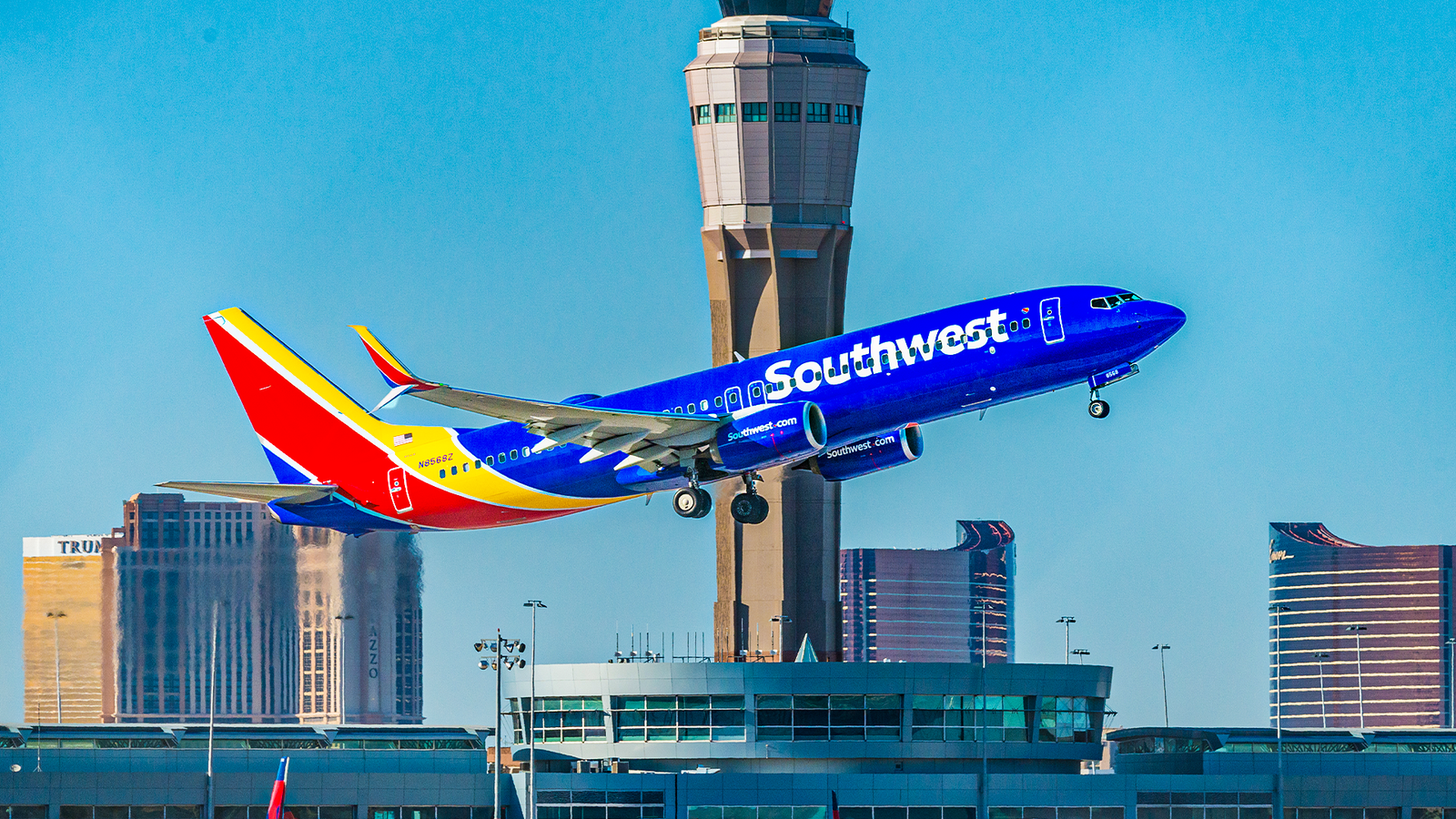
Southwest Airlines is rolling out its largest-ever expansion at Harry Reid International Airport (LAS) after Spirit Airlines shut down on May 2, removing a major low-cost competitor that had flown nearly 2% of US domestic seats. Within days of Spirit's exit, Southwest moved quickly to lend a hand to displaced travelers by adding frequencies on 15 existing routes, 14 of which Spirit also served, pairing capped rescue fares and a status match with around ten new nonstop destinations spanning Mexico, Hawaii, Alaska, California, and the East Coast. How can Southwest turn a sudden low-cost capacity vacuum at its second-busiest market into sustained network gains through spring 2027? To explore this transition, this article looks at Southwest's Las Vegas hub base, its immediate post-shutdown moves, its new nonstop rollout and schedule caveats, incoming Boeing 737 deliveries, competitive pressure from rivals, and what those shifts mean for operations at LAS. Southwest Airlines enters its latest push from a position of unmatched scale at Las Vegas Harry Reid International Airport (LAS), operating as the airport's largest carrier by traffic and departures. Across Southwest's wider system during 2025, Las Vegas ranked as its second-busiest market behind Denver International Airport (DEN), reflecting years of steady investment in leisure demand, regional business travel, and high-frequency domestic schedules. That entrenched presence gives Southwest deep airport infrastructure, gate familiarity, and loyal local flyers from the outset, even without adding extra flights. Connecting traffic plays a major role in sustaining that volume at LAS, where Southwest is not leaving the hub dependent solely on local travelers. Roughly 35% of Southwest passengers traveling through Las Vegas connect onward to other flights across the carrier's network, making the desert airport a vital crossroads between the West Coast, Mountain West, Midwest, and Southern states. High transfer volume helps smooth seasonal lulls in leisure travel and keeps aircraft utilization at higher levels throughout the year. Chief Operating Officer Andrew Watterson has exemplified that long-term commitment by describing both Las Vegas and Orlando as foundational communities within Southwest's network. Calling a hub a 'foundational community' really points to more than short-term capacity opportunism; it suggests sustained crew bases, deep route density, and multi-decade commercial importance. This baseline shows why Southwest treats Las Vegas as a core pillar, regardless of what may be affecting the wider industry. Filling The Power Vacuum Spirit Airlines ceased operations on May 2, 2026, abruptly removing nearly 2% of total US domestic seat capacity and leaving thousands of leisure and price-sensitive travelers searching for immediate backup options, as noted by Business Travel News. For a low-cost airline with a visible span across major leisure corridors, that shutdown created a sudden capacity gap where available seats tightened almost overnight. As covered by TravelPulse and News 3 Las Vegas, competing carriers moved quickly to evaluate where displaced flyers and unfilled demand could be spread across key markets. Southwest responded within days by adding extra frequencies on 15 existing routes out of Las Vegas Harry Reid International Airport, 14 of which Spirit had also operated. Boosting departures on established city pairs enabled Southwest to put extra seats into the market quickly without waiting on new station setups or building route awareness from scratch. Reporting from The Points Guy shows how those frequency boosts focused squarely on overlapping low-fare demand. Alongside extra flights, Southwest introduced capped rescue fares and a status match designed to win over disrupted Spirit passengers. Offering set fare ceilings and loyalty status recognition gave stranded travelers a clear way to complete trips while testing whether former Spirit flyers would adopt Southwest for future travel. Combined with added frequencies, those steps turned the sudden rival collapse into an immediate retention and acquisition play. New Routes Incoming Beyond boosting existing flights, Southwest is rolling out around ten new nonstop destinations from Las Vegas across a phased schedule stretching into early 2027. The push introduces Southwest's first international nonstops from Las Vegas to Cancun (CUN) and Los Cabos (SJD) starting in June 2026, followed by Puerto Vallarta (PVR) in late 2026, while pairing those beach markets with domestic and Hawaii additions such as Anchorage (ANC), Hilo (ITO), and Santa Rosa (STS). Looking ahead to March 2027, the expansion extends eastward with new nonstops linking Las Vegas to Boston (BOS), Knoxville (TYS), Miami (MIA), and Philadelphia (PHL). Staging those launches across seasons lets Southwest test leisure demand in phases instead of dumping every new city pair into the market on a single day. Earlier resort flying to Mexico, Hawaii, California, and Alaska addresses warm-weather and outdoor getaway demand across different parts of the year, while the March 2027 East Coast and Southeast additions broaden long-haul domestic reach from Harry Reid. Staggering start dates also give airport operations and crews room to adjust to added flying smoothly. Schedule tallies across the expansion shifted between the initial announcement and later filings, narrowing the active lineup to ten new nonstop routes after a planned service to San Jose, Costa Rica, was dropped before launch, even though early roundups had counted 11 destinations. Timing for the Puerto Vallarta launch similarly settled on November 1, 2026, following earlier references to an October 2026 start. Plenty Of Rivals Looking To Expand Scaling up from added frequencies and new nonstops to record daily departures at Harry Reid by spring 2027 depends directly on incoming 737 deliveries. Fresh narrowbody arrivals give Southwest the airframes needed to sustain higher departure banks and longer missions without stretching existing aircraft thin across its network. Expanding in Las Vegas also puts Southwest squarely against rival carriers competing for leisure and regional traffic out of LAS. Frontier Airlines has signaled its own Las Vegas growth as ultra-low-fare travelers look for alternatives after Spirit's shutdown, as reported by AeroTime, while Alaska Airlines overlaps with Southwest across several West Coast and Mexico markets. That mix of budget and network competition shapes how aggressively Southwest prices seats and schedules flights. Competing against Frontier on low-fare demand while overlapping with Alaska on the West Coast and Mexico flying means Southwest cannot treat open capacity as an uncontested windfall. Winning repeat traffic is tough and requires matching schedule convenience with competitive fares as rivals adjust their own Las Vegas flying. Together, 737 deliveries and rival reactions set the operational test ahead of spring 2027. Making This Expansion Successful Sustaining higher flight volume at LAS rests on balancing local leisure demand with onward connecting traffic across every bank of the day. Point-to-point flyers heading to Las Vegas for conventions, concerts, and weekend trips drive peak demand swings, whereas connecting passengers help fill seats on midweek and shoulder-season departures. Blending both traffic streams lets Southwest support wider geographic reach in a way that does not leave individual flights overly reliant on discretionary vacationers. Managing schedule adjustments across seasonal peaks and troughs is just as important as announcing headline route additions. Leisure-heavy markets to resort destinations like Hawaii, and outdoor gateways naturally experience stronger seasonal surges than year-round business trunks, which explains why start dates and route counts can shift as demand signals evolve. Over the longer term, sustained capacity growth at Las Vegas reinforces Southwest's grip on its premier western hub while raising the operational stakes at the airport. More departures mean tighter gate, ramp, and crew coordination during busy waves, yet deeper schedule density also makes Southwest harder for competitors to dislodge among local and connecting travelers. Moving Quickly Often Brings The Most Progression Southwest Airlines' push at Harry Reid International Airport shows how an established hub leader moves when a major low-cost rival exits overnight. Combining its existing connecting base with added frequencies on 15 routes, rescue fares, status matching, and ten active nonstop additions after Spirit Airlines shut down in May 2026, Southwest achieved rapid capacity recovery while staying within its phased international and domestic growth plans. Along the way, schedule refinements such as shifting Puerto Vallarta to November 2026 and dropping San Jose, Costa Rica demonstrate how fleet availability, seasonal demand, and competition from Frontier and Alaska shape the rollout. The clearest benchmark ahead arrives in spring 2027, when incoming 737 deliveries are slated to support record daily departures alongside March 2027 launches to Boston, Knoxville, Miami, and Philadelphia. Watching how those added seats perform across peak leisure waves and shoulder seasons, and how rivals adjust their own schedules at Las Vegas, will show whether Southwest turns a sudden market opening into lasting hub share.
Why Southwest Airlines Is Adding More Flights At Harry Reid International Airport
Full Article
Original Source
Read the full article at Simpleflying →KhanList aggregates and links to publicly available news content. We do not host full articles from third-party sources. Always verify important information with original sources.