
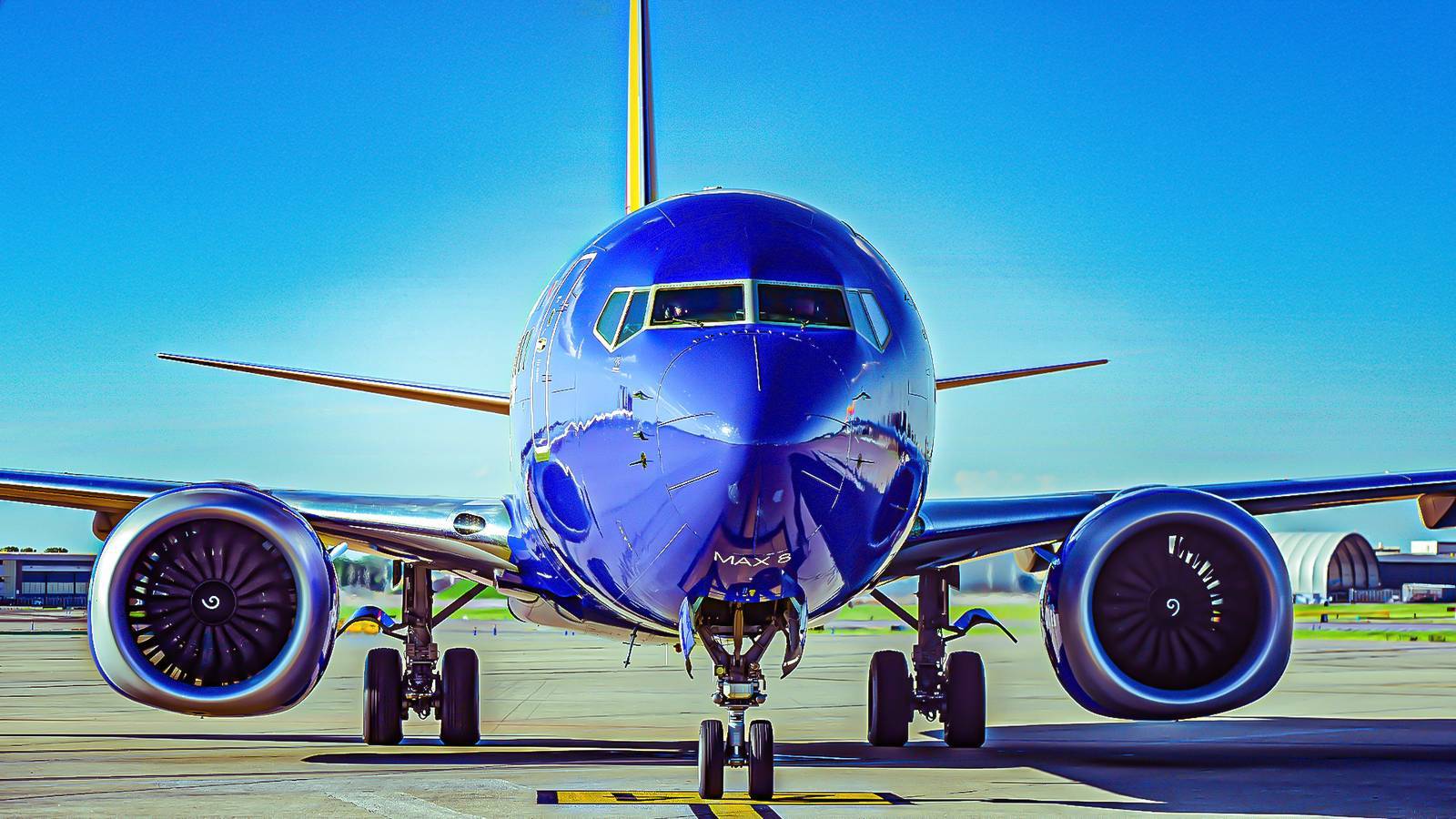
Credit: Thiago B Trevisan | Shutterstock | Simple Flying Published Nov 12, 2026, 1:00 AM EST Experienced ICAO English Language Proficiency Instructor for pilots and ATCOs and conference interpreter who is passionate about facilitating effective communication within aviation-related businesses. Possess a deep understanding of the aviation industry, including aviation regulations, terminology, and industry-specific communication protocols. Has been working at numerous airshows across Europe since 2014. Being an ultralight pilot in her free time, she also promotes safety and efficiency in aviation operations. Based in Italy and Malta Sign in to your Simple Flying account An airline ordering a new aircraft might expect to have several choices when it comes to selecting its engines. After all, manufacturers such as General Electric, Rolls-Royce, and Pratt & Whitney compete fiercely to supply the world's commercial aircraft. However, some of the industry's most recognizable modern airliners leave airlines with no choice whatsoever: they can purchase the aircraft, but they cannot choose between competing powerplants. This approach, known as sole-source engine selection, is used on several major commercial aircraft programs, including the Boeing 737 MAX, Airbus A220, Embraer E-Jets E2, and Airbus A350. While this may seem to limit airline flexibility, manufacturers pursue exclusive engine partnerships for important engineering and economic reasons. However, concentrating an entire aircraft program around one supplier also introduces risks that can affect thousands of flights if something goes wrong. Why Do Some Aircraft Manufacturers Choose Just One Engine Supplier? Credit: Allora Empire Art | Shutterstock Manufacturers often decide on a single engine supplier long before an aircraft enters commercial service. Rather than designing an airframe around several competing powerplants, manufacturers can select one engine manufacturer and develop the aircraft around a specific engine from the beginning. This creates a closer engineering relationship between the two companies and allows them to optimize the complete aircraft rather than treating the engine and airframe as entirely separate components. Several reasons make this arrangement attractive. Different engine manufacturers produce powerplants with varying dimensions, weights, thrust ratings, fuel consumption characteristics, and installation requirements. Accommodating multiple engines can require additional engineering work, including modifications to engine mounts, nacelles, landing gear, aerodynamic characteristics, and aircraft systems. A sole-source arrangement eliminates much of this complexity because the aircraft manufacturer knows precisely which engine it needs to accommodate. Beyond the initial design process, a single engine configuration can also simplify certification, production planning, spare-parts management, and maintenance training. However, if choosing one engine makes development easier, why do some manufacturers believe this approach can produce a better aircraft than offering multiple engine options? How Does A Single Engine Supplier Simplify Aircraft Development? Credit: irfansatria28 | Shutterstock The biggest advantage is the opportunity to optimize the engine and aircraft together. An aircraft's performance depends on much more than the engine's individual fuel efficiency or maximum thrust. Its installation, aerodynamic interaction with the wings, weight distribution, and operating characteristics all influence the finished aircraft's overall performance. Consequently, an engine that performs exceptionally well on its own might not deliver the best results when installed on a particular airframe. The Boeing 737 MAX provides a clear example. CFM International developed the LEAP-1B specifically for the aircraft in close collaboration with Boeing. According to CFM, the engine resulted from an extensive six-year development effort, with its turbo machinery and installation customized to meet the 737 MAX's requirements. The manufacturer also highlighted improvements in specific fuel consumption, materials, aerodynamics, emissions, and noise compared with the previous-generation CFM56 engines. This relationship continued a partnership that had already lasted decades. CFM had supplied the exclusive powerplant for the Boeing 737 Classic and Next Generation families, before being selected again for the 737 MAX. The companies had considerable experience working together, making it easier to build on an established engineering relationship rather than introduce an entirely new supplier. The relationship between aircraft and engine manufacturers can be illustrated by several major programs: Aircraft program Exclusive engine supplier Engine family Boeing 737 MAX CFM International LEAP-1B Airbus A220 Pratt & Whitney PW1500G Embraer E-Jets E2 Pratt & Whitney GTF (PW1700G/PW1900G family) Airbus A350 Rolls-Royce Trent XWB However, the engineering advantages of exclusive engine partnerships are not limited to Boeing. Airbus, Embraer, and other manufacturers have also adopted this strategy, although their reasons and commercial circumstances can differ considerably. Which Modern Commercial Aircraft Have Exclusive Engine Suppliers? Credit: VanderWolf Images | Shutterstock The Airbus A350 is one of the clearest examples of an aircraft designed around a single engine manufacturer. Every A350 is powered by Rolls-Royce Trent XWB engines, with the A350-900 using the Trent XWB-84 and the larger A350-1000 using the more powerful Trent XWB-97. According to Airbus, these engines produce 84,000 lb (38,102 kg) and 97,000 lb (43,998 kg) of thrust, respectively. Unlike some competing widebody aircraft, the A350 does not offer airlines a choice between Rolls-Royce, GE Aerospace, or Pratt & Whitney powerplants. A similar arrangement exists on the Airbus A220, which is exclusively powered by Pratt & Whitney's PW1500G geared turbofan. The engine was developed for the aircraft, which originally entered the market as the Bombardier C Series before Airbus acquired a majority stake in the program and subsequently rebranded it. The PW1500G features a geared turbofan architecture that allows the fan and low-pressure turbine to operate at different speeds, improving overall propulsion efficiency. Pratt & Whitney has also confirmed that the engine received 180-minute Extended Range Twin-engine Operational Performance Standards (ETOPS) certification from the FAA in 2018. Embraer's E-Jets E2 family follows the same general philosophy, relying on Pratt & Whitney's geared turbofan technology. The E190-E2 and E195-E2 use engines from the PW1900G family, while the smaller E175-E2 was designed around the PW1700G family. Embraer's aircraft planning documentation identifies the respective engine configurations for the different variants. These examples demonstrate that exclusive engine arrangements are not restricted to one manufacturer, aircraft category, or market segment. Nevertheless, these partnerships raise an important commercial question: what does an engine manufacturer gain by becoming the sole supplier for an entire aircraft family? Why Are Exclusive Engine Contracts Attractive To Engine Manufacturers? Credit: Coby Wayne | Shutterstock For an engine manufacturer, becoming the exclusive supplier of a successful aircraft program can represent an enormous long-term commercial opportunity. Every aircraft delivered requires its own engines, and operators will subsequently need spare powerplants, replacement components, maintenance, repairs, and technical support throughout the aircraft's operating life. This creates a relationship that can continue for decades rather than ending when the initial engine order is fulfilled. The Boeing 737 provides a particularly interesting historical example. On October 31, 1980, Boeing and CFM signed an agreement making the CFM56-3 the exclusive powerplant for the 737-300, -400, and -500. The two companies initially expected to sell approximately 400 aircraft. However, by the end of the Classic 737 production run in 1999, Boeing had delivered 1,987 aircraft powered by CFM56-3 engines, requiring 3,974 engines in total. Boeing subsequently selected CFM as the exclusive supplier for the Next Generation 737 family, continuing a relationship that would eventually extend to the 737 MAX. The arrangement also benefits aircraft manufacturers. Instead of managing several competing engine suppliers throughout development and production, Boeing can work with one partner to coordinate technical requirements, production schedules, certification activities, and long-term support. The engine manufacturer, meanwhile, benefits from predictable demand and the opportunity to build a substantial installed fleet. However, the commercial advantages come with an important trade-off. When an entire aircraft family depends on one engine manufacturer, problems affecting that supplier can quickly become problems for every airline operating the aircraft. What Happens When A Sole-Source Engine Develops Problems? Credit: Sheviakova Kateryna | Shutterstock The biggest disadvantage of sole-source engine selection is concentration risk. When an aircraft has two certified engine options, airlines can choose between manufacturers when placing orders and potentially benefit from competition in pricing, performance, and maintenance support. More importantly, having different engine options means the aircraft program is not entirely dependent on one manufacturer's ability to deliver a particular powerplant. With an exclusive engine arrangement, that alternative disappears. This becomes particularly noticeable when an engine experiences durability problems, unexpected maintenance requirements, manufacturing delays, or supply-chain disruptions. If an engine manufacturer cannot deliver enough powerplants or replacement components, aircraft production and airline operations can both be affected. Operators cannot simply request that the airframe manufacturer install a competing engine, because doing so would require substantial engineering work, new certification, and potentially extensive changes to the aircraft's structure and systems. The consequences can extend well beyond the engine manufacturer itself. Airlines might have to adjust schedules, keep aircraft grounded for longer periods, arrange additional spare engines, or rely on other aircraft types to maintain their networks. Aircraft manufacturers may also face delivery delays and customer pressure, while engine suppliers may need to expand maintenance capacity and accelerate production of replacement components. A clear example is Pratt & Whitney's geared turbofan (GTF) engine crisis, which affected operators of the Airbus A220 and A320neo families. A manufacturing defect involving contaminated powder metal triggered extensive inspections, forcing airlines to ground aircraft while engines underwent repairs. Wizz Air reported 41 aircraft grounded due to GTF-related inspections in September 2024, while airBaltic also faced significant capacity constraints, eventually canceling 4,670 flights for summer 2025, cutting 19 routes and reducing frequencies on another 21. These cases show how problems at a single engine supplier can disrupt entire airline networks, leaving operators little choice but to ground aircraft, adjust schedules, and secure additional spare engines. The challenge is hard because developing an alternative engine is not a straightforward solution. Even if another manufacturer has an engine with suitable thrust, its dimensions, weight, operating characteristics, and integration requirements might be incompatible with the aircraft. The manufacturer would effectively need to develop and certify another aircraft-engine combination, requiring considerable investment and time. Consequently, the decision to use one engine supplier is not simply an engineering shortcut. It is a long-term strategic commitment that shifts considerable responsibility to the selected engine manufacturer. But does this mean that offering multiple engine options is always the better commercial strategy? Is A Single Engine Supplier The Right Long-Term Strategy? Credit: Jon Tetzlaff | Shutterstock The decision to use one engine supplier involves balancing engineering efficiency against operational flexibility. For aircraft manufacturers, building an airframe around one carefully selected powerplant can reduce complexity, shorten development, and produce a more integrated aircraft. For engine manufacturers, exclusive contracts can secure a substantial market for decades. However, airlines must accept that their aircraft's operational performance and long-term availability will depend heavily on the selected supplier. There is no universal answer to whether exclusive engine arrangements are preferable. The Airbus A350, Boeing 737 MAX, A220, and Embraer E2 demonstrate that manufacturers across different segments consider this approach commercially attractive. Meanwhile, aircraft such as the Airbus A320neo and Boeing 787 show that manufacturers can also offer multiple engine options, allowing airlines to choose among competing manufacturers. The A320neo, for example, is available with either the CFM LEAP-1A or Pratt & Whitney PW1100G-JM, providing a choice that is not available to A350 customers. The long-term success of sole-source arrangements will ultimately depend on how effectively manufacturers and engine suppliers manage their responsibilities after an aircraft enters service. Development efficiency and performance advantages are important, but airlines also need dependable engines, sufficient maintenance capacity, reliable spare-parts supplies, and predictable operating costs. For passengers, the distinction may be invisible, but the consequences of an engine supplier's difficulties can ripple across an airline's network.
Why Some Modern Airliners Have Just One Engine Supplier
Full Article
Original Source
Read the full article at Simpleflying →KhanList aggregates and links to publicly available news content. We do not host full articles from third-party sources. Always verify important information with original sources.