Published Aug 20, 2026, 1:00 AM EDT Airline and Airport Management Graduate, Student Commercial Pilot and Commercial Aviation Writer. Based in London & Nagoya Whenever a 350-ton (317-metric-ton) Boeing 777 swings its nose onto the runway centerline, it normally comes to a complete standstill, sets the parking brakes, and undergoes a dramatic spool-up of the engines before release. Flight deck crews frequently skip over this full stop entirely, sweeping the thrust levers forward while the twin-jet is still rolling through its turn. Deciding whether to perform a rolling takeoff or hold the aircraft stationary on the brakes comes down to decisions made in the cockpit before crossing the hold-short line. Flight manual guidelines from Boeing, combined with airline standard operating procedures (SOPs) and air traffic control (ATC) commands, actually dictate how these heavy twin-jets enter the runway. So why is it that some airlines encourage pilots to keep moving, and what invisible operational parameters lead them to hit the brakes instead? Better Fuel Economy? Credit: Shutterstock Airlines like Japan Airlines (JAL) explicitly favor rolling takeoffs for their long-haul fleet because maintaining taxi momentum directly reduces fuel burn and total trip time. In its internal publication Agora, JAL notes that entering the runway at 8 knots to 12 knots allows the flight deck crew to advance the thrust levers smoothly without overcoming static inertia. The continuous motion lowers engine stress, curbs noise exposure around airport perimeters, and optimizes departure sequencing at high-density hubs. However, eliminating the dead stop means a mandatory engine stabilization phase is needed while the aircraft is actively accelerating down the runway. Completing this maneuver on an over 700,000 lb (317,514 kg) widebody requires strict adherence to standard Boeing flight deck procedures. Whether powered by General Electric GE90 engines pushing 55% N1 or Pratt & Whitney and Rolls-Royce powerplants reaching 1.05 EPR, crews need to allow both engines to stabilize symmetrically before pressing the Takeoff/Go-Around (TO/GA) switches. Failing to verify balanced thrust while rolling can cause the aircraft to yaw sharply toward the lower-performing engine, where a minor power imbalance can become a high-speed directional control challenge. By removing the static brake hold, a rolling start saves valuable seconds and several gallons of jet fuel on every departure. Despite this, the efficiency gains of a continuous roll rely on having clean, high-friction pavement beneath the landing gear tires. If runway surfaces are contaminated by water, slush, or winter ice, the entire situation changes. When Runway Conditions Are Not Ideal On contaminated surfaces covered in ice, slush, or standing water, attempting a rolling takeoff is not the wisest decision, especially with the inherent severe directional control risks. At snowy gateways like New Chitose Airport (CTS) in Hokkaido or Chicago O'Hare (ORD) in winter, reduced nosewheel traction means any split-second delay in one engine accelerating can swivel the widebody off the centerline. Shown in documentation from Airbus Safety First, holding the aircraft on the brakes until both powerplants hit 55% N1 or 1.05 EPR guarantees symmetrical thrust delivery before the tires ever begin to roll down slippery airport surfaces. Ground vortex dynamics present another critical mechanical trade-off during high-power engine spool-up. When a widebody with massive 128-inch (3.25 meters) diameter GE90 engines remains stationary at high power, intense intake suction creates a tornado-like air vortex off the pavement that can vacuum up loose gravel, slush, or foreign object debris (FOD). Operational analyses published on the aviation forum Stack Exchange explain that rolling takeoffs keep the engine nacelles moving continuously through fresh air, disrupting ground vortex formation and protecting composite fan blades from impact damage. On one side, surface contamination pushes flight crews onto the brakes for directional stability, but also, environmental conditions are not the only constraint overruling a rolling start. Extreme gross takeoff weights and short runway distances can also lead pilots to abandon rolling momentum even on dry pavement. Heavy Aircraft Need Plenty Of Room Credit: Shutterstock When a Boeing 777-300ER pushes back for an intercontinental sector at its maximum takeoff weight of 775,000 lb (351,534 kg), available pavement becomes a non-negotiable performance constraint. Gliding through a rolling entry generally takes up a few hundred feet of runway margin while aligning the nosewheel and waiting for engine spool-up. On performance-limited departures out of hubs like San Francisco International (SFO) or London Heathrow (LHR), wasting those initial feet directly shrinks the aircraft's Accelerate-Stop Distance Available (ASDA), compromising rejected takeoff safety calculations. Further discussions from Stack Exchange demonstrate that standing starts maximize runway utilization down to the exact threshold line. Holding full pressure on the wheel brakes allows both GE90 powerplants to stabilize before the takeoff roll technically begins, ensuring that 100% of the rated thrust pushes the heavy twin down the pavement from the very beginning. For ultra-long-haul cargo runs on the Boeing 777F or heavily loaded passenger flights, establishing peak power prior to brake release offers the highest possible margin to reach decision speed (V1) or execute a high-speed abort safely. Heavy takeoff weights and restricted field lengths make standing takeoffs an undeniable mathematical necessity for dispatch performance. Even when gross weight is low and the runway stretches for miles, external operational rules can still snatch the choice out of the captain's hands. In reality, air traffic control instructions and flight deck brake management protocols can override pilot preference at the threshold. What Brake Holds Can Actually Affect Credit: Shutterstock Air traffic controllers regularly dictate takeoff technique long before a widebody reaches the runway threshold. Hearing the clearance 'line up and wait' from tower controllers pushes a 777 flight crew into a static position, removing the option of a rolling entry regardless of weight or surface friction. Conversely, receiving an immediate departure instruction to depart without delay leads pilots to perform a continuous rolling start, preserving airport surface throughput at busy air traffic control hubs. Outside of controller instructions, managing carbon brake thermal energy plays an equally decisive role in airline Standard Operating Procedures (SOPs). Unlike steel brakes, the carbon multi-disc brake assemblies engineered by Goodrich for the Boeing 777-200ER and 777-300ER wear less at elevated operating temperatures, but holding high engine power against applied wheel brakes rapidly elevates core thermal levels. If a crew performs a standing takeoff with pre-heated brakes and subsequently experiences a high-speed Rejected Takeoff (RTO) near V1, extreme thermal absorption can trigger fuse plug melting or wheel fires. Some airlines structure their cockpit checklists to reduce the use of static brake holds unless runway length or slippery pavement explicitly requires it, then turning to carbon brake thermal management guidelines to protect safety margins. Prioritizing rolling takeoffs keeps brake temperatures lower prior to acceleration, protecting critical stopping capability in the event of an aborted departure. Beyond this, the true test of any takeoff technique arrives when unexpected mechanical failures occur during the high-speed roll. How do the split-second dynamics of a high-speed rejected takeoff change when an engine fails during a rolling launch versus a standing start? When The Runway Becomes Almost Invisible Credit: Shutterstock In thick fog under Category III Low Visibility Procedures (LVPs), where Runway Visual Range (RVR) drops below 246 ft (75 meters), flight crews abandon rolling starts to lock the aircraft precisely onto the centerline lights. Sweeping onto a runway without stopping makes visual verification of high-intensity centerline lighting and digital compass alignment exceptionally difficult before advancing thrust. Coming to a dead stop gives both pilots time to confirm runway alignment, cross-check flight deck heading reference systems, and eliminate any residual side-loading forces on the main gear tires before initiating high-power acceleration. Directional control dynamics during an engine failure or high-speed rejected takeoff (RTO) become significantly more complex if a rolling entry strays slightly off-centerline. As detailed in a report by Flight Safety Foundation, if an engine suffers a severe compressor stall near V1 decision speed while the widebody is still settling from a rolling turn, asymmetric thrust combines with residual lateral momentum, increasing the risk of a runway excursion. Selecting between a rolling start and a static launch demonstrates that widebody takeoff performance is never a single static calculation, but a dynamic trade-off between fuel efficiency, airport capacity, and safety margins. With flight deck automation advancing, integrated onboard systems are beginning to calculate runway alignment and surface friction in real time, according to Airport Industry Review, reshaping how future widebody crews make this decision at the hold-short line. The New Age Of Data Decision-Making Credit: Shutterstock Modern widebody cockpits are leaving behind the manual rule-of-thumb choices in favor of real-time algorithmic runway optimization. Next-generation platforms like the Boeing 777X and updated Electronic Flight Bags (EFBs) dynamically compute precise takeoff performance using live surface friction telemetry, weather updates, and digital runway positioning data. As these automated performance applications become standard across long-haul fleets, onboard software rather than pilot preference will routinely decide whether a rolling or standing takeoff is required, balancing fuel burn against real-time safety margins. Aviation regulators like the Federal Aviation Administration (FAA) are also expanding digital surface management initiatives like the Terminal Flight Data Manager (TFDM) to coordinate runway entries down to the second. At constrained airfields managing high volumes of widebody traffic, integrated air traffic control tools will actively sequence departure protocols to prevent gridlock on taxiways and reduce gate delays. Whether airlines can consistently capture the operational fuel savings of rolling takeoffs without compromising safety on degraded runways will depend on how rapidly these connected cockpit systems are deployed across global fleets. Flight operations engineers and safety specialists continue to monitor how automated thrust calculation tools interact with pilot decision-making during severe winter weather or sudden air traffic holds. The subtle decision made by 777 crews before sweeping onto the runway line is one of the clearest examples of how physics, airline economics, and flight deck discipline intersect every time a very heavy aircraft accelerates down the pavement.
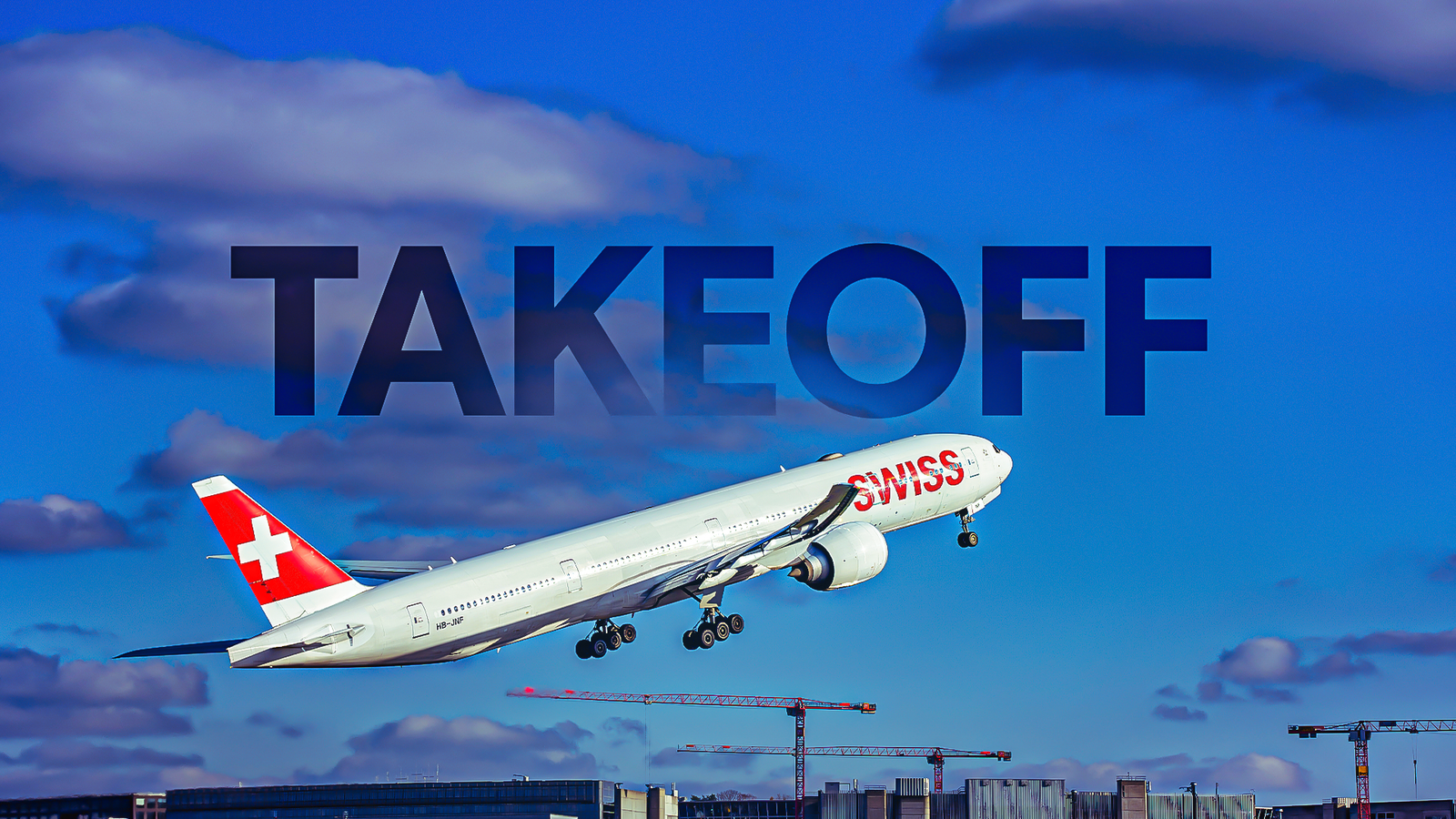
Why Some Boeing 777 Crews Never Stop The Aircraft Before Applying Full Takeoff Thrust
Full Article
Original Source
Read the full article at Simpleflying →KhanList aggregates and links to publicly available news content. We do not host full articles from third-party sources. Always verify important information with original sources.