
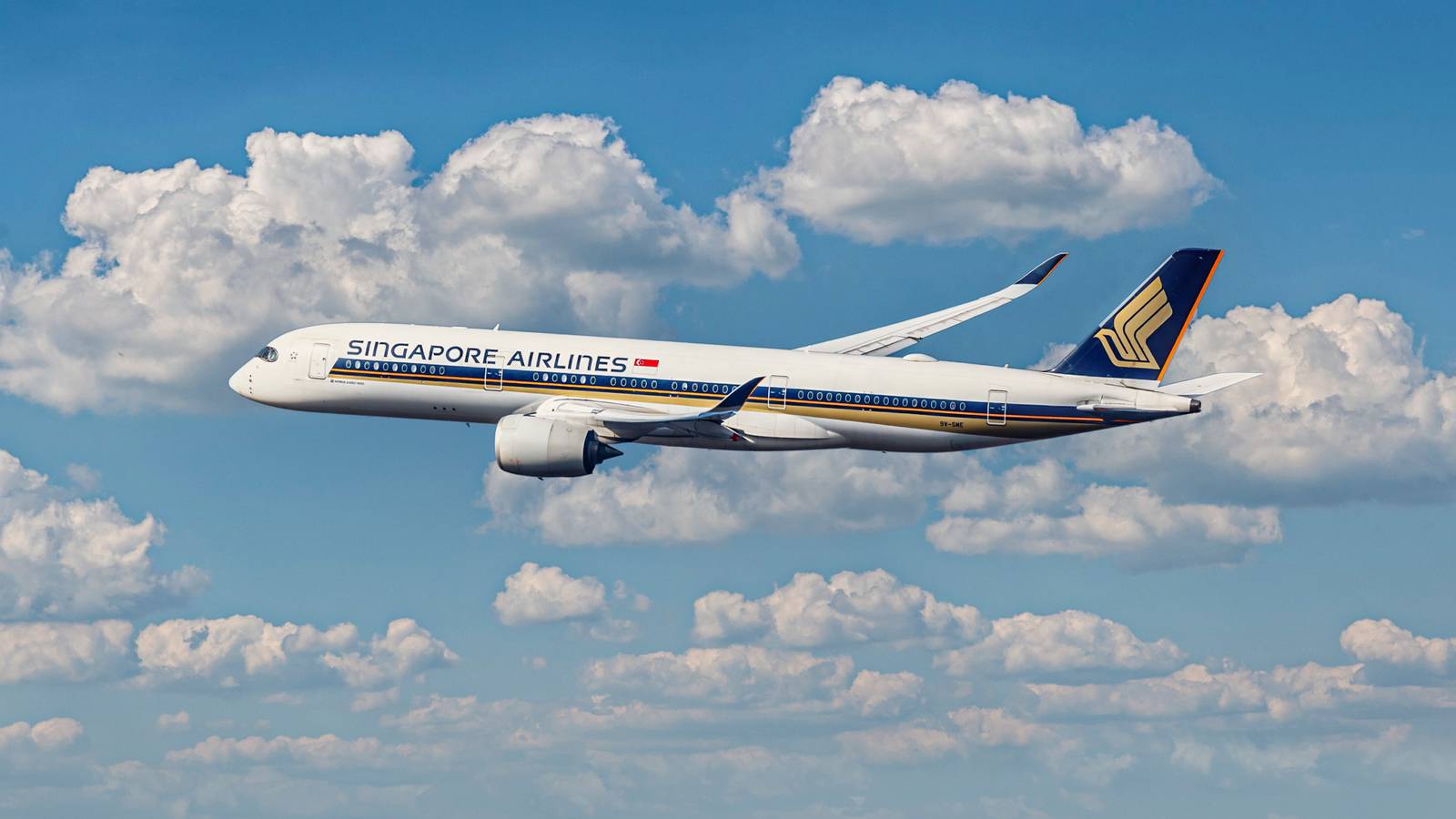
Credit: Sea_Inside_Soul | Shutterstock | Simple Flying Published Nov 1, 2026, 9:00 AM EST Daniel comes to Simple Flying with a business focused approach to the aviation world. Daniel enjoys analyzing strategy and how companies move against each other to gain a step ahead in the skies. Besides strategy, Daniel also has a passion for aircraft design and the history of aviation. Based in New York Sign in to your Simple Flying account In 2004, Singapore Airlines made history when it launched nonstop flights between Singapore Changi Airport (SIN) and Los Angeles International Airport (LAX). Never before had Singapore and the US been connected by nonstop flights, and the airline would follow this up with nonstop flights to Newark Liberty International Airport (EWR), by far the world's longest nonstop flight. However, this wouldn't last, as the carrier ended up canceling both of these routes in November 2013. Today, however, Singapore Airlines is back and stronger than ever. The carrier restarted both of these flights in 2018, and it's also launched additional nonstop services to the US. What's more, the planes operating to New York will receive interior refurbishments with brand-new seats and a first class cabin, a first for a nonstop Singapore-US service. Today, Singapore Airlines serves five airports in the US, and primarily operates nonstop services rather than the one-stops that dominated its US network in the distant past. Largely, the airline's newfound success in the US is because of one aircraft: the Airbus A350. The Start Of Nonstop US Services Credit: Austin Deppe I Shutterstock Singapore Airlines has served the US since 1979, but it's long had to schedule stopovers in third countries due to the sheer distances involved with Singapore-US services. In 2004, however, the airline began operating the Airbus A340-500. This was the longest-range airliner in the world when it debuted, and Singapore Airlines used this aircraft to operate nonstop flights from SIN to LAX and EWR. These planes originally had 64 business class seats and 117 'Executive Economy' seats, before being retrofitted with just 100 business class seats. At 7,621 nautical miles (14,114 km), the Los Angeles flight could last over 17 hours, while the 8,285 nautical miles (15,344 km) Newark flight could last over 18 hours. This means that the five quadjets operating these routes consumed huge amounts of fuel, which was manageable in 2004 when the routes launched, if the airline earned substantial revenue. Given the economic strength of Singapore, Los Angeles, and New York, this was hardly a far-fetched proposition, especially given the fare premiums that nonstop flights usually command. However, jet fuel prices rose significantly later in the 2000s. While they dropped after the Great Recession, oil prices rose again in the early 2010s and remained elevated. In 2013, oil prices were more than double what they were in 2004, and this made the aging, inefficient A340-500s uneconomical. As such, Singapore Airlines sold the A340-500s back to Airbus in 2013. After this point, there were no nonstop flights between the US and Singapore for nearly three years. Returning To The US With The A350 Credit: EQRoy I Shutterstock In 2016, United Airlines launched nonstop flights from San Francisco to Singapore, the first nonstop service between the two countries since 2013. The flight would be operated by the Boeing 787-9, a new ultra-long-range composite widebody smaller and far more fuel-efficient than any ultra-long-range airliners before it. Singapore Airlines didn't take the 787-9, but instead ordered the contemporary Airbus A350-900, which it used to launch competing flights between Singapore and San Francisco. The A350-900 was sufficient for the San Francisco flight, but it lacked the legs to reach LAX or EWR at the time. As such, Singapore Airlines ordered a specialized variant of the A350-900 with aerodynamic improvements, a higher gross weight, software changes to increase usable fuel, and a blocked forward cargo hold. Dubbed the A350-900ULR, Singapore Airlines took six of these aircraft and relaunched the Newark flight in October 2018, while the LAX service was restarted the following month. New York and Los Angeles are the US' largest markets, and they're typically among the first choices for foreign operators looking to serve the US, but Singapore Airlines' flights were simply too long to be sustainable with the A340. The A350, however, burns 25% to 30% less fuel than the A340-500, enough to turn an unprofitable service into a profitable one, or from marginal to lucrative. Excluding the COVID-era suspensions, these two routes have operated for roughly eight years, and Singapore Airlines has continued to add nonstop US flights. The Evolution Of Singapore Airlines' US Network Credit: The Global Guy I Shutterstock Singapore Airlines launched nonstop services between SIN and Seattle-Tacoma International Airport (SEA) in 2019, using the standard A350-900 as this route does not require the ULR variant. In addition, the airline later began flying the A350-900ULR to San Francisco on a second-daily flight, as these aircraft feature a significantly more premium configuration than the carrier's standard A350s. They're equipped with 67 business class seats and 94 premium economy seats, for a total of 161 seats. In late 2020, Singapore Airlines began nonstop flights to New York John F. Kennedy International Airport (JFK), which became the world's longest nonstop flight by a narrow margin over the Newark flight. This route was originally launched to capitalize on elevated freight demand during the pandemic, and it originally used the standard A350-900 because of its greater cargo capacity. However, passenger demand grew, and the carrier switched this route to the A350-900ULR as it became a permanent part of its US route network. Singapore Airlines switched to flying the standard A350-900 on the LAX route, as newer examples can make the flight nonstop, while it's still using the ULR on the San Francisco route due to its premium capacity. Meanwhile, the carrier's only fifth-freedom routes to the US are to LAX via Tokyo and to JFK via Frankfurt, which was downgraded from the Airbus A380 to the Boeing 777 in 2023. Singapore Airlines also discontinued its prior one-stop service to Houston via Manchester in 2025. The Impact Of The A350 Credit: kamilpetran I Shutterstock Singapore Airlines is one of the airlines that has benefited the most from the current generation of ultra-long-range widebodies. While the airline is focusing on the A350 for its ultra-long-haul flights, the 787-9 has also been just as impactful. Both types have almost the same range as prior ultra-long-haul airliners like the A340-500 or Boeing 777-200LR, but they're far more fuel-efficient. In the past, airlines only used the A340-500 and 777-200LR to serve extreme missions, and they quickly became uneconomical when market conditions soured. The A350 and 787 make ULH missions far more economical, which is especially important when demand softens or fuel prices rise. This has enabled a significant number of new ULH routes to be launched worldwide, and Singapore Airlines uses the A350-900/900ULR on all five of its nonstop routes to the US. While Seattle could be reached with the airline's 777-300ER and the West Coast could be reached with the Airbus A380, these planes are too big and far too fuel-thirsty to make these services work. Origin Destination Aircraft Frequency Distance (NM) Distance (km) SIN SEA Airbus A350-900 Five times weekly 7,013 NM 12,988 km SIN SFO Airbus A350-900 Airbus A350-900ULR Double daily 7,340 NM 13,593 km SIN LAX Airbus A350-900 Ten times weekly 7,621 NM 14,114 km SIN EWR Airbus A350-900ULR Daily 8,285 NM 15,344 km SIN JFK Airbus A350-900ULR Daily 8,288 NM 15,349 km The 787-9 is slightly smaller than the A350-900 and burns less fuel. The appeal of the A350-900, meanwhile, is its excellent payload capacity and added range, perfect for carriers looking to move more passengers and cargo across a longer distance than a 787-9 can do. Meanwhile, the aircraft has the efficiency and fuel capacity to be adapted into the ULR variant, now operating the world's longest flights for Singapore Airlines, while Airbus has also developed a ULR variant of the larger A350-1000 for Qantas. Changes Coming To The World's Longest Flights Credit: Singapore Airlines The JFK, Newark, and San Francisco services with the A350-900ULR have proven quite successful for Singapore Airlines. The business class seat being used is still competent, but it's also 13 years old. In 2024, the airline teased all-new seats for business and first class, which are reported to be fully revealed on November 7, 2026. All long-haul A350-900s and A350-900ULRs will receive the new business class seats, while the Boeing 777-9 will be delivered with the new business and first class seats. It's expected that the airline's retrofitted A350s will enter service with the new cabins in early 2027, while the first refurbished A350-900ULR will enter service later. While the ULRs currently only feature business class and premium economy, Singapore Airlines will add a first class cabin with four of the airline's new seats. In addition, the carrier will add three business class seats, bringing the total up to 70, while the premium economy cabin will be cut down to 58 seats. In total, the A350-900ULRs will go from 161 to 132 seats. The airline only released a very brief teaser of the new seats. From what can be seen, the business class seats appear to be in a staggered layout and could be based on either the Safran Unity, the Stelia Rendez-Vous, or the Elevate Summit. In addition, these seats will feature sliding doors and modern technology, while Singapore Airlines will install Starlink WiFi and updated amenities. Singapore Airlines is already one of the best airlines in the world, and these upgrades will elevate the airline's onboard product even further.
Why Singapore Airlines Returned To The Ultra-Long-Haul Nonstop It Walked Away From 5 Years Earlier
Full Article
Original Source
Read the full article at Simpleflying →KhanList aggregates and links to publicly available news content. We do not host full articles from third-party sources. Always verify important information with original sources.