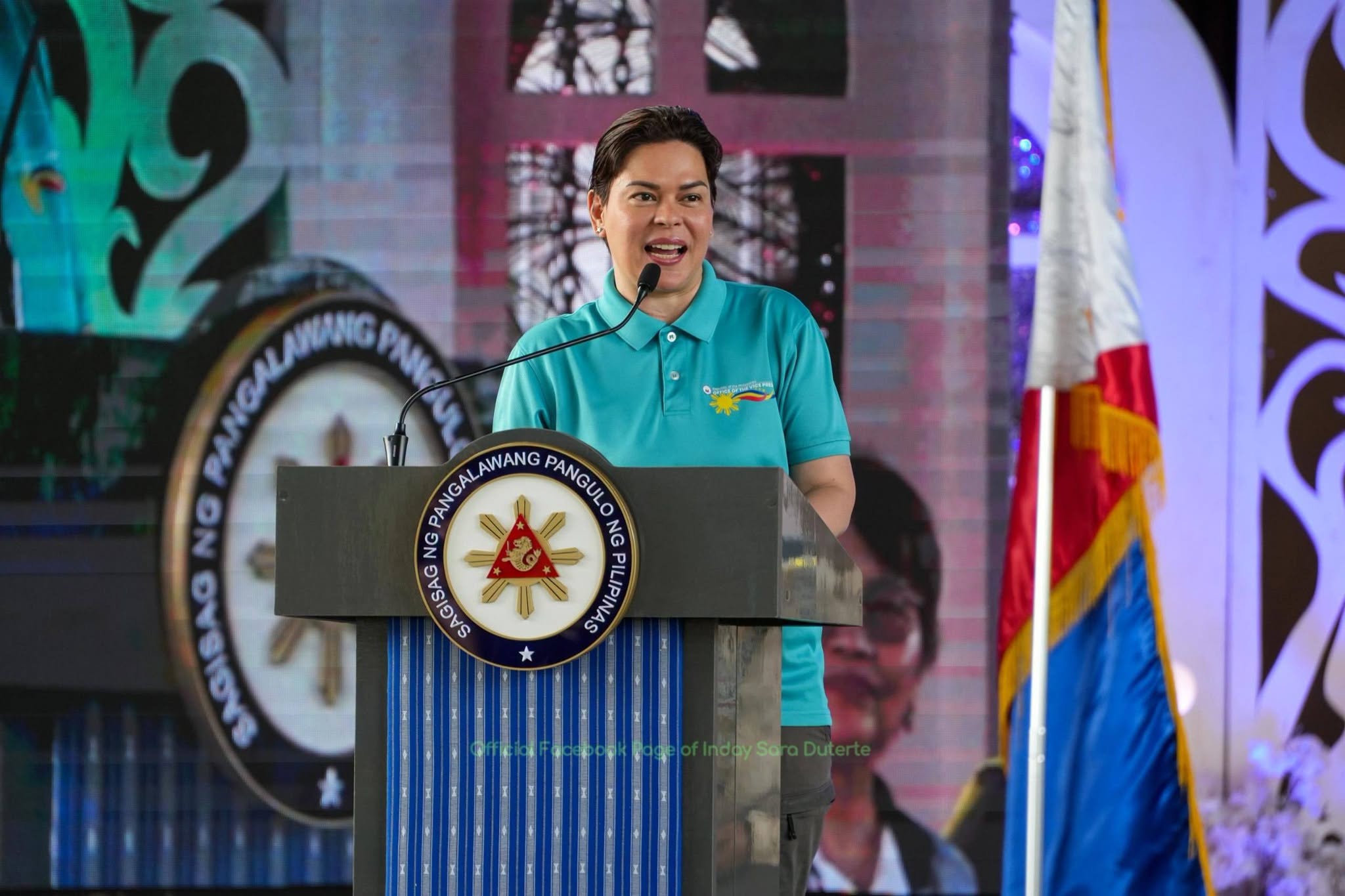
VEEP. Vice President Sara Duterte. Inday Sara Duterte Facebook page 'An alteration of an established order of presentation of evidence at this stage will not only violate the respondent's constitutional rights but also weaken the integrity of the proceedings,' the defense lawyers argue Vice President Sara Duterte has made it clear — she is opposed to changing the sequence of the evidence in her impeachment trial. She filed a formal opposition before the impeachment court on Tuesday, July 28. The next day, on July 29, the Senate impeachment court ruled that the status quo will be preserved and the sequence will remain the same. The prosecution will have to finish presenting its evidence on the four articles of impeachment, after which the defense will have its turn to present its own evidence. Apparently, Presiding Officer Chiz Escudero asked the parties if they are open to changing the current order of the presentation. Escudero, however, said that if one of the parties disagrees, then the status quo remains. “We shall finish with the evidence-in-chief of the prosecution for all the articles of impeachment that they will not withdraw…. Thereafter, we will hear the evidence-in-chief of the respondent for all the articles that remain or all the articles that evidence will be presented by the prosecution,” Escudero ruled on Wednesday. But what are Duterte’s reasons for opposing this? Is sequence really a big deal? Constitutional violation? In sum, Duterte raised four main arguments: It violates concepts of fair play and due process It goes against what was agreed upon during the pre-trial conference It defies the Senate impeachment court’s pre-trial order It shifts the burden of proving the accusations from the prosecution to the respondent The defense cited Article III, Section 1 of the 1987 Constitution: “No person shall be deprived of life, liberty, or property without due process of law, nor shall any person be denied the equal protection of the laws.” According to Duterte’s lawyers, this constitutional guarantee ensures that a respondent will be given a fair and reasonable opportunity to know the allegations against him/her. This also ensures that she will be informed about the alleged evidence against her and she will be able to prepare a comprehensive defense strategy. “Requiring the respondent to present evidence per Article before the Prosecution has fully presented its case-in-chief for all Articles undermines this constitutional guarantee and will deprive her of the opportunity to be fully informed of the nature and cause of the accusation against her and the evidentiary basis supporting them, if any,” said the defense’s reply. “Thus, to alter the established order of trial at this juncture will constitute an arbitrary departure from the respondent’s right to due process, protection against capricious proceedings, and the tenets of fair play,” it added. The defense lawyers also argued that the burden of proof lies with the prosecution. They said that if the prosecution fails to discharge this burden, “the accused need not even answer any of the charges and must be acquitted.” For the prosecution, its proposed sequence “allows [Duterte] an immediate opportunity to address the evidence presented on a particular article before the proceedings move to the next, while enabling the impeachment court to receive and evaluate all evidence relating to each charge in a more comprehensive and self-contained manner.” Should stick to pre-trial order The Duterte camp argued that the pre-trial order issued by the impeachment court should govern the impeachment proceedings. “Considering that the purpose of pre-trial is to take the trial of the case out of the realm of surprise and maneuvering, any deviation from this agreed upon sequence will undermine the binding force of the Pre- Trial Order and render the entire pre-trial proceeding meaningless. Modifying a pre-trial order during trial indubitably results in manifest injustice,” said the defense team. “An alteration of an established order of presentation of evidence at this stage will not only violate the respondent’s constitutional rights but also weaken the integrity of the proceedings,” it added. During the impeachment trial of former chief justice Renato Corona, the defense presented their evidence only after the prosecution rested its case. In criminal proceedings, the defense also presents its evidence only after the prosecution’s presentation. Meanwhile, defense spokesperson and counsel Michael Poa refuted insinuations that the defense opposed the change in sequence because they have no witnesses. “That’s not true,” said Poa. – Rappler.com How does this make you feel? Loading
Why Sara opposes changing sequence of presenting evidence in her trial
Full Article
Original Source
Read the full article at Rappler →KhanList aggregates and links to publicly available news content. We do not host full articles from third-party sources. Always verify important information with original sources.