
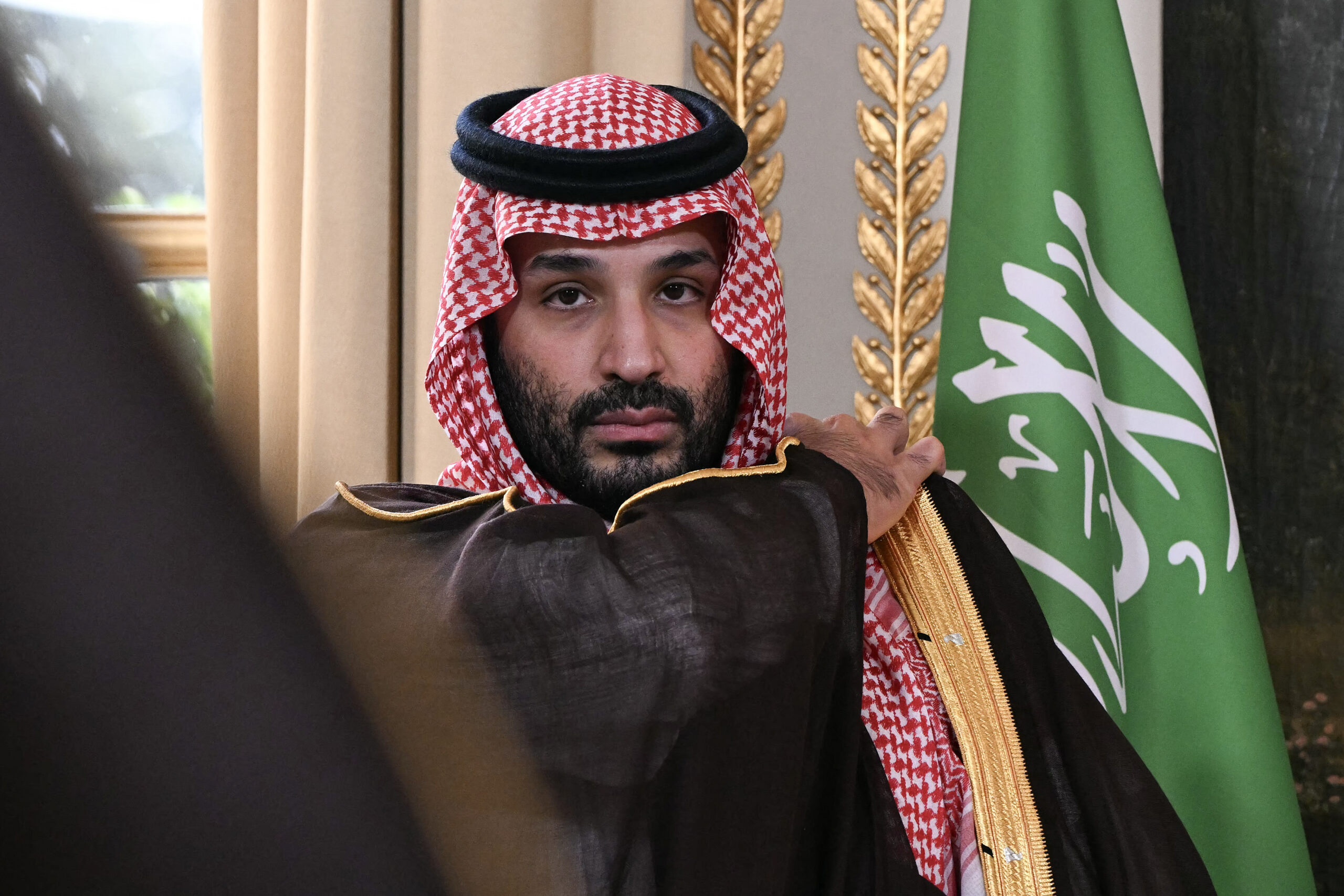
Foreign Affairs The U.S. has proven itself to be an unreliable partner for the Saudis. Photo by LOU BENOIST / POOL / AFP via Getty Images The Yemeni militant group Ansar Allah, known as the Houthis, has been striking Saudi Arabia again. President Donald Trump reportedly rebuffed Saudi Crown Prince Mohammad bin Salman’s request for the U.S. to join the war against the group. In the neoconservative commentariat, the knives came out—not for Trump, not for the Houthis, but for MbS. The pressure comes on the heels of a recent Saudi strategy to diversify its relationships—the China-brokered détente with Iran, the refusal to unconditionally normalize relations with Israel via the Abraham Accords, and, most recently, the Mecca defense pact with Turkey and Pakistan. The hawkish Foundation for Defense of Democracies declares that “Saudi Arabia picked a fight with the two nations that could help it the most against the Houthis—Israel and the UAE.” John Podhoretz of Commentary claimed the U.S. was deliberately withholding support to “teach MbS a lesson” and force him to normalize with Israel. “Oh, the Houthis are blowing up your pipelines?” he said in a recent podcast. “Maybe sign those Abraham Accords!” Matthew Continetti—the son-in-law of Bill Kristol, for what it’s worth—nodded along. “I think that’s the way Israel sees it, for sure,” he said. Max Abrahms piled on, saying that the Saudis—after dismissing the Abraham Accords and throwing in with Turkey and Pakistan—are now begging Jerusalem and Washington to rescue them. Other neocons went further still. Michael Rubin of the Middle East Forum predicted a palace coup in Riyadh. The apparent hope is that Saudi Arabia will suffer enough to abandon its diversification strategy and join the Abraham Accords, bending the knee to the U.S. and Israel. But the neocons, whether they know it or not, face a big problem: Even before Trump rejected MbS’s request to bomb the Houthis, Washington had shown it can’t be trusted as a Saudi partner. Trump’s refusal to help MbS out of the Yemeni jam serves to further highlight that fact, making Riyadh less likely to tighten its security relations with the U.S. and its client Israel. In 2019, when Iranian missiles struck Saudi oil fields, knocking out half of the country’s oil production, the Trump administration did nothing. The message was clear: The U.S. can’t be relied on to fight for Saudi Arabia’s security. That message has only become clearer in Trump’s second term. The president, after all, disregarded the Saudis’ advice not to attack Iran. Riyadh was acutely aware that it would become a target of the kind of retaliatory attacks by Iranian allies it is being subjected to now, attacks coming not only from the Yemeni Houthis but from Iraqi militias as well. The neocons can’t realistically expect Riyadh, at the Trump administration’s urging, to pursue close ties with Israel now, especially since Israel is further than ever from fulfilling Riyadh’s central demand for normalization—a viable Palestinian state. Trump is right not to join Riyadh’s war against the Houthis, and he was right to stop the U.S. bombing of the Houthis in May 2025—but not because military restraint is a good strategy for forcing Saudi–Israeli normalization. Rather, getting further embroiled in the Middle East conflict is simply not in American interests. Moreover, the neocons’ claim that the Saudi-Turkish-Pakistani defense pact has been exposed as a paper alliance warrants skepticism, though the arrangement does seem to rest more on diplomatic support than hair-trigger collective defense. Ankara and Islamabad both seem to have diplomatic back channels with the Houthis and are pushing for de-escalation. Saudi strikes against the Houthis have been less intense in recent weeks than one might have expected. MbS’ priority remains the kingdom’s economic modernization (under his ambitious “Vision 2030”), not war. And with the U.S. not joining the fight anyway, MbS has every incentive to avoid being seen as fighting Washington’s and Israel’s war against the Houthis and Iran. To do so would be politically toxic across the Arab and Muslim world and would undermine the very independence he has spent the last years cultivating. Thus MbS cannot trust America for his security, and he cannot normalize with Israel without courting significant political risks. Meanwhile, he remains in Iranian crosshairs—a threat that the U.S. and Israel have been unable to eliminate. Subscribe Today Get daily emails in your inbox Whatever the Houthis' own grievances with Riyadh, the root cause of the current conflagration is the U.S. war against Iran. So long as that war continues, Saudi Arabia will remain exposed. For Trump and the United States, avoiding direct war with the Houthis is, in this context, only the first step. The next step is to return to the Islamabad Memorandum between the United States and Iran, a framework peace deal that offered a genuine path to peace. At some point, the Trump administration will need to accept that it can’t vanquish the Islamic Republic with airstrikes nor force its collapse or capitulation via economic warfare. Washington has to recognize that stability in the Middle East can only be built through diplomacy with Iran and supporting the regional architecture that Turkey, Pakistan, and Saudi Arabia (and Oman) are already building, not through forcing Riyadh into the Abraham Accords at the Houthis’ gunpoint.
Why Riyadh Won’t Be Forced Into Israel’s Arms
Full Article
Original Source
Read the full article at Theamericanconservative →KhanList aggregates and links to publicly available news content. We do not host full articles from third-party sources. Always verify important information with original sources.