
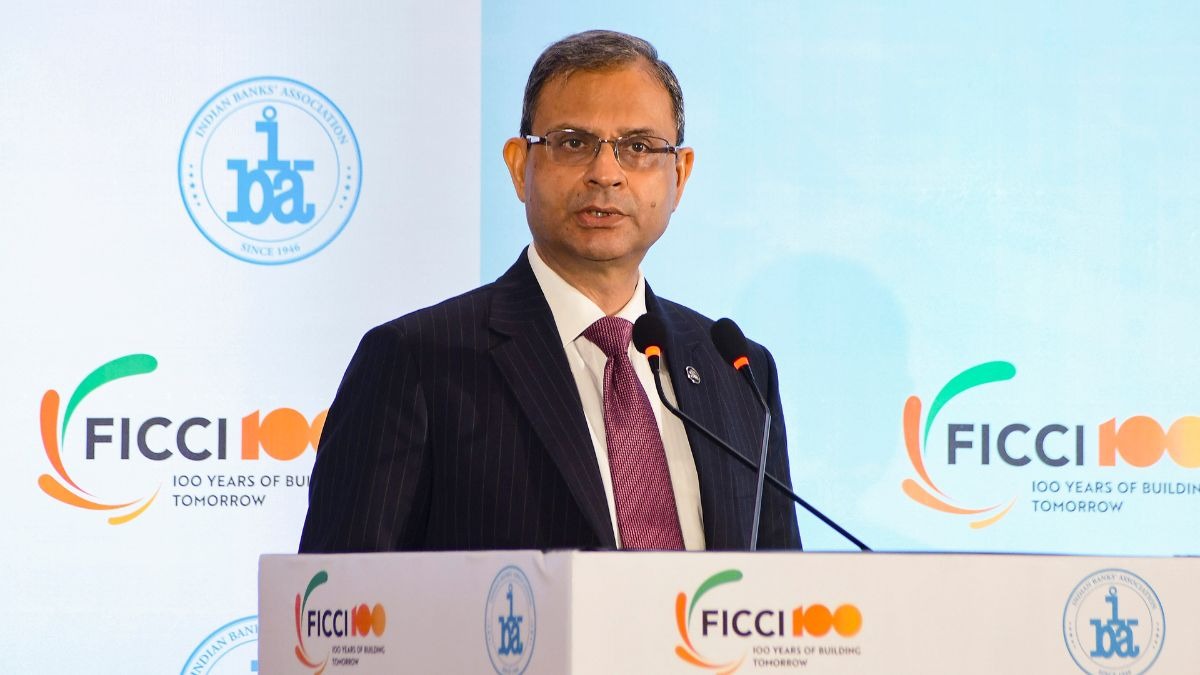
Advance closure of the Foreign Currency Non-Resident (Bank) swap window has sparked a debate, but RBI calls it a data-driven response to the forex environmentThere is much debate around the decision by the Reserve Bank of India (RBI) to advance the closure of the Foreign Currency Non-Resident (Bank)—FCNR (B)—swap window by a month. Governor Sanjay Malhotra has maintained that the move was well thought-out, calibrated, prudent and a data-driven response to the forex environment.So, what is FCNR (B) and what is the buzz around it? FCNR (B) deposits allow Non-Resident Indians (NRIs) to keep money in a bank in the form of foreign currency, the main attractions being that it offers tax-free interest as well as complete protection from exchange rate fluctuations.In June, the RBI opened a temporary facility for banks to swap these foreign currency deposits, saying it would bear their full currency risk. This was done to attract foreign capital, stabilise the rupee against import cost pressures and bolster India’s dollar reserves. High crude cost was driving inflation and putting pressure on the rupee. On May 20, the rupee had plunged to its lowest of 96.9 to the dollar.But now, the central bank has decided to end the scheme in August, rather than the earlier deadline of September, citing an encouraging response to the move. RBI data showed that at least $52 billion of inflows had come through FCNR (B) deposits as of August 14, say media reports. However, what has fired up a debate is that the decision came just two weeks after Malhotra told the media there was “no proposal under consideration” to prematurely end the concession. “While there may be valid reasons to justify an early closure [of the FCNR (B) scheme], the most likely reason could be that the target for FCNR (B) mobilisation has already been achieved with inflows at $57 billion. And another $25-30 billion could easily flow in the remaining days of August, taking the total collections to around $85 billion,” says Soumya Kanti Ghosh, group chief economic advisor, State Bank of India, in a research note. “The balance of payment will be in surplus of around $50 billion with CAD (current account deficit) at 1 per cent of GDP.”Malhotra, on his part, has said that the central bank had not taken a U-turn on the move; “it is rather a calibration”. In June, apart from agreeing to bear the hedging cost on fresh three-to-five-year FCNR (B) deposits, the RBI provided public sector units time-bound incentives to raise external commercial borrowings (ECBs).ECBs are commercial loans raised by eligible resident entities from recognised non-resident lenders, and used by Indian corporations and public sector undertakings to access foreign capital. RBI expects to attract $80 billion in its three initiatives—FCNR (B), ECBs and overseas foreign currency borrowings—put together. The Centre, meanwhile, complemented RBI measures with a slew of steps aimed at easing investments into the country and strengthening the rupee. To deepen the capital market, it introduced a series of reforms to increase foreign portfolio investor participation in government securities (G-Secs). Key measures included tax exemptions on interest income, long-term capital gains and short-term capital gains, expansion of specified securities under the fully accessible route, and streamlining of investment norms.SBI’s Ghosh says that although the impact of the FCNR (B) move by the RBI is clearly not as expected, going ahead, the rupee could appreciate in the range of 95-95.5 to a dollar till August 31. However, there are a few factors to look out for, which will put pressure on the rupee. One is the jump in US treasury yields to nearly 5.3 per cent, the highest since 2007. Yet another is the possibility of crude oil prices rising again to over $100 a barrel with geopolitical tensions remaining elevated and disruptions around the Strait of Hormuz posing risks to global oil supplies, he adds.India’s forex situation had come into sharp focus in the past four months, particularly after Prime Minister Narendra Modi raised a few red flags on the foreign exchange front in May. The crisis in the Middle East had upended India’s energy security, hit remittances from overseas and made goods and services costlier for commoners. It hit the country’s balance of payments position, that is the inflow of funds compared to outflow, prompting Modi to exhort citizens to pursue austerity measures, including cutting down on foreign travel and reducing gold purchases in order to reduce the dollar spend.Subscribe to India Today Magazine- EndsPublished By: Akshita JollyPublished On: Aug 21, 2026 18:35 IST
Why RBI ended its foreign currency swap scheme early
Full Article
Original Source
Read the full article at Indiatoday →KhanList aggregates and links to publicly available news content. We do not host full articles from third-party sources. Always verify important information with original sources.