
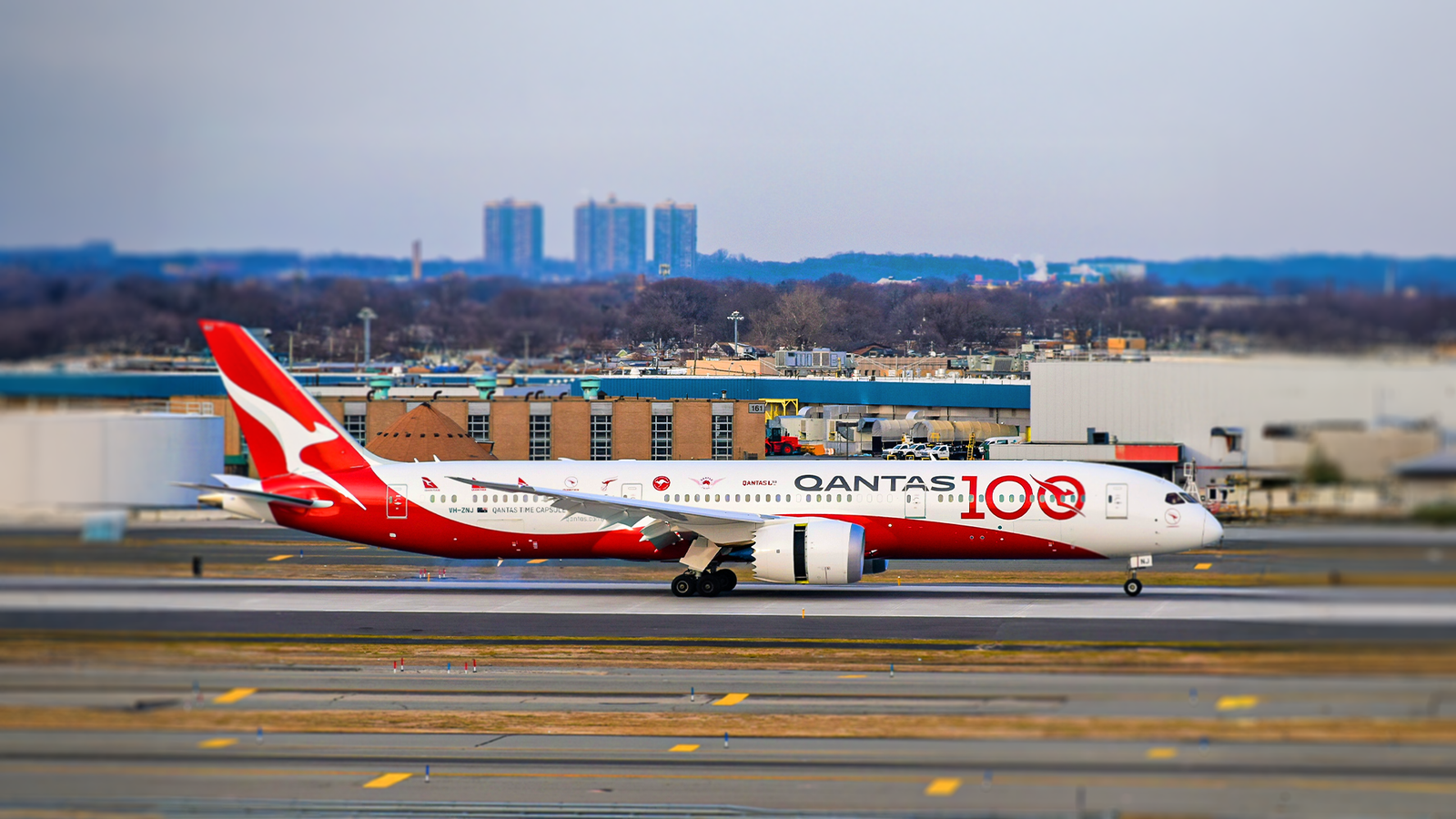
Published Sep 24, 2026, 3:00 PM EDT Daniel comes to Simple Flying with a business focused approach to the aviation world. Daniel enjoys analyzing strategy and how companies move against each other to gain a step ahead in the skies. Besides strategy, Daniel also has a passion for aircraft design and the history of aviation. Based in New York In preparation for the FIFA World Cup, Qantas increased its services between Sydney Kingsford Smith Airport (SYD) and New York John F. Kennedy International Airport (JFK) via Auckland Airport (AKL) to daily. This boost was implemented in June and will last until October, and it's quite notable because Qantas now has a much larger presence on the AKL-JFK route (where it has fifth freedom rights) than New Zealand's own flag carrier. Next year, Qantas will start taking delivery of Airbus A350-1000ULRs for Project Sunrise, which will consist of nonstops from SYD to London and JFK. Shortly afterwards, however, the carrier will begin retiring its massive Airbus A380s, which will dramatically cut capacity on its US routes. To counter this, Qantas will be increasing its US footprint by keeping frequencies high, retaining the one-stop via AKL, and also launching services to more destinations, creating a new era that's detached from its decades-old strategy of focusing on trunk routes. The 2026 Schedule Changes To The US Credit: The Global Guy I Shutterstock Qantas currently serves five destinations in the US. Los Angeles International Airport (LAX) is served daily with the 485-seat Airbus A380-800 from SYD, as well as from Melbourne Airport (MEL) with the A380, and from Brisbane Airport (BNE) with the 251-seat Airbus A330-200. Dallas/Fort Worth International Airport (DFW) is served daily from SYD with the A380 and thrice weekly with the 236-seat Boeing 787-9. San Francisco International Airport (SFO) is served thrice weekly with the 787 from SYD, while Honolulu Daniel K. Inouye International Airport (HNL) is served six times per week with the 787 and 279-seat Airbus A330-300 from SYD. Finally, JFK is now being flown daily via AKL with the 787. This change is temporary, as the carrier will pull back its JFK schedule in October, operating just four flights per week. However, Qantas will up service to five flights per week during the 2027 summer season, and it will continue to sell more capacity on this route than Air New Zealand, which has been bleeding money on the AKL-JFK route. This also represents the first time that Qantas has served JFK nonstop since pre-COVID, when it flew to JFK via LAX with the Boeing 747-400. In December 2026, Qantas will launch new nonstop flights between SYD and Las Vegas Harry Reid International Airport (LAS), which will be its sixth US destination. Flights will use the 787 and will operate thrice weekly, while the route will operate until March. It was a surprising addition, but the carrier has seen sufficient demand from Australians for travel to Las Vegas and has therefore launched what will presumably be a relatively low-cost route to serve this market. Qantas' Project Sunrise Credit: Airbus Qantas holds 12 orders for the Airbus A350-1000ULR, which is an extended-range version of the A350-1000. This aircraft, configured with 238 seats in a premium-heavy four-class layout, will enable the airline to commence its long-discussed Project Sunrise routes. Initially, this consisted of nonstops from SYD and MEL to London Heathrow Airport (LHR) and JFK, but recent comments from Qantas suggest that the carrier will focus on the SYD routes and then deploy the fleet throughout its existing network, while the MEL routes may come later than previously expected. The JFK route will be the second Project Sunrise service to launch, following the LHR flight in October 2027, and although Qantas will be flying nonstop from SYD, indications are that it will keep the one-stop option via AKL. Although the daily increase was due to the FIFA World Cup in the US, the carrier has generally been performing quite well and has increased service since the route was launched (the route was originally flown thrice weekly when it commenced in 2023). Qantas has been experiencing success with its US operations and has increasingly been pivoting towards a strategy of operating multiple routes with smaller aircraft rather than serving a handful of spokes with jumbo jets. Its Project Sunrise routes are a further reflection of this. On their own, the Project Sunrise routes won't cut Qantas' overall capacity to the US because they'll be new routes, but what will cut its capacity is what's set to occur the year after Project Sunrise launches. The Retirement Of The Airbus A380 Credit: Christopher Frame I Shutterstock Qantas currently operates ten Airbus A380-800s. These planes are hugely expensive to maintain and come with high operating costs, which is why it planned to start retiring these planes in 2032. However, in early September, the carrier moved its plans forward by four years, and the A380s will instead start leaving in 2028. This withdrawal will occur quite rapidly too, as the Australian flag carrier intends to operate its final A380 flight in mid-2028. The problem with this is capacity. The A380s currently fly to LHR, Singapore Changi International Airport (SIN), Johannesburg O.R. Tambo International Airport (JNB), LAX, and DFW. By all accounts, the carrier is filling its double-deckers, and although it holds orders for 12 standard A350-1000s (separate from the A350-1000ULRs) as well as more 787s, this will result in a capacity drop of at least 100 seats per flight, but likely more, depending on how the A350s are configured. While the carrier could charge higher prices, the scale of the size drop means that Qantas could end up leaving revenue on the table. Qantas Widebody Aircraft Capacity Airbus A330-200 251 seats or 271 seats Airbus A330-300 279 seats or 297 seats Airbus A350-1000 TBD, likely between 250 seats and 375 seats Airbus A350-1000ULR 238 seats Airbus A380-800 485 seats Boeing 787-9 236 seats Boeing 787-10 (unlikely to be flown to the US) TBD, likely over 300 seats The solution is to launch more nonstop services and increase frequencies to existing destinations. Focusing on the US, while DFW and LAX are major destinations in their own right, they also serve as connecting hubs due to Qantas' joint venture with American Airlines. Therefore, Qantas will need to keep the one-stop route to JFK even when the nonstop launches to maintain or grow its overall capacity to the US. The LAS route will also serve this purpose, and we're likely to see it increase frequencies throughout its US network once the A380s go. Moving Away From Trunk Routes Credit: Karolis Kavolelis I Shutterstock In the past, Qantas' long-haul strategy centered around trunk routes to London, Singapore, Hong Kong, and LAX with Boeing 747s. The A380s were ordered to continue this strategy. For the most part, the idea was that Qantas would funnel all of its passengers to these destinations, where they could continue onto flights operated by partner airlines to their destinations (American Airlines in the US). The same held for the DFW route, which came slightly later. However, passengers overwhelmingly prefer nonstop routes, and in the 21st century, new aircraft types began arriving that were smaller and more efficient than the massive double-deckers of the past, yet still had the same or greater range. Qantas is now flying the 787, while it also holds orders for the A350-1000 and A350-1000ULR. These aircraft allow it to launch more nonstop flights to new destinations, therefore reducing the need to fly massive planes to LAX and DFW, where Qantas carries sizable connecting traffic. This, then, is why Qantas is increasing its capacity to JFK and how it will maintain overall traffic to the US. Rather than fly an A380 to DFW and LAX, these spokes can be served by the A350-1000 or 787, while JFK will have up to two flights per day (the Project Sunrise nonstop and the one-stop via AKL). With four 787-9s, 12 A350-1000s, and 12 A350-1000ULRs set to arrive within the coming years, expect that Qantas will be increasing frequencies on its US routes at the very least, and that new destinations may also be announced. A New Era For Qantas Credit: Ceri Breeze I Shutterstock It would have been unimaginable 30 years ago, but we now live in a world where Qantas will be operating nonstop flights from SYD to LAS. The carrier now has aircraft that can economically serve ultra-long-haul thin routes, and these planes can fly even farther than the giants of the recent past. The A380 still serves a role in Qantas' fleet, but the aircraft is simply too expensive to fly and maintain for it to make sense with today's fuel prices, and so Qantas is now fully moving away from its old trunk routes philosophy. LAX and DFW will still be important, but even if the A350-1000 is flown daily to these destinations, it will represent a sizable drop in capacity per flight. Instead, Qantas is boosting capacity to the smaller destinations and adding new dots to the map, with LAS being the next addition. While it's impossible to know what Qantas' next new spoke in the US will be, expansion seems highly likely with its current orderbook, and frequency increases even more so. Many passengers on the former trunk routes were headed to cities like New York anyway, and they now have more nonstop options rather than needing to connect. JFK continues to be a success and will soon be getting its nonstop from SYD, with potential nonstops from MEL further down the line. This is the future of Qantas' US network.
Why Qantas Is Going Daily To New York Before Project Sunrise Shrinks Its US Capacity
Full Article
Original Source
Read the full article at Simpleflying →KhanList aggregates and links to publicly available news content. We do not host full articles from third-party sources. Always verify important information with original sources.