
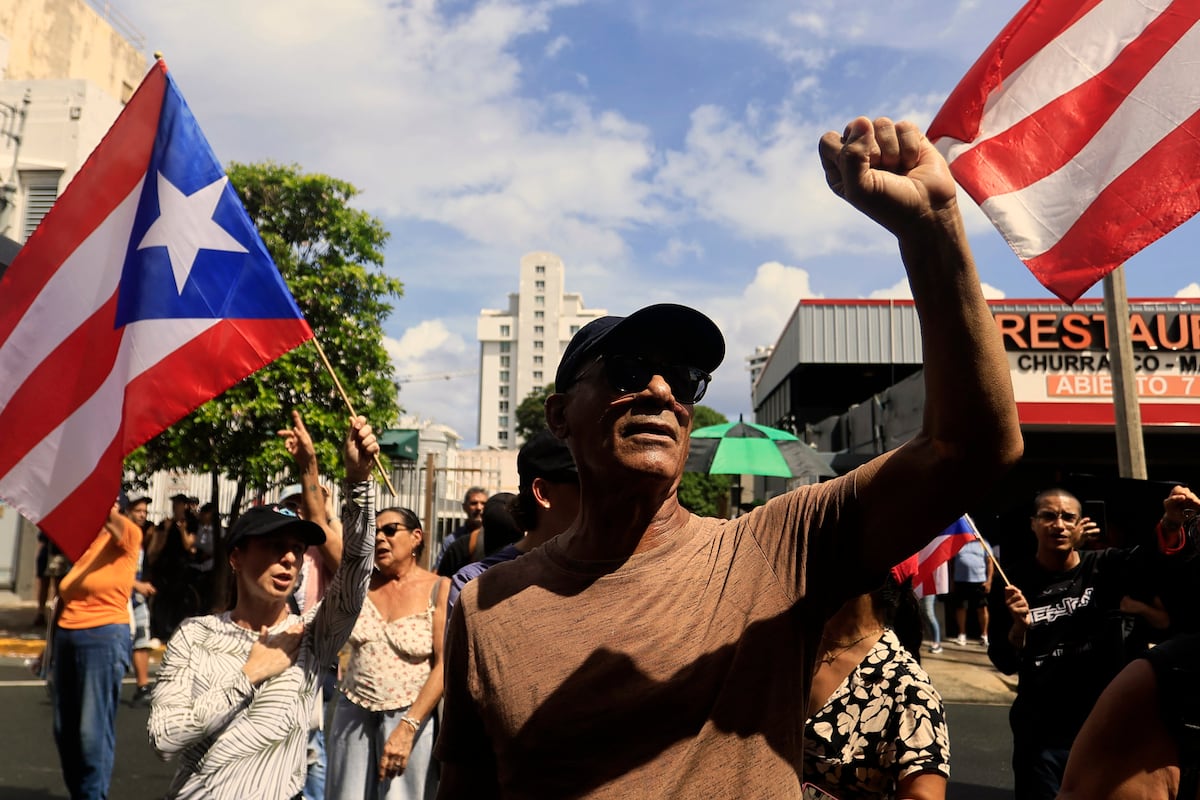
Will people ever stop talking about electricity in Puerto Rico? Unlikely. Puerto Ricans frequently receive warnings about potential blackouts because the system cannot meet demand, while paying 37% more for electricity five years after power distribution was handed over to a private consortium.Rising electricity bills are being met across the archipelago with a mix of anger, outrage and anxiety about how to pay them. The increases have been steeper in this U.S. territory than on the mainland and go beyond the global rise in fuel prices, according to a recent analysis released by the Center for Development Studies at the University of Puerto Rico.“Despite that increase in energy costs, the quality of electricity service has not improved in Puerto Rico,” the center concluded after comparing the price of a kilowatt-hour in 2020, the year before electricity distribution was handed over to the private company LUMA on the promise of a better and more reliable service. Before LUMA took over, a kilowatt-hour cost 19.63 cents; today it averages 26.9 cents. The issue of electricity has offered no respite since Hurricane Maria devastated Puerto Rico’s energy infrastructure nearly a decade ago, and there are still no signs of relief. Burdened by debt, the state-owned Puerto Rico Electric Power Authority transferred transmission and distribution operations to LUMA in 2021 and, in 2023, entered into a public-private partnership with GeneraPR to manage power generation.Electricity generation and consumption are now frequently close to balance. That leaves little margin during periods of peak demand and, at times, selective blackouts have to be implemented.Despite the $14 billion that Washington has allocated since 2017 to improve the archipelago’s fragile power grid after the hurricane, only $2.7 billion has actually been disbursed, according to a June report by the Government Accountability Office (GAO), the independent congressional watchdog.Against that backdrop, steadily rising electricity bills have fueled growing frustration, with some residents reaching a breaking point when the Puerto Rico Energy Bureau approved a new quarterly rate adjustment in October. The increase added dozens of dollars a month to some household bills and thousands of dollars to some businesses.The regulator tried unsuccessfully to soften the blow, noting that LUMA had sought an even larger increase. Even so, it acknowledged that a customer who previously paid around $228 a month would now face a bill of at least $270.According to both the regulator and LUMA, the latest increases have been driven largely by higher fuel costs due to the war in Iran. But some of the challenges affecting power generation are homegrown. Several generating units, for instance, frequently go offline, forcing operators to rely on more expensive fuels such as diesel.Businesses brace for soaring electricity billsThe latest increase in electricity prices has been felt more sharply than previous ones. That is hardly surprising in a territory where the average weekly wage is $724, less than half the $1,654 earned on average each week in the continental United States, according to federal government figures.Paying for electricity is hitting both households and businesses hard, and threatens to have far wider consequences for a sluggish economy overseen by a fiscal control board imposed by Washington, which has implemented a policy of austerity and spending cuts.The association representing small and medium-sized businesses in Puerto Rico warned that, following the increase announced this month, as many as 12,000 businesses could shut down and some 70,000 jobs could be lost.Christian Delgado knows this from firsthand experience. He shut down his vehicle washing and painting business in the municipality of Bayamón, in the San Juan metropolitan area. In September, he received an electricity bill for nearly $4,000 and, after requesting a review, the company told him the charge had resulted from a problem with his meter.But in October he received another bill, this time for around $2,600, far above the roughly $350 he had been paying just a few months earlier, according to billing records he shared on social media.Delgado decided to move to Florida, a path taken by many Puerto Ricans who find it increasingly difficult to make ends meet on the island. But before leaving, and frustrated by the situation, he chose to lead a protest outside LUMA’s offices on October 24. Of all the operators in Puerto Rico’s electricity system, LUMA is the one that most often becomes the focus of public anger.That Saturday, nearly 100 people gathered outside the consortium’s building in San Juan, carrying pots and pans, flags and placards. “The struggle gives us what LUMA takes away,” read one sign. “LUMA is torture, Genera is abuse,” declared another.Aware of the public frustration, the government has asked the powerful fiscal control board to allow a temporary exemption from the sales tax on restaurant meals and is considering other measures to ease the impact of higher electricity prices. In Congress, lawmakers from an opposition party have introduced a proposal aimed at cushioning the effects of rising fuel costs.In the meantime, households and businesses can only hope that next quarter does not bring another electricity-rate increase they cannot afford.Sign up for our weekly newsletter to get more English-language news coverage from EL PAÍS USA Edition
Why Puerto Rico can’t stop talking about electricity
Full Article
Original Source
Read the full article at English →KhanList aggregates and links to publicly available news content. We do not host full articles from third-party sources. Always verify important information with original sources.