
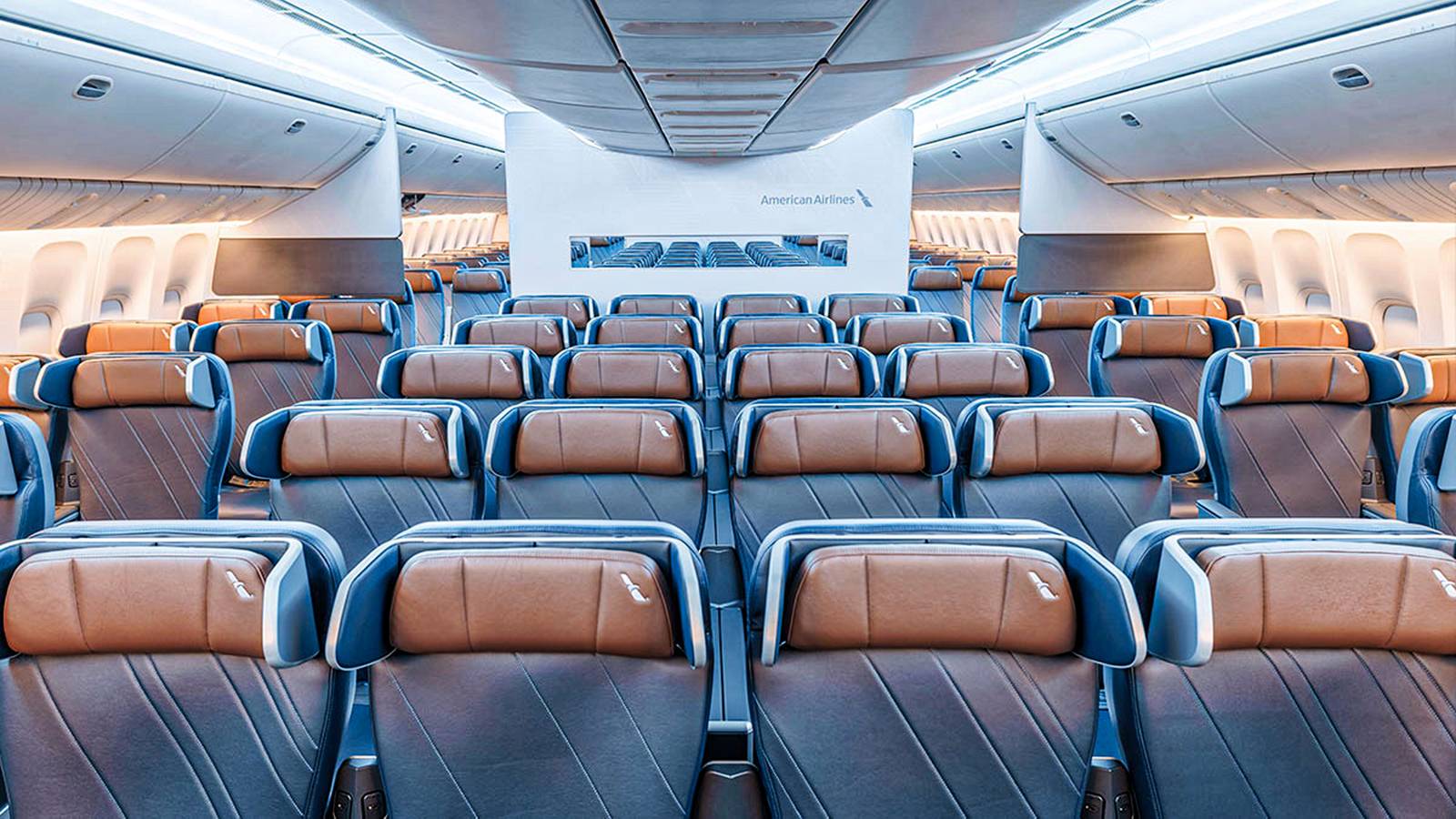
For years, a standard economy class seat with 34 inches of pitch represented a reasonably comfortable way to fly long-haul, giving passengers enough room to stretch their legs without paying the substantial premium associated with business class. Today, however, that kind of space is increasingly difficult to find across standard economy class cabins, where 30 or 31 inches has become the norm for long-haul services. As such, the additional room that once helped define conventional seating is now frequently marketed as a premium product. The transformation is not simply a story about airlines squeezing more passengers into aircraft, although cabin density remains important. Instead, it reflects a broader shift in airline economics. Specifically, revenue per square foot increasingly determines how cabins are designed and how comfort is priced. Premium economy has consequently evolved from a niche upgrade into something resembling yesterday's standard economy class, while basic economy at the opposite end of the pricing spectrum has helped create an increasingly polarized onboard experience. The Disappearing 34-Inch Economy Seat Pitch Credit: Gagliardi Photography | Shutterstock Seat pitch measures the distance between corresponding points on two seats in successive rows, rather than the unobstructed space available to a passenger's knees, but it remains one of the most useful indicators of how an airline allocates cabin space. A 34-inch seat pitch was once associated with relatively generous economy class seating, particularly on longer international routes. Meanwhile, contemporary configurations commonly place passengers approximately 30 to 32 inches apart, depending on the airline, aircraft, and route. The difference between 34 and 30 inches might appear insignificant numerically, yet losing four inches can materially affect the experience of sitting upright for hours, particularly for taller passengers whose knees already approach the seat ahead. A 31-inch configuration represents a smaller reduction, but the cumulative effect becomes noticeable when passengers cannot stretch comfortably, change position easily, or find a relaxed posture during an overnight journey. Aircraft type also matters because cabin width, seat design, and the number of seats installed across each row influence the overall experience. With the majority of carriers, including the likes of American Airlines and United Airlines, the Boeing 787 Dreamliner features a 3-3-3 layout in economy class, while the Boeing 777 can accommodate an extra seat in a 3-4-3 layout. There is also a distinction between the space an airline provides and the space it advertises. This is because identical pitch measurements can produce different experiences depending on seat thickness, recline mechanisms, and cushion design. Nevertheless, the broader trend is clear: passengers increasingly encounter less room in standard economy while paying separately for the additional space that once helped define a conventional seat. The Economics Behind The Smaller Seat Credit: American Airlines The explanation lies in aircraft interior economics, where every additional inch of cabin space carries an opportunity cost because it could accommodate another passenger or contribute to a higher-value seating arrangement. Airlines balance operating expenses, aircraft utilization, passenger demand, and ticket revenue, and even small changes to a cabin layout can influence how much money an aircraft generates on each departure. Business class illustrates the incentive particularly clearly, since a premium seat can occupy two to four times the space of an economy class seat while commanding a substantially higher fare. Industry estimates suggest business class can generate four to five times as much revenue per square foot as economy class, while premium economy can deliver approximately 1.8 to 2.4 times economy's revenue for around 1.5 times the footprint. These estimates vary by route, aircraft, and demand, but they explain why airlines increasingly prioritize cabin mix rather than passenger numbers alone. Selling fewer seats at significantly higher prices can sometimes generate better returns than maximizing capacity, particularly on routes where corporate travelers and affluent leisure passengers demonstrate strong willingness to pay for additional comfort. The result is a commercial calculation favoring high-yield premium seating alongside a densely configured economy class cabin, creating what is often described as a barbell-shaped aircraft interior. Business class attracts passengers paying for privacy and luxury, while economy class retains travelers seeking competitive fares, leaving premium economy to capture those willing to spend more without paying for a lie-flat seat. Premium Economy Becomes The New Normal Credit: Virgin Atlantic Premium economy was originally positioned as an intermediate option for travelers who wanted something better than standard economy but could not justify business-class prices. Its appeal rested on wider seats, additional legroom, greater recline, and selected service enhancements, allowing airlines to sell a meaningful upgrade without dedicating as much cabin space to each passenger as business class requires. As carriers refined their offerings, however, premium economy increasingly became a distinct revenue category rather than simply a small collection of especially comfortable seats toward the front of economy. On long-haul aircraft, such as the Airbus A350, the cabin can offer a quieter environment, improved dining and other benefits alongside its physical advantages, although the exact package differs between airlines. The irony is that some of the room passengers now pay extra to obtain resembles the space available in older economy configurations. Premium economy seats frequently provide pitches in the mid-to-upper 30-inch range, although individual products vary, bringing them closer to traditional expectations of standard seating than the increasingly common 30- or 31-inch economy arrangement. For airlines, this creates an opportunity to monetize comfort without making every ticket more expensive. Passengers prioritizing legroom can purchase an upgrade, while price-sensitive travelers remain in economy class or select basic economy. The commercial strategy captures different willingness to pay, but it also means that comfort once associated with an ordinary ticket increasingly depends on selecting the correct fare category. Premium Revenue Is Challenging Economy Class Credit: Delta Air Lines The financial importance of premium seating has grown alongside expanding premium cabins, particularly among major US carriers competing for corporate travelers and affluent leisure passengers. Premium customers often generate disproportionately high revenue through expensive tickets, upgrades, and greater willingness to spend on flexibility, schedules, and onboard comfort, encouraging airlines to dedicate more aircraft space to these travelers. Delta Air Lines provides a striking illustration, with premium ticket revenue reaching approximately $6.82 billion in the third quarter of 2026, narrowly exceeding the $6.80 billion generated by its main cabin. The figures demonstrate how significant premium demand has become for a major carrier, although one quarterly result does not establish that every airline or route has reached the same point. Other carriers illustrate the competitive pressure to differentiate their products. American Airlines and United Airlines both offer premium-cabin options designed to attract customers beyond the traditional economy market, while their long-haul fleets compete for passengers comparing comfort, schedules, and total ticket costs rather than simply choosing the lowest available fare. Capacity trends reinforce the shift, with US premium seat capacity reported to have increased 33% since 2020, compared with 16% growth for economy. This faster expansion suggests that airlines are increasingly prioritizing products capable of generating higher returns from limited aircraft space, although the consequences for individual passengers depend on the route, aircraft configuration and available alternatives. Basic Economy Completes The Barbell Credit: United Airlines Basic economy class represents the other side of the commercial strategy, allowing airlines to advertise lower entry-level fares while restricting benefits passengers might once have expected from a conventional economy ticket. Depending on the carrier and itinerary, restrictions can involve advance seat selection, ticket changes, boarding priority, or baggage allowances, turning the cheapest fare into a deliberately limited product. The strategy helps airlines compete with low-cost carriers without reducing the price of every seat, because customers concerned primarily with cost can select the restricted fare while others pay more for flexibility and convenience. It also creates opportunities for additional revenue when passengers purchase preferred seats, baggage, or other services separately. Together, basic economy and premium economy establish a more pronounced hierarchy, with a stripped-down entry product at one end and a more spacious, expensive alternative at the other. Standard economy sits between them, but its traditional role as a reasonably comfortable default has become less straightforward as airlines differentiate seating, legroom and service. This approach does not mean every airline is deliberately reducing every seat's pitch, nor does it imply that all economy cabins are equally restrictive. Rather, it demonstrates how pricing segmentation allows carriers to sell different levels of comfort and convenience within the same aircraft, making cabin design inseparable from the broader strategy of maximizing revenue. What Passengers Should Check Before Booking Passengers comparing economy class fares should examine actual seat pitch, seat width, and fare restrictions rather than relying exclusively on the advertised ticket price. The cheapest option may become less attractive once seat selection and baggage costs are included, while a 30-inch pitch can feel particularly restrictive on an overnight flight compared with a more generous configuration. Premium economy deserves closer scrutiny when the price difference is reasonable, but the label alone does not guarantee the same product across airlines. Some cabins provide genuinely wider seats, greater recline and meaningful service improvements, while others deliver a more limited upgrade centered on additional legroom and selected amenities. Passengers should also check the precise aircraft assigned to their flight, since configurations can vary within the same airline and aircraft family. A Boeing 787 operating a long-haul service may offer a different seating experience from another aircraft on the same route, making the published seat map and specific cabin details more useful than general assumptions about an airline's entire fleet. Finally, premium economy pricing can function as a decoy when its fare appears attractive beside an expensive economy ticket but sits surprisingly close to business class. Comparing all three cabins, including their baggage allowances, flexibility, and seating arrangements, helps reveal whether the upgrade represents genuine value or simply another carefully positioned price point in an increasingly segmented airline market.
Why Premium Economy Is Effectively Yesterday's Standard Economy: Pitch Shrank From 34 Inches To 30-31
Full Article
Original Source
Read the full article at Simpleflying →KhanList aggregates and links to publicly available news content. We do not host full articles from third-party sources. Always verify important information with original sources.