
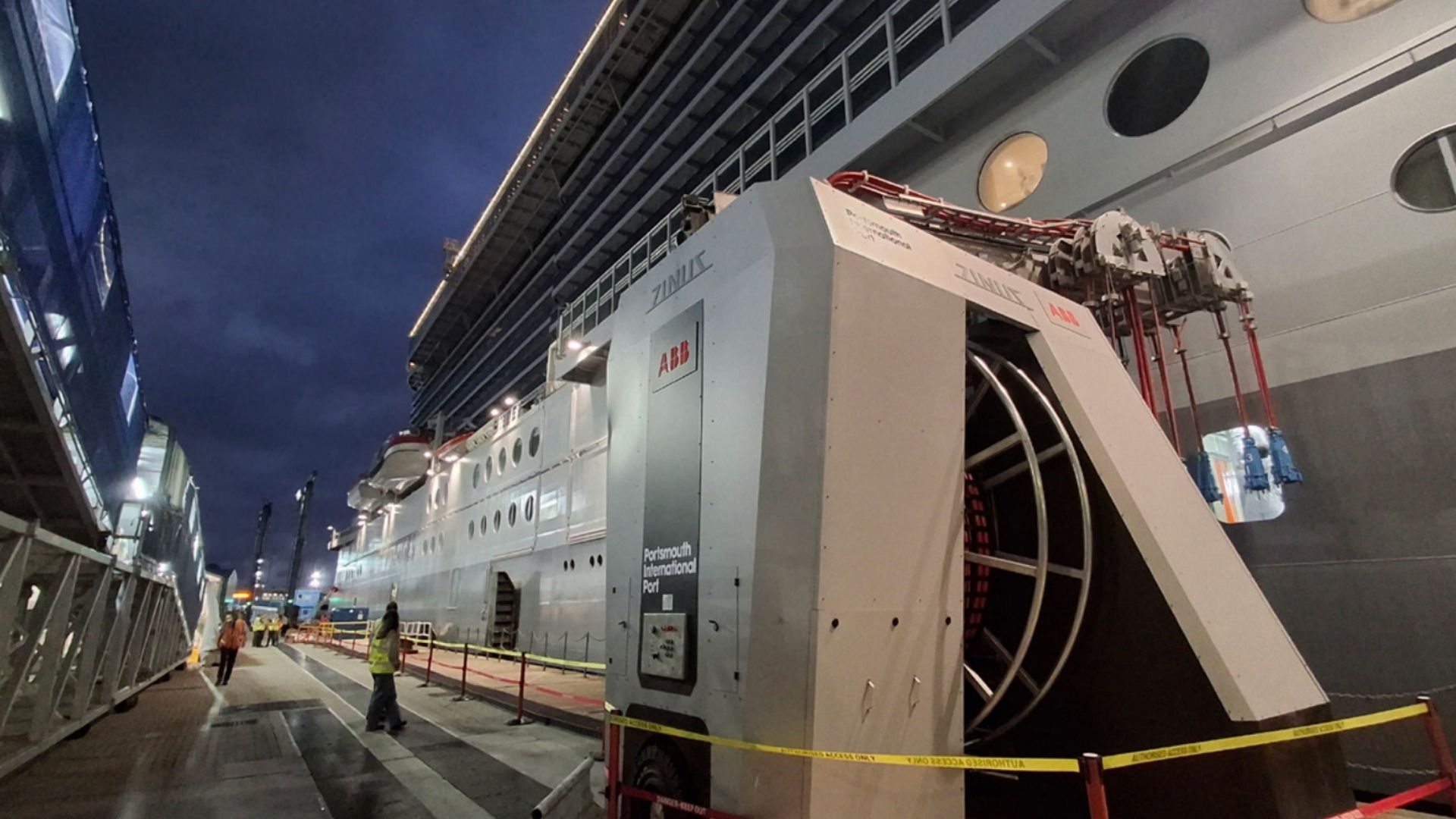
A ship can switch off its generators, burn less fuel and reduce pollution while docked, yet still face a higher power bill. That is the financial challenge surrounding Portsmouth International Port’s new shore power system. The port has launched the UK’s first high-voltage, multi-berth installation, allowing docked ships to connect to grid electricity instead of generating power onboard. It supports Portsmouth’s ambition to become a net-zero facility, improve local air quality and contribute to the wider decarbonization of shipping. However, high UK electricity prices complicate the economics. Shore power can replace fuel-burning generators without delivering the savings operators might expect, while rising grid-related charges add further pressure. How shore power cuts fuel use Shore power changes where a docked ship gets its electricity. Rather than keeping onboard generators running, vessels connect to the grid and switch those generators off. For Portsmouth, this provides a way to address air pollution from marine engines while supporting its broader environmental goals. The principle is straightforward: supplying electricity from the shore reduces the need to burn fuel onboard while a vessel remains docked. Portsmouth’s ambition sits alongside efforts at the ports of Long Beach and New York and New Jersey, as well as JFK’s Terminal One project, to make transport infrastructure cleaner. But the environmental and financial arguments depend on different factors. Switching off generators reduces onboard fuel consumption. Whether it also saves money depends on the price of the electricity purchased to replace that generation. Access to grid power therefore creates an alternative, rather than guaranteeing a cheaper option. A vessel operator still has to compare the cost of plugging in with the cost of keeping its generators running. At Portsmouth, expensive electricity makes that comparison challenging, even as the system offers a way to reduce pollution. Why electricity dominates the connection bill Electricity accounts for approximately 80–85% of the total cost paid by a vessel using shore power at Portsmouth. Port charges account for the remaining 15–20%. That breakdown explains why electricity prices matter so much. The larger share of the bill comes from purchasing power, rather than the port’s charges for using the system. Even though a connected ship avoids burning fuel in its generators, it must pay for the grid electricity taking its place. If that electricity costs more than onboard generation, reduced fuel spending does not translate into lower overall power costs. According to the House of Commons Library, UK electricity prices were 18% above the EU average in the second half of 2025. Separately, the International Energy Agency found that electricity prices for energy-intensive industries across the EU averaged more than twice those in the US. These comparisons illustrate the wider electricity pricing differences surrounding Portsmouth’s project. They help explain why the financial case for electrification can vary considerably between countries. For ships at Portsmouth, the immediate challenge is that cleaner power can cost more to operate. Rising grid charges complicate the economics Portsmouth faces an estimated 10% year-on-year increase in Transmission Network Use of System charges over the next five years. The increase concerns transmission charges, rather than the entire shore power bill. Nevertheless, it adds another cost pressure to a system already affected by high electricity prices. The source describes lower ownership costs for electric port equipment, including cranes, material handlers, terminal trucks and locomotives, compared with diesel equivalents. Hybrid-electric ships can also be cheaper in some uses. Those examples do not guarantee the same outcome for shore power in Portsmouth. Its system enables ships to reduce pollution while docked. Turning that environmental benefit into a financial saving depends on electricity prices and the grid-related costs accompanying them. Get the latest in engineering, tech, space & science - delivered daily to your inbox.Atharva is a full-time content writer with a post-graduate degree in media & amp; entertainment and a graduate degree in electronics & telecommunications. He has written in the sports and technology domains respectively. In his leisure time, Atharva loves learning about digital marketing and watching soccer matches. His main goal behind joining Interesting Engineering is to learn more about how the recent technological advancements are helping human beings on both societal and individual levels in their daily lives.
Why plugging ships into the grid can cost more than running onboard generators
Full Article
Original Source
Read the full article at Interestingengineering →KhanList aggregates and links to publicly available news content. We do not host full articles from third-party sources. Always verify important information with original sources.