
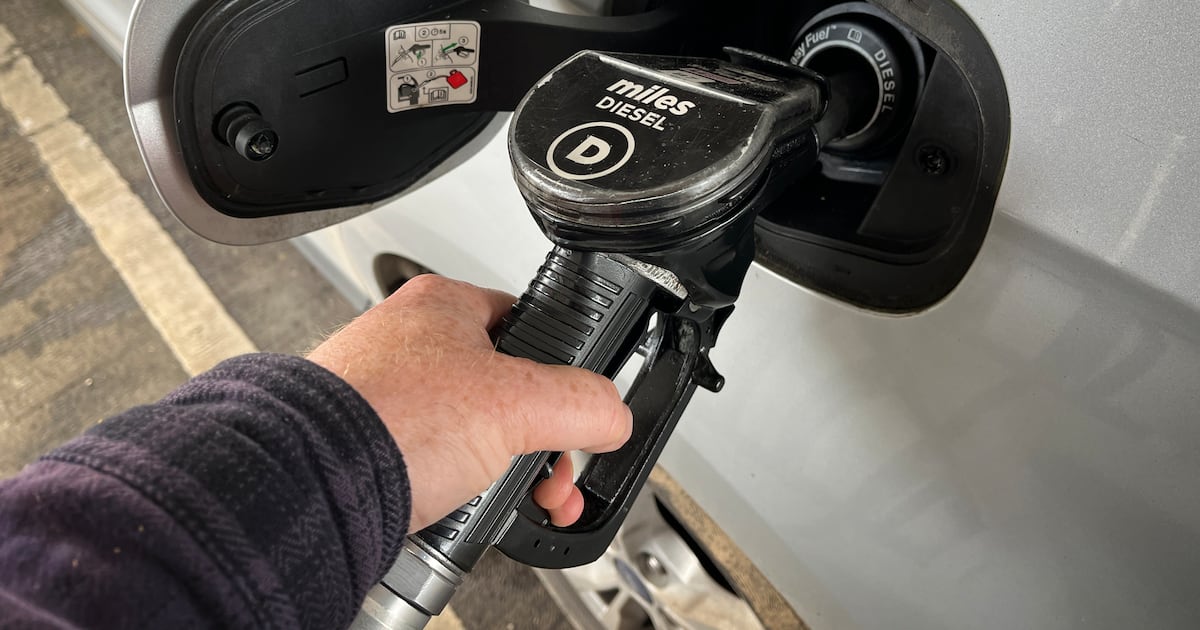
I don’t suppose there is any sign of fuel prices falling?Sorry, no. In fact, things are worse now than they were just a couple of weeks ago. Worse? How bad are we talking?Well, in August figures from the AA suggested that the average price of a litre of petrol was €1.84 and it put the average price of diesel at €1.92. Its most recent figures, from the middle of this month, priced petrol at €1.87 while diesel was €1.94.Well, that is not that much higher, is it?Things are worse today than these figures suggest. Many motorists who have been criss-crossing the country since the start of the week will have been alarmed to see a litre of diesel priced at close to €2.15 on many forecourts – and in some cases more than that – while petrol has breached the €2 barrier.How does that compare with the start of the year?In February, a litre of petrol and diesel were both priced at around €1.70. That means many motorists are now paying as much as 45 cent more for each litre of diesel they pump into their car. If a typical motorist covers around 17,000km a year and uses around 1,100 litres of fuel, the higher prices today – if maintained – will see motorists spending close to €500 more on fuel over the course of a year than they were in 2024.READ MOREThat is steep.And it could actually be a whole lot worse. Remember, the current prices do not take into account the temporary tax cuts that apply to both petrol and diesel. What were they again?In April, the excise duty on diesel was lowered by 32c a litre while the duty was cut on petrol by 27c a litre. Had there been no cuts, the price of a litre of diesel on many forecourts would currently be around €2.55, while a litre of petrol would cost around €2.30.Will the excise cuts be reversed in the short term?Theoretically, excise duty could start reverting to previous levels from November, but it would be a very brave Minister for Finance who’d do that.So what is driving the higher prices?This is an interesting question. The price of a litre of Brent Crude, widely considered the benchmark for fuel prices worldwide, is currently around $97. That is certainly higher than the $60 or $70 it cost 12 months ago. But it’s a long way shy of the $120 a barrel it was priced at in March and April in the immediate aftermath of the war in the Middle East starting.So if oil costs less than $100 a barrel, why are prices higher now than they were six months ago?Because the thing that is pushing prices up now is not the price of crude but the price of refined diesel and kerosene. What do you mean by that?Ahead of the summer, some refineries tweaked their processes to allow them to switch from refining diesel to refining kerosene. They did that to meet demand for aviation fuel. While that was good news for the aviation sector, it did put pressure on the motor fuel sector. And is that all?No. That shift in production has been coupled with a reduction in the number of refineries in the Middle East that can convert crude into motor oil. Many of them have been bombed or otherwise damaged. In short, there is plenty of crude now but not enough capacity to turn it into diesel and petrol.Is this a long-term problem?Yes, there has been much talk of fuel at €2 being the new normal. Industry sources are now telling us that €2.15 for diesel might be the new normal, and that is only if things don’t get worse on the geopolitical stage.What do you mean?Well, there are a couple of scenarios that could play out. Things could stabilise, the war could end, and supply chains could reopen. That would lead to a rapid decrease in prices, as the risk would be taken out of the markets and companies would have the capacity to move more fuel through the Strait of Hormuz. But because of the damage to refineries, it will be years before the world reaches the production capacity levels that existed pre-February 27th, so prices will remain elevated. And that is the best-case scenario?Unfortunately yes. If things in the Middle East do not improve and if they get worse, then prices could easily climb higher, and we could be paying €2.30 a litre or worse before the end of the year.
Why petrol pump prices in Ireland could be €2.30 a litre by December
Full Article
Original Source
Read the full article at Irishtimes →KhanList aggregates and links to publicly available news content. We do not host full articles from third-party sources. Always verify important information with original sources.