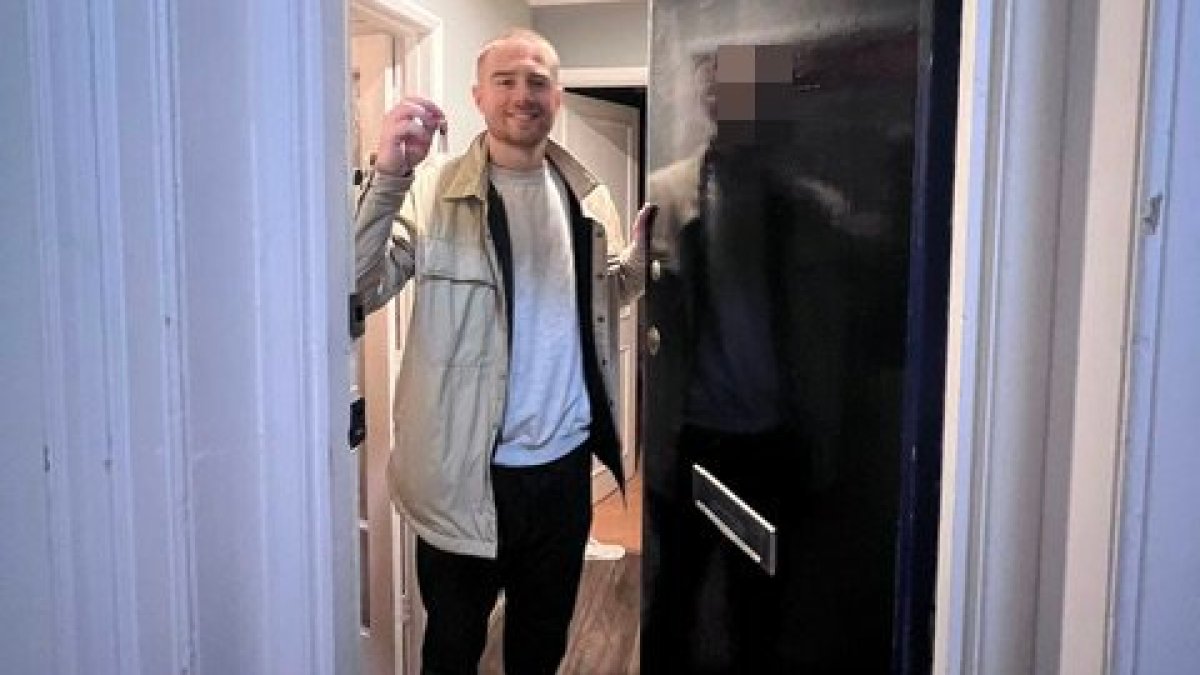
Dan Bermingham-Shaw has had his studio flat up for sale for 90 days now and has had no viewings. The 32-year-old living in South London bought his flat in 2022 for £225,000 and put it up for sale in April this year for £230,000. Land Registry figures suggest average property prices have grown about 7 per cent over the past four years, but Dan found that even his 2 per cent increase was proving too much for prospective buyers. Dan had to drop his price by £6,000 last month – to £224,000 – but still has had no luck and is now considering pausing the listing and relisting at a later date. He said: “I’ve had zero viewings and zero offers, and despite the advert apparently having thousands of hits on Rightmove and Zoopla, not a single person has ‘saved’ or ‘liked’ the property to indicate they’re considering it.” Dan’s case is not isolated. Estate agents have told The i Paper that selling studios and one-bedroom homes is incredibly difficult. According to property portal Zoopla, 72 per cent of one-bedroom flats for sale this year remain unsold nationally. Matt Dawson, director of Westwood Property Services, based in Sidcup, south-east London, said demand for these properties was far lower than supply, and he had had some potential buyers view close to 20 homes that match their criteria. As a result of increased stock in the market, Dawson said prices have taken a fair hit. First-time buyers struggling Recent analysis by Zoopla found that 44 per cent of UK homes listed for sale in the past three years failed to sell, citing overambitious pricing as the biggest reason. But why are they overpriced? Richard Donnell, executive director at Zoopla, said that, currently, affordability concerns among first-time buyers – the key market for smaller flats – mean many were unprepared to offer what many sellers wanted. Josh Endacott, an estate agent from London-based firm 1st Avenue, said: “We are seeing a market where buyers have more choice than at any point in over a decade, and yet too many sellers are still pricing as if it were 2022 or 2021, when demand was at its absolute peak, and buyers were competing fiercely for every available property.” In 2021 and 2022, mortgage rates of below 2 per cent were widely available. Now, rates above 5 per cent are typical. There have been some drops in recent weeks, but mortgage rates are still nowhere near levels seen before the Iran war began in March. Richard Donnell, executive director at Zoopla, said: “First-time buyers, who are the obvious buyers for these flats, are the most squeezed by higher mortgage rates and, in London, stamp duty.” The holiday on stamp duty – a tax paid by home buyers – seen last year is also now a distant memory. Until the end of March last year, first-time buyers did not pay any stamp duty on homes costing up to £425,000, while the threshold for other buyers is £250,000. But the threshold for first-time buyers has dropped to £300,000, while for everyone else it has been halved to £125,000. Renters’ Rights Act Earlier this year, the Renters’ Rights Act (RRA) became law, giving renters a swathe of new rights. Landlords can no longer issue so-called no-fault notices to evict tenants, and can only increase rents once a year using a formal 13 notice. Fixed-term tenancies have ended – with all renters now on rolling contracts with no end date. However, many landlords criticised the legislation and said it would cause many to sell up and exit the market. Charlie Lamdin, founder of property website Best Agent and host of YouTube channel Moving Home With Charlie, said the RRA was now a contributing factor to there being a lot of stock of studios and one-beds in the market. He said: “The Renters’ Rights Act has not only increased costs for landlords, but it’s also increased risk for them. “When you look at a landlord’s investment decisions from a purely numerical perspective, it makes one-bedroom flats higher risk and lower yield when looked at from a purely financial perspective.” So the increased risk and increased costs for landlords is what has pushed many to try to sell, causing a “glut of supply” of studios and one beds. Zoopla’s Richard Donnell also pointed out that many current listings are from landlords looking to exit while still collecting rent, meaning that if they can’t get the price they want, they will wait, which causes supply to sit. Leasehold charges The third piece of the puzzle is the rising costs associated with leasehold properties, which most flats tend to be. A leasehold deal is a type of ownership in which someone owns the property for a fixed period under a legal agreement with the freeholder. Owners of this type of home usually pay a service charge that is expected to cover the maintenance, repairs, and management of communal areas in a building or estate. Lamdin said: “Service charges and ground rents have risen disproportionately high on all leasehold properties, but in proportion to the size and value of the flat, it’s worst for one-bedroom flats. “When the cost of ownership of an asset increases, it brings down the value of that asset. So very simply, people looking at buying one-bed flats are now looking at the increased service charge, and saying, ‘that’s too expensive now’.” Hamptons research earlier this year found flat leaseholders in England and Wales paid an average service charge of £2,405 or £200.42 a month in 2025, up 4.6 per cent from 2024. Average service charge rose 32.6 per cent over the last five years, outstripping inflation. The Government plans to introduce a series of changes for leasehold property owners in the coming years. Millions of leaseholders across England and Wales will have their ground rents capped at £250 a year from 2028, Sir Keir Starmer announced in January. Other key measures include a ban on the sale of new leasehold homes and a gradual transition to a “commonhold system”, which means there will be no freehold landlords. There are no plans to cap service charges; however, some campaigners are unhappy with this. What to do if you are buying or selling Lucian Cook, director of residential research at Savills, suggested that those trying to sell a flat need to “rein in” their price expectation. He added: “For those looking to trade up the housing ladder, that will have a knock-on implication for where they are able to buy, often requiring them to compromise on location.”Buyers are currently in a stronger position, according to Cook, given the amount of choice in the market. He suggested that buyers make plans to pay down their mortgage debt once they buy somewhere, in order to build up some equity in the property and put them in the strongest position to make their next move.
Why one-bed flat owners are struggling to sell their homes – even for a loss
Full Article
Original Source
Read the full article at Inews →KhanList aggregates and links to publicly available news content. We do not host full articles from third-party sources. Always verify important information with original sources.