
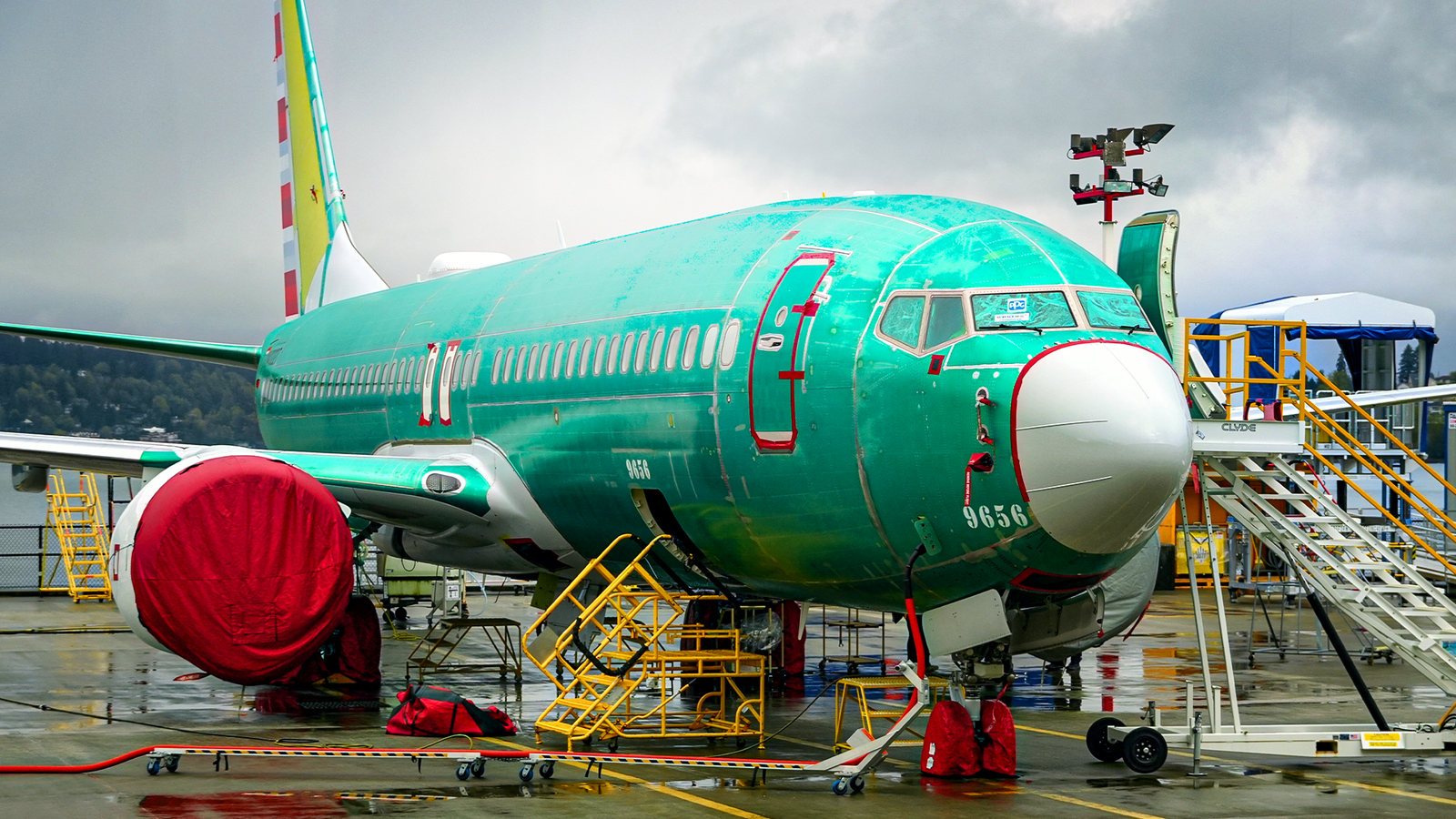
Published Nov 13, 2026, 8:00 PM EST Aaron is an aviation enthusiast and world traveler with a deep interest in aerospace history and technology. He has traveled around the world numerous times, often incorporating visits to aviation museums and historic aircraft collections into his journeys. A native of New Zealand, he is an expert in aviation and maintains a broad interest in a variety of other subjects. The observation that pre-delivery Boeing aircraft are green, and Airbus aluminum aircraft aren't, is partially true, but it is far from the full picture. There are significant differences in the substances that Boeing and Airbus' various divisions and subcontractors use, and this is partially driven by environmental regulations differing by location. But unfinished Boeing aircraft are also typically photographed at an earlier stage of development compared with Airbus. After the peelable Temporary Protective Coating (TPC / "Spraylat") is removed, Boeing aircraft look different, but they are rarely photographed at that stage. This is the stage that Airbus aircraft are typically photographed. Importantly, the 'green' conversation requires aluminum aircraft, as composite material structures are treated differently. Here is what to know about Boeing and Airbus coatings. The Green Coat Of Factory-New Boeing Aircraft Credit: Ian Dewar Photography l Shutterstock One of the most distinctive features of new aircraft is the stage they go through when they are in their primary coats of paint. Boeing aircraft are green as they roll out of the assembly facility. The green coating is a corrosion-protective primer applied to the aircraft structure before its final exterior paint scheme. The layer also helps subsequent coatings to adhere to the aircraft. Other aircraft manufacturers such as Airbus, Embraer, ATR, and COMAC use broadly comparable surface-protection coatings, although they are not quite the same. It is also important to distinguish between the aircraft's three basic stages of coating. Aircraft receive structural primer, intermediate coating, and final decorative topcoats. What looks like a single coat of green paint on Boeing aircraft is actually a combination of two distinct coatings, obviously not the final decorative one. What is seen is typically the Temporary Protective Coating (TPC / "Spraylat") and the Corrosion-Inhibiting Primer (The True Undercoat). This does not apply to the composite-material-constructed 787 Dreamliner (more on that below). Instead, it is applied to traditional aluminum structures. It is worth noting that while the Boeing 737 is now in its fourth (MAX) generation, its fuselage remains a fundamentally aluminum structure and a 1960s design. Something similar is also true of the heavily updated Boeing 777X soon to enter service. It may come with new wings, but its fuselage remains primarily aluminum. The Exception For Composite Material Aircraft Credit: Antoine Houzelstein l Shutterstock Boeing's clean-sheet Boeing 787 is its only 'new' aircraft in the narrow sense of being a clean-sheet design able to take full advantage of today's advanced composite materials. The only 'new' Airbus analog is the Airbus A350. The A330neo and A320neo series are upgraded older aluminum fuselage aircraft. The Boeing 787's fuselage and wings are built with carbon-fiber-reinforced polymer (CFRP) rather than aluminum and so do not suffer from galvanic or atmospheric metal corrosion. Consequently, Dreamliners do not come with green TPC or green chromate primers. As they roll out of the assembly line, they appear white or light-gray/beige, being coated with conductive/UV-protective primer coats. The Dreamliner's primary competitor, the A350, comes with a tan/beige primer coating, which serves a similar function. Sections in white or beige are usually composite materials, which don't corrode and don't need the coating. That's why the composite-bodied 787 looks less green than the aluminum 737. Airplane maker Stage 1: component fabrication, sub-assembly transit Stage 2: Final assembly, outdoor flight line Stage 3: pre-livery paint hangar prep Boeing (aluminum) Glossy emerald/kelly green Glossy emerald green Matte yellow-green Boeing (composite) Dark charcoal/black or light gray Matte white/light gray Matte white/light gray Airbus (aluminum) Matte 'patchwork' greens/tans Matte 'patchwork green/yellow-green Uniform matte pale green/yellow-green Airbus (composite) Matte tan/beige or dark gray Matte tan/beige/warm gray Matte tan/beige/off-white Embraer (aluminum) Bare bright silver or matte pale yellow-green Matte yellow-green/olive green Matte yellow-green This is perhaps the most striking on the Boeing 777X. As stated, it retained the 1990s-era aluminum fuselage. Accordingly, the fuselage is painted green in the signature glossy emerald-green Temporary Protective Coating (TPC). Meanwhile, the wings are made of composite and so receive a white or light-gray UV-protective topcoat that matches the Boeing 787. Boeing has also applied a strippable green film to its early-built 777-9s, which have been stored outdoors awaiting certification for years. Airbus' Primers Are Chromate-Free Credit: aiyoshi597 l Shutterstock Airbus' aluminum aircraft are similar, but also different. These receive chromate-free exterior primers, corrosion-protective coatings, and decorative topcoats. But while the basic process is the same, they are still chromate-free. Airbus started introducing chromate-free exterior primers on the A380 in 2016, almost a decade after the Superjumbo entered service. While the Superjumbo was a clean-sheet aircraft, it was not a 'new' aircraft in the sense of the Boeing 787 and Airbus A350. The A380 was built using the traditional aluminum-alloy fuselage. One of the criticisms of the program was that it was a big airplane more than it was a new one. Airbus and Boeing operate in different regulatory environments. The European Union has strict REACH chemical regulations that are phasing out hexavalent chromium more aggressively than in the United States. In 2025, CIRS reported, "the European Chemicals Agency (ECHA) unveiled a proposal to restrict the use of carcinogenic hexavalent chromium (Cr(VI)) substances across the EU. The measure aims to safeguard human health and the environment from the cancer risks associated with these chemicals." This has pushed Airbus to adopt chromate-free primers faster than Boeing. These typically appear tan, beige, or pale yellow. Airbus generally doesn't use Boeing's glossy, peelable emerald green 'Spraylat' transport film. The structural primer is therefore directly visible. Airbus' Multinationalism Visible In Primers Credit: Mariusz Bugno l Shutterstock Another distinctive feature of Airbus aircraft is that when assembled, their coatings are a patchwork of shades. Boeing is a national company; Airbus is a multinational company formed from the merger of major European aerospace companies. It has four home countries (the UK, France, Germany, and Spain). Accordingly, it uses a distributed European manufacturing model. Barrels, wings, and tails are fabricated, anodized, and primed at different sites and at different subsidiaries across these countries. Each facility applies its own corrosion-inhibiting primer before they are shipped to be assembled. Those primers have slightly different chemistries, resulting in different shades. When the aircraft is pieced together, it looks like something of a patchwork of mismatched greens, yellows, and tans. Major contractors include GKN Aerospace (Fokker Aerostructures) in the UK and the Netherlands, Latecoere in France, and Spirit AeroSystems. Airbus radomes are often matte gray or tan (made of composite materials), the nose and forward base are pale yellow-green, the center fuselage is slightly darker olive or lime green, the belly fairing is tan or beige, the wings are light gray over green primer, and the aft is olive green aluminum or tan/gray in composite areas. The 2,000-Mile Boeing 737 Train Trek Credit: Ian Dewar Photography l Shutterstock Unlike Airbus, Boeing uses a peelable green coating to protect the aircraft's aluminum skin. The aluminum skin is relatively thin, and even minor scratches and indentations can require inspection. It protects against environmental damage during manufacturing and transport. Like Airbus, Boeing has components manufactured across a broad geological footprint, and these require transportation. While Airbus transports many of its components on climate-controlled BelugaXL aircraft (and ferries), Boeing relies on the Open-Air Cross-Country Rail Transit for its core 737 aircraft. Those fuselages are built in Wichita, Kansas, and need to be transported 2,000 miles (3,200 km) by open railcar to Renton and Everett. Boeing's highly modified Boeing 747 Dreamlifters are used for the 787, not normally the 737. The train route is primarily operated by BNSF Railway, with the journey going through Nebraska, Wyoming, Montana, to Washington via Spokane. The journey takes around ten to 12 days, with trains taking three to four fuselages at a time (six maximum). In 2018, Aviation Week reported, "In today’s world on the massive airplane you see going down the rail or you see entering the Renton factory the fuselage is already integrated and they are able to start the same day installing the blankets and wiring and going through the production process without having to do any structural work to the airplane." Aircraft In Different States Of Manufacture Credit: Michelangelo DeSantis l Shutterstock Another key factor to consider when comparing Boeing and Airbus during their manufacturing process is that they are typically photographed at different stages of their manufacturing cycle. This creates an apples-to-oranges mismatch. Most familiar photos of green Boeing aircraft show them with the TPC peelable coating, as they are on the railcars or parked at Renton/Everett facilities. Airbus photos are typically taken when they are being unloaded from a BelugaXL or rolling off the Final Assembly Line. They may be conducting their first customer acceptance flights. This is a later stage than the Boeing aircraft, and they typically sport a raw structural epoxy primer that gives them a flat, chalky, matte finish. Other factors also explain why Boeing and Airbus aircraft may appear different. Boeing aircraft parked in Washington are frequently pictured in overcast skies, while Airbus aircraft in Toulouse are often in warm Mediterranean sunlight. Even the digital camera may react differently. For example, if a planespotter fills much of the frame with a green fuselage, the camera's Auto White Balance (AWB) may automatically shift the image to magenta and warm tones.
Why New Boeing Planes Are Green Before Delivery, But Airbus Aircraft Aren't
Full Article
Original Source
Read the full article at Simpleflying →KhanList aggregates and links to publicly available news content. We do not host full articles from third-party sources. Always verify important information with original sources.