
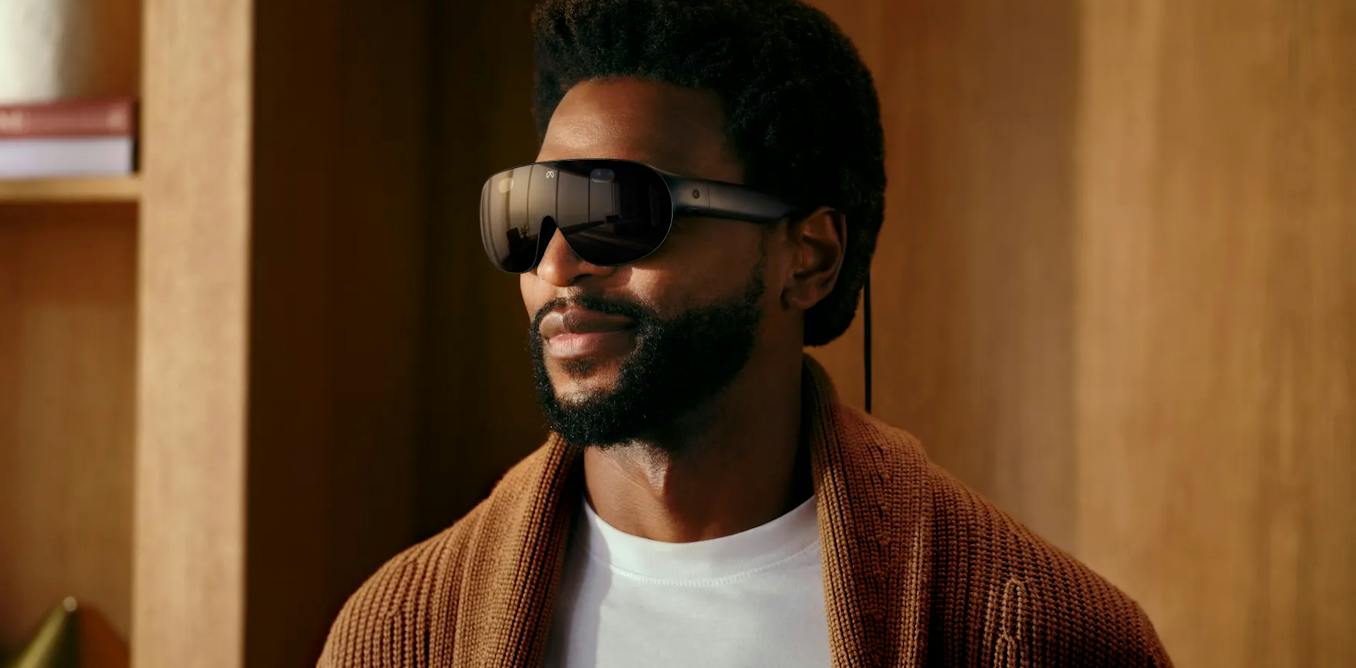
Two years after releasing its last virtual reality product, Meta has announced plans to release virtual reality (VR) glasses. They are due to reach the market in spring of 2027. With a lightweight and stylish form, the glasses could be the tipping point for mainstream VR adoption. Interest in virtual reality waxes and wanes. Versions of the technology have been around since the 1990s, but VR only really broke through at consumer level when Meta’s previous incarnation Facebook released Oculus Quest in 2019 (the company had bought Oculus five years earlier). VR got off to a great start, perhaps one of the very few technologies to benefit from COVID and lockdowns. Steady sales of Quest upgrades now mean Meta has shifted 20 million VR headsets worldwide to date. That’s where the good news for VR ends. The market decline became visible in the first quarter of 2024, when Apple’s Vision Pro proved to be a rare and expensive flop for the Mac and iPhone manufacturer. After selling 390,000 initial units worldwide, it could muster only 210,000 more after a muted chip upgrade. When we drill into the overall numbers of active VR users, we find a curious statistic. Released in 2020 and discontinued in 2024, the Quest 2 is still the most widely used VR device in the market. This is strange, considering there have been several updates since: the Quest Pro, Quest 3 and Quest 3S. It seems that once early adopters, gamers and enthusiasts had the technology in their hands, they were reluctant to upgrade. Newer headsets offered higher resolution and faster processing, but the advances were incremental rather than Earth-shattering. At £3,495, the Apple Vision Pro’s poor sales showed that gamers were reluctant to part with more than the price of a games console. As VR sales plateaued, Meta moved away from headsets. Starting in 2023 it partnered strategically with fashion brands like Ray-Ban and Oakley for its augmented reality, AI-powered product, Meta Glasses. Introducing Meta’s VR glasses (Meta). It was a smart move. Such accessories have been controversial due to privacy concerns over their ability to record video without other people knowing. But smart glasses have become must-haves for influencers and social media content creators. With marketing focused on jet-set activities, Meta Glasses have taken the device category out of the basement and onto the catwalk. With the announcement of Meta VR Glasses, the company is positioned to rebrand VR as sexy and stylish, focusing on media consumption rather than gaming. Crucially, they’re glasses, not a headset. They’re part of the already buoyant “wearables” niche now. That is, smart accessories like watches, rings and spectacles. Fancy ski glasses The Meta Quest 3, released in 2023, is five times heavier than Meta VR Glasses. The company’s engineering feat in making the new product so light has partly been accomplished by shifting some computing power into an accompanying brickette that Meta calls a “puck”. It’s essentially a computing core (powered by a Qualcomm Snapdragon processor) and battery, connected through a fibre-optic cable. Weighing 300g, the puck reduces the headset to a stereoscopic display resembling a fancy pair of ski glasses. The glasses – which weigh just 100g – can be worn for hours at a stretch, according to Meta, with a battery that can manage three hours of continuous high-resolution media playback. The new glasses are a far cry from Meta’s Quest series of VR headsets. Habanero Pixel The device will run Meta Horizon OS (operating system) and have access to a huge, existing catalogue of games, apps and experiences. However, it’s not positioned as a VR headset to rival its Quest precedessors. Instead, the new glasses are touted as a device for watching movies, attending live events, and replacing monitors. They will let users interact with multiple computer screens in their own environment, blending the real and virtual worlds. So far, so similar to the Apple Vision Pro. And while the US$1,299.99 (around £1,000) price point is a little kinder on the wallet, we’d be missing the point if we didn’t ask: what do Meta VR Glasses have that the Vision Pro doesn’t? Or, for that matter, any number of products from other developers, like the HTC Vive Flow or Xreal One Pro. Well, aside from the weight, price, back catalogue and the sleek good looks, there’s a massive, crucial difference. Meta VR Glasses have a ready-made audience. Meta has carefully incubated this demographic since 2021, developing AI glasses alongside its VR headsets. Meta’s smart wearable and VR headset categories are beginning to converge. Columbo.photog Partnerships with fashionable brands have enabled it to sidestep the “ick” of early VR. Mark Zuckerberg’s disastrously awkward demonstration of VR platform Horizon Worlds in 2022 failed to sell the Quest Pro to the mainstream, but Meta AI Glasses continued unharmed and unhindered. In fact, while the VR market has grown little recently, a 2026 report by the research company Omdia found that the smart glasses market expanded by 322% in 2025. Meta accounts for 85% of that global market. Now the two streams are about to converge. And though there’s no Ray-Ban version of Meta VR Glasses yet, the device will launch with significant partnerships. Disney+, Prime Video, YouTube, ESPN and Imax are among those already announced. Could this finally be the tipping point for widespread VR adoption? It’s not yet the holy grail – a hassle-free pair of glasses that wearers can just toggle into VR mode – but it’s a distinct step along the way. Crucially, it unites loyal followers from both sides of the style divide: the chic and the geek.
Why Meta’s new virtual reality glasses could finally take this technology primetime
Full Article
Original Source
Read the full article at Theconversation →KhanList aggregates and links to publicly available news content. We do not host full articles from third-party sources. Always verify important information with original sources.