
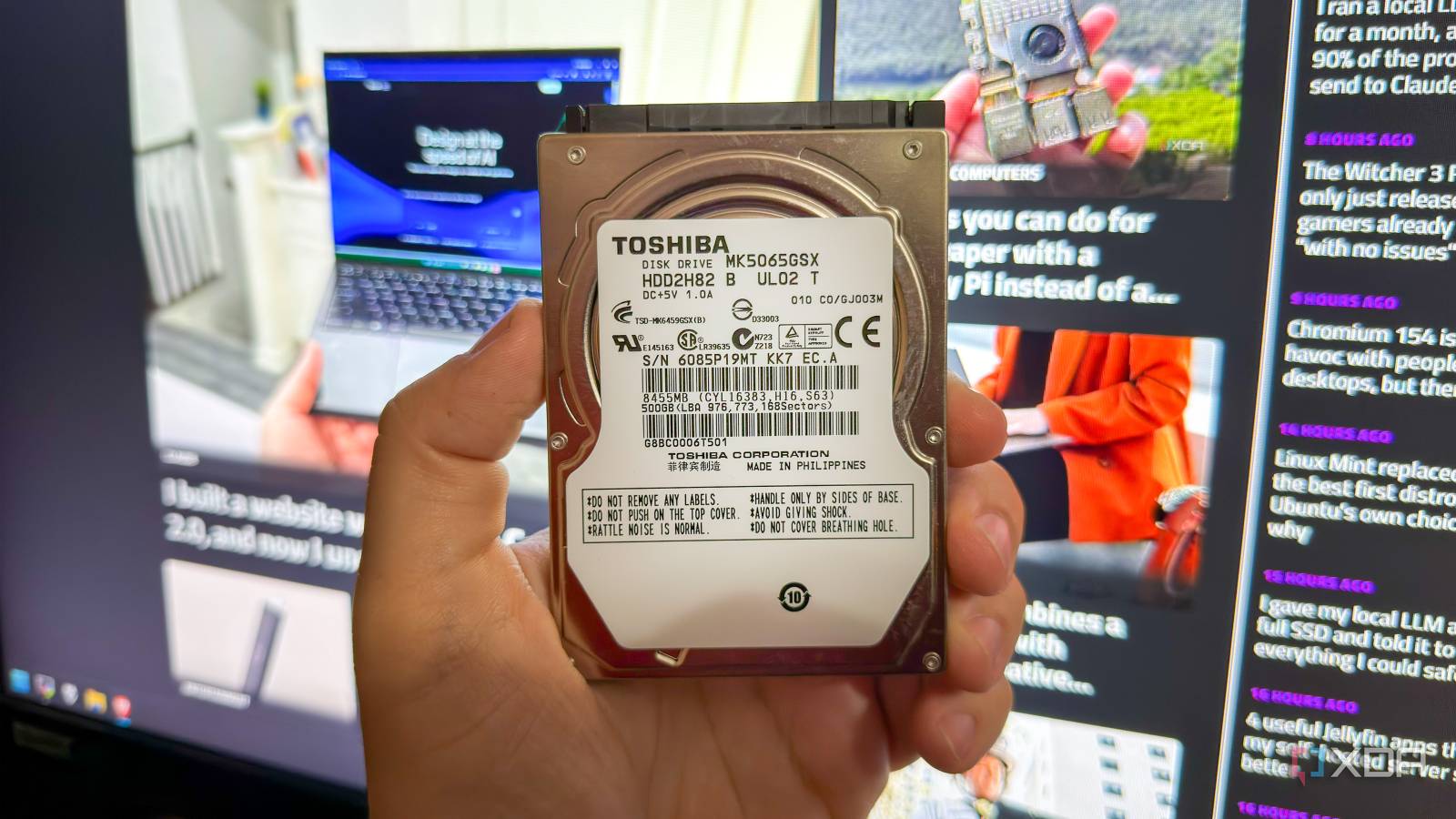
Published Oct 28, 2026, 8:00 PM EDT Simon is a Computer Science BSc graduate who has been writing about technology since 2014, and using Windows machines since 3.1. After working for an indie game studio and acting as the family's go-to technician for all computer issues, he found his passion for writing and decided to use his skill set to write about all things tech. Since beginning his writing career, he has written for many different publications such as WorldStart, Listverse, and MakeTechEasier. However, after finding his home at MakeUseOf in February 2019, he would eventually move on to its sister site, XDA, to bring the latest and greatest in Windows, Linux, and DIY electronics. If you used Windows back in the day, you probably remember whittling away the days watching the colorful defragmentation tool work away to help speed up your disk reads. And while the introduction of SSDs and automatic organization services in Windows has generally reduced the need to run the defragger (if at all), it's still a cool chapter in how we used our PCs back then. But when was the last time you defragged a Linux machine, even if it wasn't running off an SSD? There's a good chance you haven't; in fact, it's totally reasonable that a regular Linux user never feels the need to. And that difference shows how Windows grew up. Microsoft's architecture dates back to 1977 Back when Microsoft was chewing the FAT So, how come Windows on an HDD needs defragging to stay responsive, but Linux doesn't? Well, Microsoft's OS has quite a few more years on Team Tux. Back in 1977, Microsoft invented the File Allocation Table (FAT), which was designed for fitting data onto floppy disks. Floppies were quite tight on space (they were around 100 KB at the time), so FAT had to use some smart tactics to squeeze everything on. Fitting everything on was like trying to pack a tight suitcase. Everything was assigned a block and occupied that block. When a small block was deleted and a large block was added, the system couldn't afford to ignore that little block. To help fill the gap and keep as much space open as possible, the system would take a chunk out of the large block, put it into the smaller space, and then place the rest at the end. It helped save space, but now reading that one large block requires two reads from different locations, slowing things down. Things got weird when a block grew, usually because more data had been added. If another block had been positioned next to it by then, FAT would have to take the new block and place it somewhere else, further fragmenting the data on the drive. Defragging's goal was to sort all these blocks so that there were no breaks between them. It took a little bit of time to shuffle those blocks around, but once it was done, reading files got noticeably faster. Linux had the benefit of starting with Unix mentalities It didn't need to squish data onto a floppy disk 14 years after Microsoft used FAT on floppy disks, Linux entered the scene. Its inventor, Linus Torvalds, was inspired by the Unix OS when he attended the University of Helsinki. He wanted to work on operating systems at home, so he grabbed a copy of MINIX, an OS that existed to teach people how to code for operating systems. It wasn't based on Unix, but it was 'Unix-like', so it was a good fit. When Torvalds then moved on to making Linux, he took the Unix mentality and worked with it. Linux developers, specifically Rémy Card, designed a new format for the OS called 'ext'. This didn't use the same 'tight suitcase' storage method as FAT; its data architecture was more like islands. Each block was separate from the others and had room to "grow", so if anything new developed, it could just take new space without having to split the block into smaller pieces. Linux isn't totally free of the need for defragmentation, though. If you have minimal free space on a drive, or you download lots of gigabyte-sized files in small, randomized chunks, you may need to give your system a defrag to get things working smoothly again. But for regular use, the ext format didn't need defragging. Linux not needing a defrag isn't as strong a bonus as it once was Defragging isn't really needed these days Of course, this all implies that people run defraggers in the first place. With SSDs becoming affordable and people using them as primary drives for the OS and software, defragging falls out of the picture. In fact, it's highly recommended you never defrag an SSD, because the damage you do from the intense write actions supersedes the benefits you get from defragging. After all, fragmentation was a problem back when data drives (like HDDs) had moving parts that needed to physically seek out blocks of data. SSDs have no moving parts, so they have no seek time. However, the fact that Linux didn't need it nearly as much as Windows is a cool insight into how both operating systems started and how they grew. Microsoft didn't have the luxury to wait a decade or two before it jumped into the OS world; it had to work with what it had at the time. Meanwhile, Linus Torvalds could pick the foundation that suited his project, and that meant no defrags. Linux didn't need the same floppy disk tech as Microsoft While disk defragging is not nearly the mainstay maintenance tool as it once was, the story behind why Windows needed it, and Linux didn't, is pretty interesting. Regardless, I don't miss those long defrag days; I'll stick to SSDs, thanks.
Why Linux never needed defragging, while Windows relied on it for decades
Full Article
Original Source
Read the full article at Xda-developers →KhanList aggregates and links to publicly available news content. We do not host full articles from third-party sources. Always verify important information with original sources.