
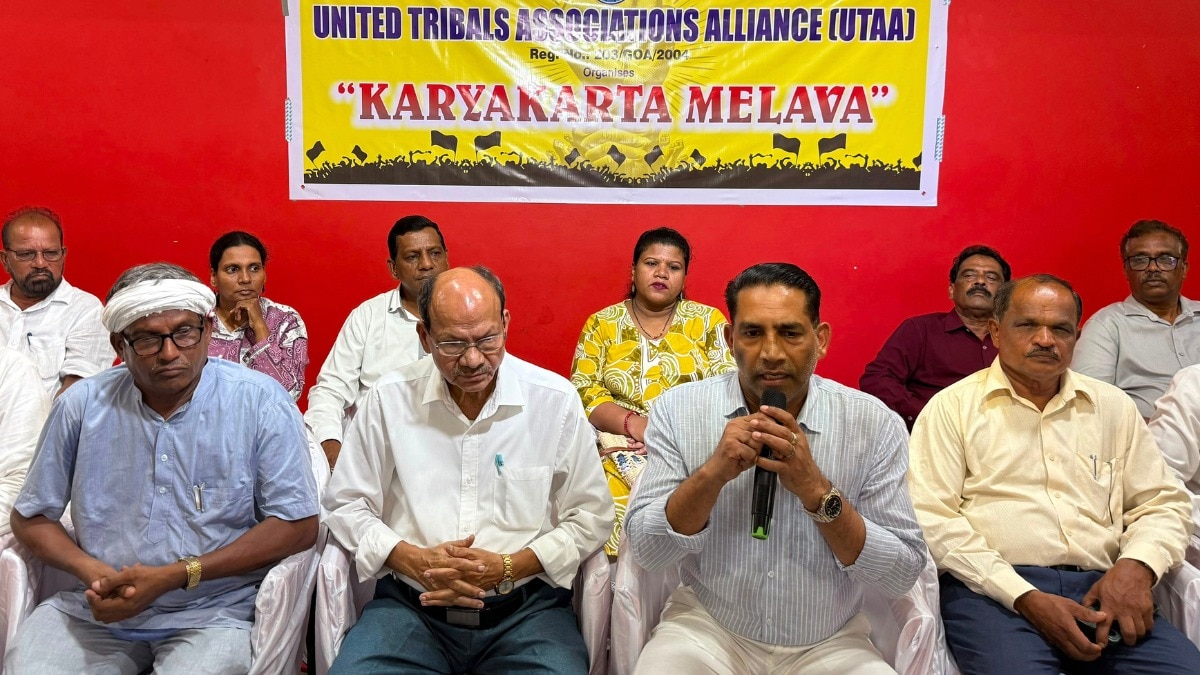
Kshatriya Maratha and Bhandari community outfits want the tribal quota in assembly seats to be implemented only after results of the ongoing censusThe Union government notifying political reservation for Scheduled Tribes (ST) in the 40-member Goa legislative assembly has prompted two of the largest social groups in the state to voice strong opinion on how these quotas should be implemented.Outfits representing the Kshatriya Marathas and Bhandaris, who together are estimated to form around half of Goa’s 1.6 million population, have called for the reservations to be implemented only after results of the ongoing census—in which castes will also be enumerated—are made public.Representatives of the outfits have submitted a memorandum of demands to chief minister Dr Pramod Sawant and other leaders. The demands include quotas on a rotational basis instead of an assembly seat being reserved for STs for perpetuity.The Centre has notified the Readjustment of Representation of Scheduled Tribes in Assembly Constituencies of the State of Goa Act, 2025. This is expected to reserve four seats in the legislative assembly for tribal communities, marking the culmination of a long-pending demand. Goa currently has four tribal MLAs elected from general catergory seats—minister Ramesh Tawadkar (Canacona), former minister Govind Gaude (Priol), legislative assembly speaker Ganesh Gaonkar (Sanvordem) of the BJP, and Independent Antonio Vas (Cortalim), who has declared support for the BJP.The challenge for the ruling BJP is whether the entire notification process and ensuing reservation of ST seats can be completed before assembly elections—due early next year but speculated to be held earlier. The party, which is facing anti-incumbency after three consecutive terms in office, must also handle the protest by the Gouly-Dhangars community for ST status.ST communities form around 10.2 per cent of Goa’s population, without any reservation in the legislative assembly. The Scheduled Castes (SCs) have one seat reserved—Pernem in North Goa. It is represented by the BJP’s Pravin Arlekar. In jobs and education, STs and SCs have 12.5 per cent and 2 per cent quotas, respectively.The Gauda, Kunbi and Velip communities were added to the ST list in 2003. They include both Hindus and Roman Catholics. The smaller tribal groups include Dubla, Siddi, Naikda, Varli and Dhodia.“A fresh caste enumeration is needed before political quota for STs is implemented. The last census was held 15 years ago. A delimitation exercise must also be conducted before this is done,” noted Suhas Faldesai, president of the Akhil Gomantak Kshatriya Maratha Samaj, noting that the state has undergone several demographic changes since then.The outfit has sought a “rotational system” of reservations for assembly segments. Faldesai said the Pernem seat had been reserved for SCs, which meant candidates from other categories could not contest from there. “We are not against reservations per se, but want them to be given only after following due procedure,” he emphasised.The Kshatriya Maratha community claims to form 18-20 per cent of Goa’s population (some estimates peg it at around 10 per cent) and has substantial numbers in all assembly seats barring Sangeum. Chief minister Sawant; ministers Vishwajit Rane and Subhash Phal Dessai; MLAs Ulhas Tuenkar, Rajesh Faldesai and Dr Chandrakant Shetye; and Rajya Sabha MP Sadanand Shet Tanavade belong to the community. Former Union minister Ramakant Khalap and former chief minister Laxmikant Parsekar are also Kshatriya Marathas.“The government is doing injustice to 90 per cent of the population to satisfy just 10 per cent of the people,” alleged Vijaykumar Kopre Dessai, vice-president of the Akhil Gomantak Kshatriya Maratha Samaj.It is estimated that two or three (Quepem, Sangeum, Canacona) of the four constituencies to be reserved for STs would fall in the newly-created Kushavati district, which has five seats. “Ensuring rotational reservations for SCs and STs would ensure that even those leaders outside these reserved seats would get a chance to contest the assembly elections. Otherwise, only entrenched leaders would benefit,” said Dessai. He warned that if their demands were not met, they would move court and vote against the BJP in the assembly elections.The Bhandari community, which is estimated at around a third of Goa’s population, has also voiced concerns over the ST quota. The community is part of the Other Backward Classes (OBC) category and recognised as the largest caste cohort in the state. Dikshak Naik Adpaikar, former president of the Gomantak Bhandari Samaj-Yuva Samiti, said the reservations must be rolled out only after the caste census and delimitation are completed. “No injustice must be perpetrated on anyone, be it them (tribal people) or us. Everyone must get their due share,” he said.Mashal Adpaikar, former general secretary of Gomantak Bhandari Samaj-Yuva Samiti, said basing the ST quota on the previous census could also work against the interests of tribal communities. “They are getting four reserved seats based on the population figure of 10 per cent (2011 census). What if the population has risen to 15 per cent? Implementing the quota in its present form would lead to injustice,” he claimed.However, Govind Shirodkar, vice-president of the United Tribals Associations Alliance (UTAA), which is spearheading the tribal quota demand, asserted that political reservations were the constitutional rights of the community. The population notified in the previous census could be considered for the quota instead of waiting for results of the ongoing census. “Otherwise, these reservations will stay pending for a decade,” he noted.The total tribal population in Goa is around 149,000, as per the 2011 census. Tribal communities are regarded as the original settlers and inhabitants of the state. North Goa is estimated to have a tribal population of 56,606, which is 6.9 per cent of the region’s population. In South Goa, it is 92,669 or 14.47 per cent.Political reservation has been an emotive issue for tribal communities in Goa. In May 2011, a protest by the UTAA in Balli had taken a violent turn and caused the death of two tribal youths. It cost the Congress, which was then in power, a substantial chunk of the tribal vote in the 2012 polls. The BJP has held onto power in Goa since then.The tribal unrest over quota demand is thought to have singed the BJP in the South Goa Lok Sabha seat in 2024. The party’s Pallavi Dempo was trounced by Captain Viriato Fernandes (retd) of the Congress.The Gouly-Dhangars, who are in the OBC category and constitute around 25,000 of the state’s population, have given the government an ultimatum of August 15 to concede their demand, which has been raised since the 1980s. However, the Registrar General of India and the Union ministry for tribal affairs have rejected the demand.The Gouly-Dhangars have the numbers to tip the scales in many assembly seats due to the smaller size of the electorate and thinner victory margins. For instance, in Sanquelim, Sawant had won by a wafer-thin margin of 666 votes in 2022. In Ponda, the late Ravi Naik, a veteran leader of the Bhandari community and a former chief minister, won by just 77 votes as a BJP nominee. In St Andre, Viresh Borkar of the Revolutionary Goans Party, won by just 76 votes.Observers said the BJP may be attempting to play both sides by reaching out to the tribal population with the promise of the quota, and also to opponents of the move. “The BJP may have purposely delayed the ST reservations. This could have been achieved four years ago. Now, no one is sure if the process would be completed in the next few months,” said political analyst Raju Nayak.Subscribe to India Today Magazine- EndsPublished By: Yashwardhan SinghPublished On: Aug 12, 2026 19:14 IST
Why key social groups in Goa red-flagged political quota for Scheduled Tribes
Full Article
Original Source
Read the full article at Indiatoday →KhanList aggregates and links to publicly available news content. We do not host full articles from third-party sources. Always verify important information with original sources.