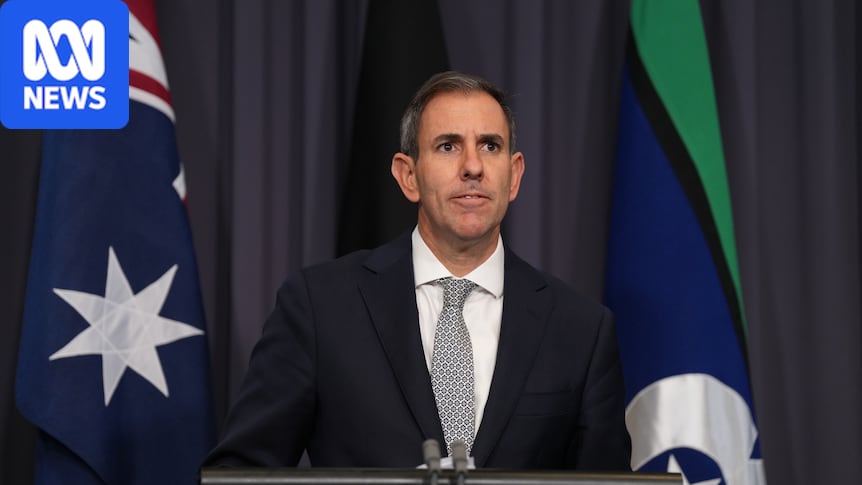
There were no bold declarations about corners being turned or missions being accomplished.After delivering a pre-election prediction that "the worst of the inflation challenge is behind us", only to see inflation then steadily rise, Jim Chalmers is now more cautious.Yet the Treasurer was undeniably upbeat yesterday. He welcomed data showing inflation running slightly below where both his department and the Reserve Bank expected it to be just a few months ago.Headline inflation fell for the third consecutive month to 3.8 per cent. Underlying inflation remains at 3.6 per cent.Still too high, to be sure. But fears of another interest rate rise have eased. Some economists reckon the Reserve Bank will now sit tight for the rest of the year.That's a reprieve for stretched households and businesses. And a major relief for the government, which itself identifies cost-of-living frustration as the main source of fuel for One Nation.The Treasurer was undeniably upbeat as he welcomed data showing inflation running slightly below where both his department and the Reserve Bank expected it to be just a few months ago. (ABC News: Matt Roberts)'The trend is clearly our friend'Slightly lower inflation means slightly less revenue flowing into government coffers via bracket creep, but Labor is far more concerned about the economic and political pain high inflation always manages to inflict."The trend is clearly our friend," notes independent economist Chris Richardson."So far we have dodged a number of bullets," he tells this column, notably the price of oil not surging quite as high as some initially feared.The important caveat, however, are the words "so far".Richardson sees two main risks.The first is beyond Australia's control."We are somewhat reliant on the compromising ability of both Trump and the Revolutionary Guard," says Richardson, pointing to the highly volatile situation in the Middle East.Even as the inflation figures were being welcomed in Australia yesterday, the conflict between the US and Iran appeared to be escalating once again. Saudi Arabia joined the US in conducting strikes against Iranian proxy forces in Iraq, marking Riyadh's direct entry into the war. It follows Saudi claims of attacks on its oil facilities by Iranian-backed militias in Iraq.Spending into the gapThe second risk to domestic inflation, as Richardson sees it, is the government itself.If inflation is seen to be easing, will the government feel it has more wiggle room to "spend into the gap"?Whether it's energy rebates, fuel excise relief, student debt relief, cheaper medicines, or tax cuts, Labor has taken pride in its willingness to spend, even if critics say it's only made the inflation problem worse.The decision to halt fuel excise relief this week, however, is a sign of some restraint.Despite the ongoing risk of another spike in oil prices, the treasurer was clear yesterday about the plan to phase out the remaining 16-cents-a-litre excise discount. "That fuel excise relief will end at midnight on Sunday," he said. The government needs inflation to keep falling without the headline rate being artificially forced lower by an expensive excise cut. It also needs its various efforts to boost productivity to start showing some results.Reserve Bank Governor Michele Bullock delivered yet another warning this week about "persistently weak productivity growth", which she said has "weighed on real incomes and growth for many years". As Chalmers has often noted, boosting productivity involves dozens of practical reforms, rather than one magic bullet. Every little bit helps.This is no doubt one of the reasons why the Treasurer was so effusive about the "outstanding" new Premier of Victoria, Ben Carroll.Chalmers was notably quick to endorse the first decision of Carroll, a fellow traveller from Labor's right faction, to call a royal commission into alleged corruption in Victoria's building industry.He backed the premier's move without even being asked."The reason why we support that is because it's consistent with our zero tolerance at the federal level for corruption," the treasurer revealed.It's the first time we've heard that.Federal Labor had long adopted a stony silence as former premier Jacinta Allen refused to call an inquiry. Even as more claims of CFMEU-inflated contracts came to light, the Albanese government refused to offer a view as to whether a royal commission might help.Cleaning up the construction sector in Victoria could well deliver national productivity benefits across the building industry by lowering costs, something Chalmers would surely welcome.The treasurer is on boardThe federal government will also be keenly anticipating the new premier's pending decision on the future of the enormously expensive Suburban Rail Loop.This contentious project is also blamed by some analysts for pushing up costs across the construction industry.The Commonwealth could easily redirect the whopping $6 billion it's already committed to the project.Not everyone in federal Labor is convinced the change of leadership in Victoria is a good idea this close to the state election in November. The jury is still out. Some privately fear there will be aftershocks and recriminations. Others say it was a pragmatic move that obviously gives Labor a fighting chance.The treasurer, looking for anything that might help the national economy, is clearly on board.David Speers is national political lead and host of Insiders, which airs on ABC TV at 9am on Sunday or on iview.
Why Jim Chalmers is cautious but upbeat
Full Article
Original Source
Read the full article at Abc →KhanList aggregates and links to publicly available news content. We do not host full articles from third-party sources. Always verify important information with original sources.