
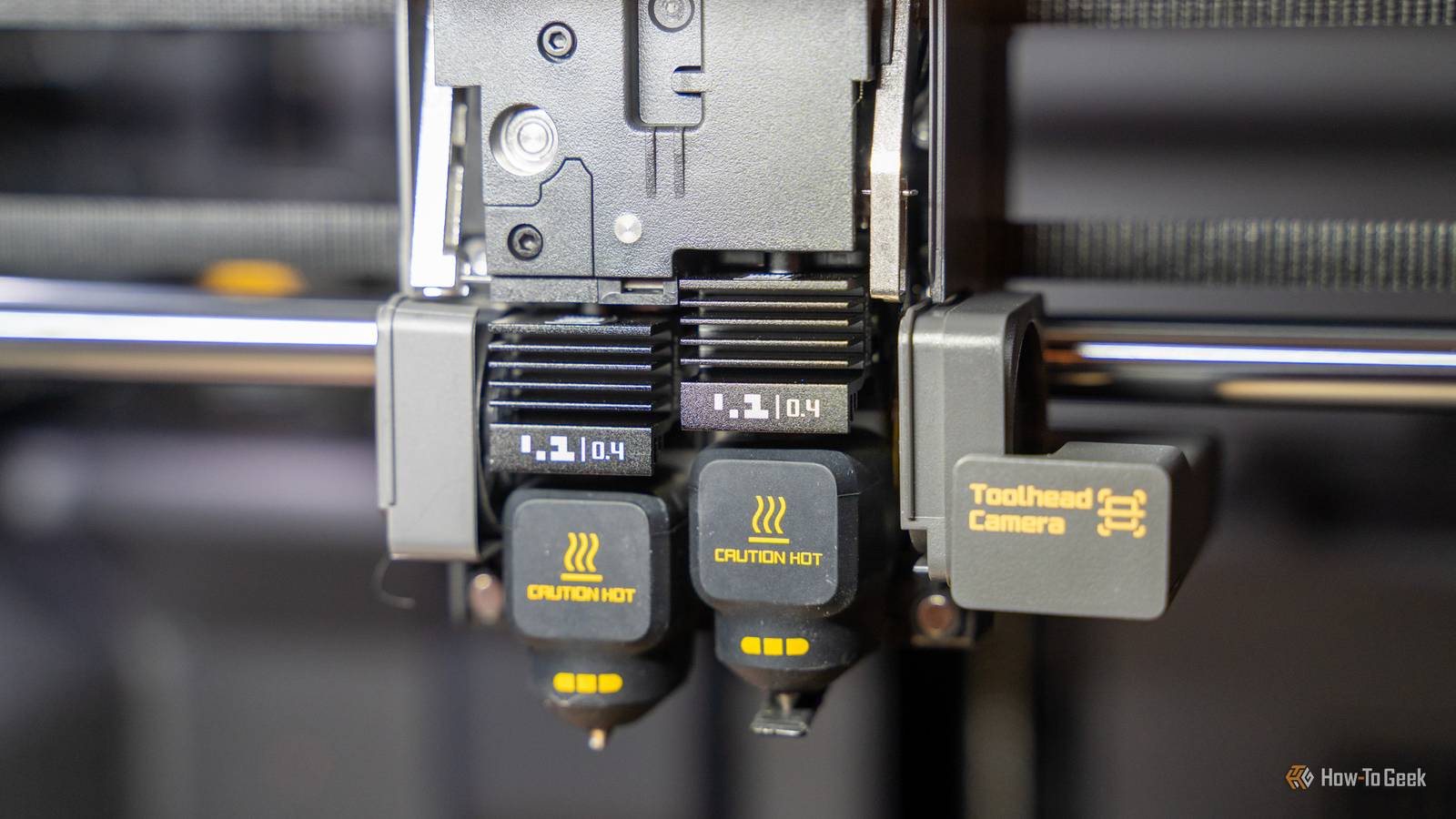
Published Sep 9, 2026, 6:00 AM EDT Tim has been covering technology for almost 20 years, in that time spanning a broad range of topics from security to product reviews. He is especially focused on the Apple ecosystem, productivity, and consumer advice. Over the years Tim has written thousands of articles, reviews, and round-ups in addition to producing video content and original photography. A graduate of journalism, he found his footing as a freelancer with a laptop and loves how he is able to work from practically anywhere. Now a Senior Editor for iPhone, Mac, and Smart Home at How-To Geek, Tim still loves to write. He can also be found crafting round-ups and productivity posts for the Zapier blog. Earlier in his career Tim spent nearly a decade as a writer and eventually Apple section editor for MakeUseOf. Tim currently lives in Brisbane, Australia. Outside of work he loves to hike and work out, play video games, and spend quality time with his wonderful partner and two cats Inka and Roger. It’s been an interesting year for 3D printers. We’ve had brand new models, updated favorites, and several companies making big strides to push the technology forward. We’ve also had some disappointments that have me feeling a little more skeptical than I was last year. Bambu Lab has been upsetting people again Legal threats and cloud lockdowns Credit: Tim Brookes / How-To Geek Bambu Lab is no stranger to controversy, with the company first drawing the ire of 3D printer owners in mid-2025 when it announced a “security” update to its printer firmware. The change means that printers now refuse to communicate over the cloud with slicers that don’t use Bambu Connect. Bambu Connect is a closed-source plugin, and refusal to adopt it means that a slicer cannot natively work with a cloud-enabled Bambu Lab printer. The only way to use a slicer that lacks the component is by enabling LAN and Developer modes on your Bambu Lab printer, which cuts off all cloud connectivity (including the useful Bambu Handy mobile app). Following the work of one open-source developer to restore cloud functionality to an OrcaSlicer fork, the company threatened legal action and forced the developer to take the project down. This sparked a bigger debate about the true open-source nature of Bambu Lab’s slicer, which was forked from Prusa Slicer (itself a fork of Slic3r), under a GNU “copyleft” license. Not only did Bambu Lab annoy a lot of people and draw attention from big-name consumer rights advocates, but its legal threats arguably made the problem worse as the Streisand Effect drew attention from far and wide. OrcaSlicer, a popular third-party alternative to Bambu Studio that works with a vast range of non-Bambu Lab models, eventually incorporated Bambu Connect as an optional plugin. The move further fueled sentiment that Bambu Lab’s restrictive nature is less about security and protecting its users and more about building the walls of its walled garden ecosystem ever higher. Bambu Lab continues to make excellent 3D printers, but the cloud that hangs over the company’s head is looking increasingly stormy as time goes on. How not to communicate with your customers The use of 3D printers to produce items that fall outside of the law is an ongoing concern, with certain states and governments deliberating on how the issue should be handled. 3D printer manufacturer Flashforge managed to wade into the debate in the least tactful manner possible with a spate of controversial social media advertisements that had owners seeing red. The company’s choice of language was unfortunate, stating that “violations may lead to account termination and referral to authorities” should the rules be breached. This led to a flurry of owners declaring that they would only use their printers in offline mode, swearing off the brand due to perceived monitoring of their printing history, and an uptick in concern regarding a perceived crackdown on the freedom that 3D printer owners have enjoyed thus far. Take a moment to consider how such a move would be received in other industries, like automotive. However you feel about the potential threats to safety posed by 3D printing, “referral to authorities” probably isn’t something you want to see in any marketing copy. Prusa’s INDX drew mixed reviews and sparked controversy Et tu, Prusa? Credit: Prusa / Bondtech Prusa makes pricey printers that have earned them a cult-like following among enthusiasts. The company emerged from the RepRap days and fully embraced the notion of open-source 3D printing, before slowly pulling back on that policy with the release of its flagship Core One+ in the face of mass-produced rivals like Bambu Lab. Despite this, Prusa rarely draws controversy, which is what made the so-called “Nozzlegate” debacle such a surprise. This surrounds the company’s INDX add-on, a toolchanger that is designed to allow for faster and more efficient multi-material printing. Prusa paired with a Swedish company called Bondtech to bring the product to market. After promising that the INDX would ship with hardened nozzles, the company stated that the nozzles were in fact steel “hardened through nitrocarburising” but “not intended for prolonged use with highly abrasive filaments.” This led to an outpouring of anger from the community, many of whom were already losing patience in the face of ongoing delays. The current state of 3D printing Not all attention is good attention Credit: Tim Brookes / How-To Geek 3D printers have evolved a lot in the last few years. Fully automated bed leveling and calibration is now the norm. Your printer can walk you through basic maintenance routines like performing a cold pull. You can swap nozzles without reaching for a screwdriver, and your printer can even detect which filament you have loaded or when a print slips off the bed. We’re now at a stage where print quality isn’t the be-all and end all. Manufacturers are trying to solve problems like the amount of waste produced by multicolor prints, while others double down on the value proposition that production at scale offers—all while desperately “protecting” the community and ecosystems they have developed through different approaches. We’re past the point of Prusa being the open-source darling, or Bambu Lab being the only manufacturer that offers fuss-free and accessible “plug and print” user-friendliness. We’re now in the era of corporate overreach, marketing missteps, and biting off more than you can chew. Are you new to the world of 3D printing? Check out our 3D printer glossary and a warning about buying the “perfect” printer.
Why I've stopped trusting 3D printer manufacturers after a year of broken promises
Full Article
Original Source
Read the full article at Howtogeek →KhanList aggregates and links to publicly available news content. We do not host full articles from third-party sources. Always verify important information with original sources.