
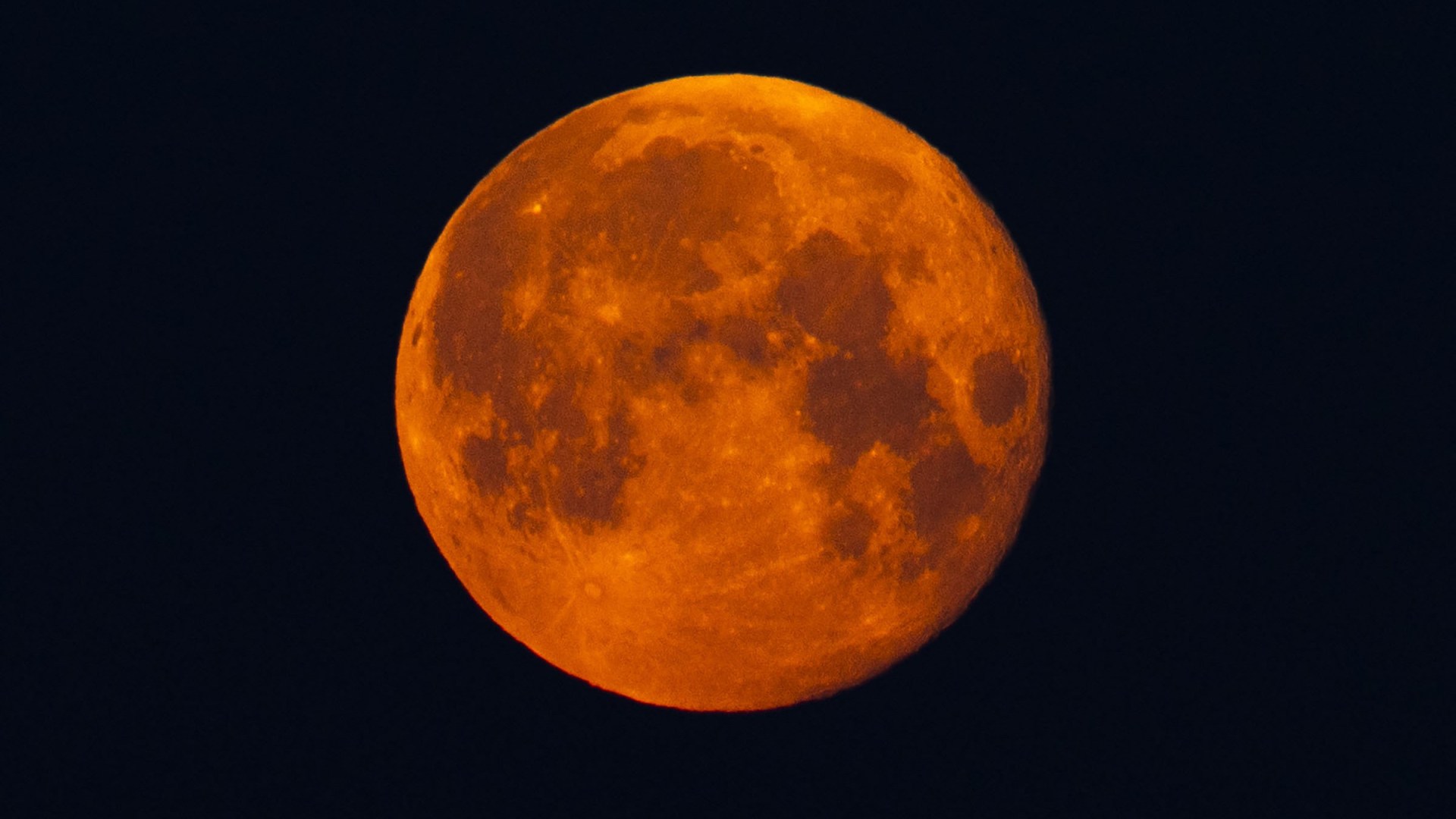
THE moon has turned a copper-red tone tonight, leaving stargazers across Britain in astonishment. While the sudden, dramatic change in colour may look extraordinary, there is no reason to worry, as the Blood Moon is a well-known natural phenomenon. The Moon receives only indirect sunlight filtered through Earth’s atmosphere during a lunar eclipse Credit: AFP The UK experiences a partial lunar eclipse in the early hours of Friday, August 28, with more than 93% of the moon’s face plunging into the darkest part of Earth’s shadow. Read more to find the exact time when the Blood Moon will be at its peak. Sign up for The Sun newsletter Thank you! What is a Blood Moon? The Blood Moon is a phenomenon caused by a total or near-total lunar eclipse. A lunar eclipse occurs when the Earth positions itself directly between the Sun and the Moon, stopping sunlight from directly reaching the lunar surface. Instead of bright, direct rays, the Moon receives only indirect sunlight filtered through Earth’s atmosphere during a lunar eclipse. This atmospheric filtering scatters shorter blue light waves and lets longer red wavelengths pass through, casting a deep crimson or copper glow across the lunar surface – the “Blood Moon” effect. These wavelengths are then reflected back towards Earth. The exact shade of red can vary significantly, as it depends on what is currently floating in Earth’s atmosphere. Most read in The Sun Higher amounts of clouds, dust, wildfire smoke and ash will filter the light even more, causing the moon to appear a much darker crimson or near-black in some cases. What is the ‘moon illusion’? The moon illusion is an optical illusion where the moon appears much larger when it is near the horizon than when it is high in the sky. Despite how it looks to your eyes, the Moon’s physical size and actual distance from Earth do not change throughout the night. There is a simple way how to prove it: If you take a photo of the moon at the horizon and at its highest point using the exact same camera settings, the moon will be identical in size in both images — it is entirely a trick played by the human brain. The moon illusion occurs just after moonrise and just before moonset. On Thursday, August 27, the moon rises in the UK at 7.44pm and sets at 4.59am on Friday, August 28. This means that the Blood Moon is expected to look even more dramatic between 5am and 6am when it sits low on the horizon. When is the best time to see the lunar eclipse? The eclipse itself will be visible for hours, but the action kicks off at 2.23am on Friday, August 28, as Earth’s outer shadow first touches the Moon, causing a subtle dimming. The partial eclipse officially begins at 3.33am, when a distinct dark ‘bite’ will appear across the lunar disk as it enters the Earth’s main shadow. The peak of the eclipse will arrive at 5.12am, when maximum coverage will cause the Moon to glow in dramatic reddish-orange hues – the “Blood Moon” effect. Around 6.15am, the Moon dips below the horizon, wrapping up visibility across the UK. How and where to watch the lunar eclipse? Your primary goal is to secure an unobstructed line of sight. Seek out high ground like a local hilltop, an open park or a west-facing coastline to ensure tall buildings, trees or hills do not block your view. While the red glow of the Moon will be bright enough to spot from suburban back gardens, stepping away from light pollution and city streetlights will make the spectacle more vivid. Unlike the solar eclipse seen earlier this month, you can leave the specialist eyewear in the drawer and look directly at the Moon with the naked eye. You don’t need to bring any special gear, but if you are lucky enough to own a pair of binoculars or a camera with a zoom lens, you should be able to get a closer look at the crimson-lit craters. Comment now
Why is the moon so big and red tonight? The ‘blood moon’ phenomenon and ‘moon illusion’ explained
Full Article
Original Source
Read the full article at Thesun →KhanList aggregates and links to publicly available news content. We do not host full articles from third-party sources. Always verify important information with original sources.