
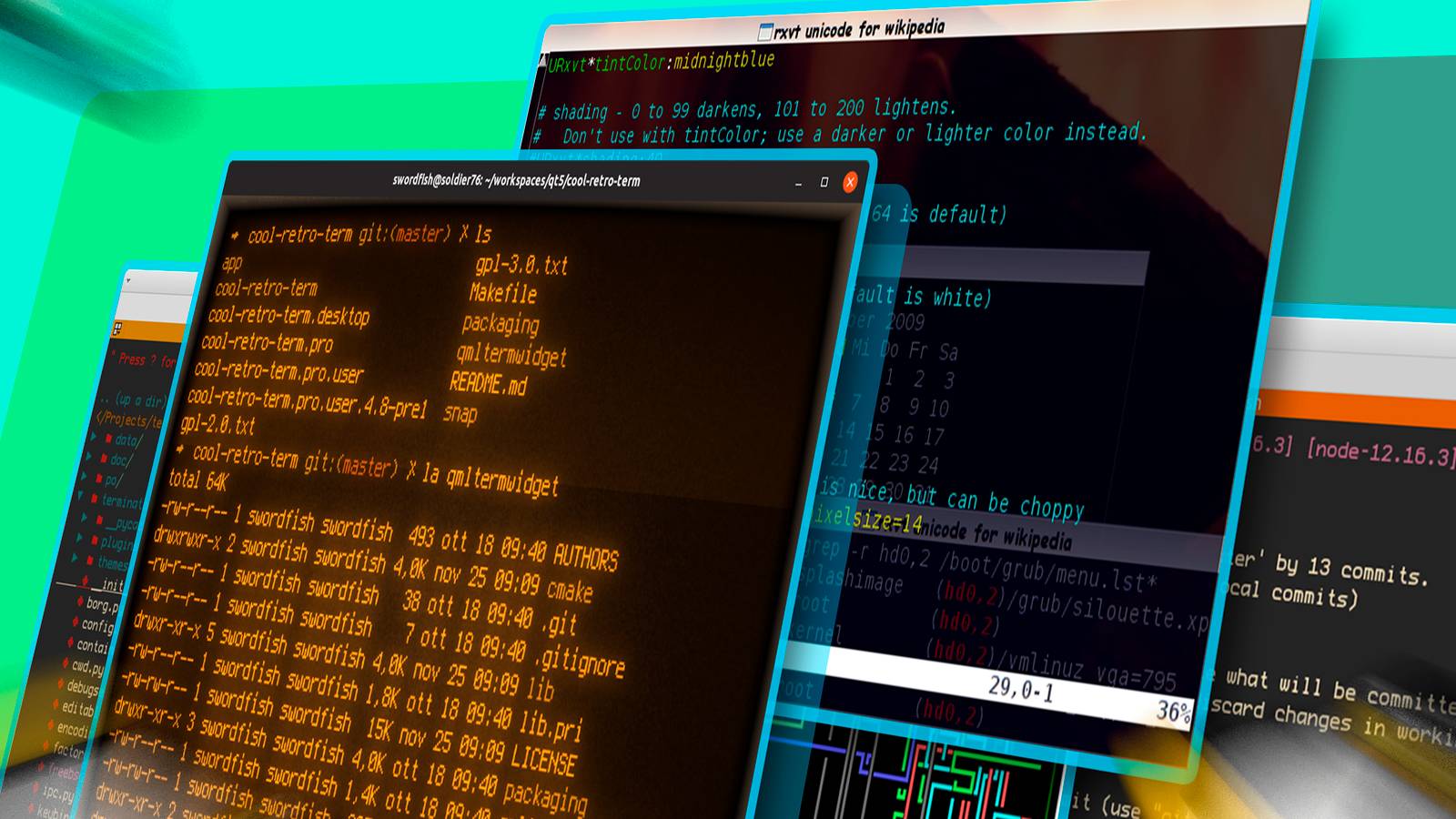
Published Oct 1, 2026, 9:30 AM EDT Dave McKay first used computers when punched paper tape was in vogue, and he has been programming ever since. After over 30 years in the IT industry, he became a full-time technology journalist. His first published article, describing macros in 6502 assembly language, was published in the December 1985 edition of the UK magazine Personal Computer World. His work has appeared on How-To Geek since March 2019. Despite graduating from Sheffield University as an archaeologist, during his career he's worked as a freelance programmer, manager of an international software development team, project manager for IT installations, and a Data Protection Officer. Dave is a Linux evangelist and open source advocate. Since 1997, all of Dave's computers have run Linux. He is a frequent guest speaker at national conferences, usually talking about topics such as artificial intelligence, data protection legislation, and cybersecurity. Expect detailed how-to's, distribution reviews, and Linux-centric editorials. Once you start to dabble with Linux, you’ll encounter the phrase “terminal emulator” over and over again. You might be familiar with games emulators, but don’t be misled. This is very different. Not the emulator you might be thinking of Although you're not too far off In general conversation, when you hear the word emulator, it’s frequently used in the context of games emulation. In particular, it’s usually associated with retro games emulation. If you want to play the video games of yesteryear, you either need to have access to a working example of the original hardware, or you need a way to run the game on modern hardware. There are modern devices you can buy that will play old video games, and some even come preloaded with games. Apart from using actual dedicated hardware, you can use software emulators on smartphones and computers. These mimic the original hardware so that, as far as the game is concerned, it’s running on its original target platform. On Linux, a terminal emulator fulfills an entirely different need. What does a terminal emulator emulate? A "terminal" used to be a real physical thing A gaming emulator emulates hardware, and so does a terminal emulator. But that’s about the only similarity. Linux is based on Unix, an operating system from the early 1970s. Computing back then was carried out on large computers that supported concurrent connections from multiple users, each of whom used a terminal. The terminal had a screen and a keyboard, and a connection back to the main computer. The user interface was text based. There was a command prompt that allowed you to enter and run commands, and launch programs. Your terminal allowed you to communicate with the computer, and to access its computational power. There was no computational power in the terminal itself, so they were often called dumb terminals. A terminal with no connection to the actual computer was useless. There’s a direct line of descent from the earliest teleprinters of the 1830s and 1840s, through the teletypewriters of the 1880s, to the terminals of the 1970s. And the hardware terminals of the 1970s live on, replicated in software, in the terminal emulators found in today’s Linux. In fact, the nickname for the teletypewriter, tty, lives on as a command you can still type on your Linux command line today. The difference is, the terminal emulator hosts a command shell, such as Bash or Zsh. The shell handles or brokers your input, not a remote mainframe. You'll hear phrases such as the Linux command line, a terminal window, a command prompt, and so on. They’re all referring to the same thing: a software emulation of a physical terminal that lets you type commands into your computer, and read its responses. Quiz 8 Questions · Test Your KnowledgeFun facts and quirky history of the internetTrivia challengeFrom the first email to the birth of the web — how well do you really know the internet's wildest moments?OriginsMilestonesProtocolsCulturePioneersBegin What was the name of the first operational packet-switching network, widely considered the precursor to the modern internet?AMILNETBCSNETCARPANETDNSFNETThat's right — ARPANET! Funded by the U.S. Department of Defense's Advanced Research Projects Agency, ARPANET sent its first message in 1969. The network pioneered packet-switching technology, which remains the backbone of how data travels across the internet today.Not quite — the answer is ARPANET. Launched in 1969 with funding from the U.S. Department of Defense, ARPANET was the first network to use packet-switching at scale. MILNET, CSNET, and NSFNET all came later and built upon ARPANET's groundbreaking foundation.Continue What was the content of the very first message ever sent over ARPANET in 1969?AHELLOBLOCTESTDLOGINCorrect! The first intended message was 'LOGIN', but the system crashed after just two letters — making 'LO' the unintentional first message ever sent over the network. It's a fittingly quirky beginning for something that would change the world.The answer is actually 'LO' — and it was an accident! Programmers at UCLA were trying to type 'LOGIN' to connect to a system at Stanford, but the receiving computer crashed after just the first two characters. The internet literally crashed on its very first message.Continue Who is credited with inventing the World Wide Web in 1989?AVint CerfBTim Berners-LeeCBob KahnDMarc AndreessenSpot on! Tim Berners-Lee, a British scientist working at CERN, proposed the World Wide Web in 1989 as a way to share information among researchers. He also created the first web browser and the first website, and he has never sought to profit from his invention.The correct answer is Tim Berners-Lee. While Vint Cerf and Bob Kahn co-invented the TCP/IP protocols that underpin the internet, and Marc Andreessen later created the influential Mosaic browser, it was Berners-Lee who invented the Web itself — HTML, HTTP, and all — at CERN in 1989.Continue What was the first item ever sold on eBay, back in 1995?AA baseball cardBA used laptop computerCA broken laser pointerDA Pez dispenserYou got it! eBay founder Pierre Omidyar listed a broken laser pointer as a test item and was stunned when it sold for $14.83. He even contacted the buyer to confirm they understood it was broken — and the buyer replied that they collected broken laser pointers. A perfect start for the internet's biggest auction site.The first item sold on eBay was actually a broken laser pointer, which fetched $14.83 in 1995. Founder Pierre Omidyar listed it as a test, fully expecting no one to buy a broken item. The Pez dispenser story is a popular myth that eBay itself once promoted, but it has since been debunked.Continue What does the 'HTTP' in a web address stand for?AHypertext Transfer ProtocolBHybrid Text Transmission ProcessCHyperlink and Text Transmission ProtocolDHigh-speed Text Transfer ProgramCorrect! HTTP stands for Hypertext Transfer Protocol, the foundational system that defines how messages are formatted and transmitted across the web. It was designed by Tim Berners-Lee in 1989 and remains the basis for data communication on the World Wide Web today.The correct answer is Hypertext Transfer Protocol. HTTP is the set of rules governing how web browsers and servers communicate with each other. The 'S' in HTTPS stands for 'Secure', meaning the connection is encrypted using SSL or TLS technology to protect your data.Continue In what year was the first ever spam email sent?A1971B1978C1983D1991Well done! The first spam email was sent in 1978 by Gary Thuerk, a marketer at Digital Equipment Corporation. He blasted an unsolicited advertisement to 393 ARPANET users to promote a new computer — and received both angry complaints and actual sales. The age of spam had officially begun.The first spam email was actually sent in 1978 by Gary Thuerk of Digital Equipment Corporation. He mass-emailed 393 ARPANET users advertising a new product, causing considerable outrage among the network's tight-knit community. Thuerk is sometimes nicknamed the 'Father of Spam' — not exactly a title to be proud of.Continue Which country had the first national top-level domain (ccTLD) ever assigned on the internet?AUnited StatesBJapanCUnited KingdomDIcelandCorrect! The United Kingdom's '.uk' domain was among the very first country-code top-level domains assigned in 1985. Interestingly, the U.S. already used generic domains like '.edu' and '.gov' rather than a country code, which is why '.us' was rarely adopted domestically.The answer is the United Kingdom, whose '.uk' domain was one of the first country-code top-level domains assigned in 1985. The U.S. had little need for a '.us' domain since American institutions already used generic domains like '.edu', '.gov', and '.com' from the very beginning.Continue What is the name of the very first website ever published, and it is still accessible today?Ainfo.cern.chBwww.w3.orgChome.cern.chDweb.mit.eduExcellent! The world's first website was published at info.cern.ch by Tim Berners-Lee on August 6, 1991. It was a simple page explaining what the World Wide Web was and how to use it. CERN has lovingly restored the original page, and you can still visit it today as a piece of living internet history.The correct answer is info.cern.ch, the address of the very first website ever published, created by Tim Berners-Lee at CERN on August 6, 1991. The page simply explained what the World Wide Web project was. CERN has preserved and restored it so that anyone curious can visit a genuine piece of internet history right now.See My Score Challenge CompleteYour Score/ 8Thanks for playing!Try Again Perhaps a better word would be “emulation” Semantics, I suppose When I hear the word emulator, rightly or wrongly, I think of something that can emulate things. Not a single thing, multiple things. If an impressionist could only do an impression of a single person, are they really an impressionist? Or are they a celebrity impersonator? It’s common for software-based gaming emulators to accept plug-ins, allowing them to mimic a variety of hardware platforms, so the user can play games designed for each of those different gaming devices. A terminal emulator emulates one thing only–a physical terminal–so maybe it should be called a terminal emulation. Whilst a terminal emulator could be viewed as something of a one-trick pony, there are many terminal emulators to choose from. And some of them provide enough bells and whistles to turn the one-trick pony into Champion the Wonder Horse. Terminator allows you to open and arrange multiple terminal windows in one desktop window. We installed it on Ubuntu with: sudo apt install terminator On Fedora, you should type: sudo dnf install terminator For Manjaro users, your command is: sudo pacman -S terminator Whenever you press F12, Guake opens a drop-down terminal window. It’s handy to have a terminal window appear and disappear with a single click of a button. It also supports multiple sub-windows. To install Guake on Ubuntu, use: sudo apt install guake On Fedora, you need to type: sudo dnf install guake On Manjaro, use: sudo pacman -S guake Tilix offers multiple tiled terminal windows, with easy buttons to split the current terminal window horizontally or vertically. To install Tilix on Ubuntu, type: sudo apt install tilix The command for Fedora is: sudo dnf install tilix The install command on Manjaro is: sudo pacman -S terminator We’ve covered Cool Retro Terminal elsewhere. It's a just-for-fun terminal emulator, whose party trick is looking just like those cathode ray tube terminals from the early days of computing. It’s a whole new spin on retro. There are many terminal emulators out there. These are just some that were recommended by the other Linux writers at How-To Geek. It’s all terminology Emulator or emulation? As long as they’re easy to install, fun to use, and they make you productive, that’s all that counts.
Why is it called a terminal "emulator"?
Full Article
Original Source
Read the full article at Howtogeek →KhanList aggregates and links to publicly available news content. We do not host full articles from third-party sources. Always verify important information with original sources.