
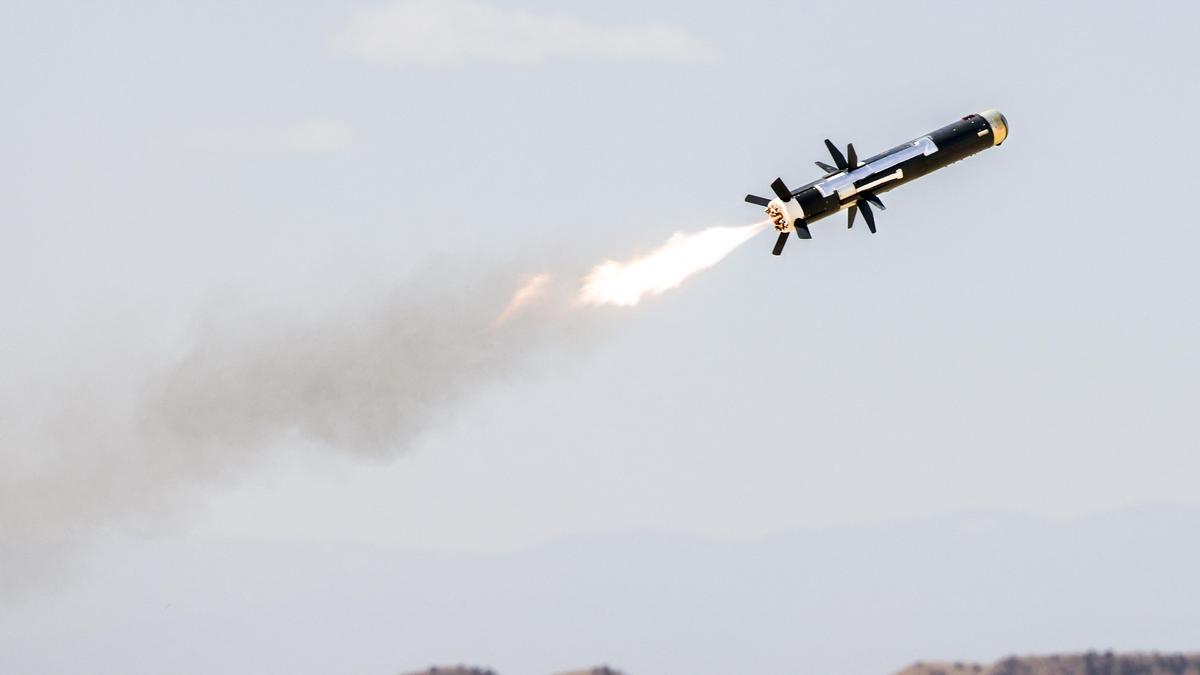
India’s decision to acquire the U.S.-made Javelin anti-tank guided missile system marks an important addition to the Indian Army’s infantry anti-armour capabilities, particularly at a time when modern warfare has reinforced the importance of highly mobile, precision-guided weapons against tanks and armoured vehicles.The Indian Army has signed a Letter of Offer and Acceptance (LOA) for the Javelin system through the U.S. Foreign Military Sales programme, making India a customer of one of the world’s best-known shoulder-fired anti-tank missile systems. The acquisition also opens the possibility of co-production in India, with Tata Advanced Systems Limited (TASL) and the Javelin Joint Venture having signed a memorandum of understanding to explore final assembly and integration of the Javelin All Up Round in the country.The Javelin’s induction took nearly 15 years because India and the U.S. could not initially bridge differences over technology transfer and local production. India subsequently pursued indigenous alternatives, including the DRDO-developed MPATGM, while acquiring limited quantities of Israeli Spike missiles for urgent requirements. With modern battlefield lessons highlighting the importance of portable, fire-and-forget weapons, the latest FMS purchase and proposed co-production arrangement have finally created a mutually acceptable framework.A battle-proven, fire-and-forget weaponThe biggest attraction of the Javelin is its fire-and-forget capability. Unlike older generations of anti-tank guided missiles that require the operator to continue guiding the weapon towards the target, a Javelin operator can launch the missile and immediately move to another position.This is a significant advantage on a modern battlefield, where missile teams can themselves become targets within seconds of firing. The ability to engage and relocate improves the survivability of infantry soldiers operating close to enemy armour.The medium-range missile is designed to engage tanks, armoured vehicles and fortified positions. Its combat reputation has also been strengthened by its operational use in several conflicts, most prominently in Ukraine, where portable anti-tank weapons demonstrated their ability to challenge much larger armoured formations.What are the military advantages that India will gain?For India, the system provides an immediately available and proven capability at a time when anti-armour warfare is becoming increasingly decentralised and mobile. One of Javelin’s key advantages is its top-attack capability, allowing the missile to strike a tank from above, where armour protection is generally thinner and more vulnerable than the heavily protected front and sides.India already has multiple anti-tank missile programmes and systems, but these cater to different operational requirements.The Defence Research and Development Organisation’s Man-Portable Anti-Tank Guided Missile (MPATGM) represents an important indigenous effort in the shoulder-fired category. While the programme has made progress through testing and development, it is yet to reach the scale of volume induction required to equip large numbers of frontline infantry units.The Nag missile family, meanwhile, provides India with heavier anti-tank capabilities for vehicle-mounted and helicopter-launched roles. These systems are important but serve a different operational purpose.The Indian Army therefore requires a highly portable, infantry-operated weapon that can be quickly deployed by small teams operating independently across the battlefield. The Javelin is expected to help fill this requirement.India had earlier acquired limited quantities of Israeli Spike anti-tank guided missiles under emergency procurement arrangements beginning in 2019. These purchases addressed immediate operational requirements but did not lead to widespread standardisation of a single portable anti-tank missile across infantry formations.The Javelin acquisition offers the Army another battle-proven option while indigenous programmes continue to mature.The growing importance of portable anti-armour weapons has been one of the clearest lessons from recent conflicts. Tanks remain important on the battlefield, but they are increasingly vulnerable when operating without adequate infantry, drone, electronic warfare and air-defence support.India is also increasingly restructuring parts of its force for faster and more flexible operations. The Army’s Bhairav rapid-action units and other formations designed for decentralised warfare could benefit from lightweight anti-armour systems that do not depend on heavier vehicles or specialised platforms. The important aspect of future warfare is the integration of different battlefield technologies.Industrial advantages for IndiaThe Javelin deal is also significant because of its potential industrial dimension.Tata Advanced Systems Limited and the Javelin Joint Venture comprising RTX and Lockheed Martin have agreed to explore establishing a facility in India for final assembly and integration of the Javelin All Up Round, along with component production capabilities.Under the proposed arrangement, sub-assembly kits and guidance electronics would be produced in the United States and shipped to India for final assembly and integration.For India, this could bring advanced manufacturing expertise into the domestic defence ecosystem, create specialised jobs and strengthen the country’s role in global defence supply chains.The acquisition, therefore, serves two purposes: it gives the Indian Army immediate access to a modern, combat-proven anti-tank weapon while potentially creating a pathway for deeper U.S.-India defence industrial cooperation.At a time when the Army is seeking greater mobility, survivability and precision at the tactical level, the Javelin represents a capability designed for the realities of the modern battlefield.
Why is India acquiring the Javelin anti-tank missile system? | Explained
Full Article
Original Source
Read the full article at Thehindu →KhanList aggregates and links to publicly available news content. We do not host full articles from third-party sources. Always verify important information with original sources.