
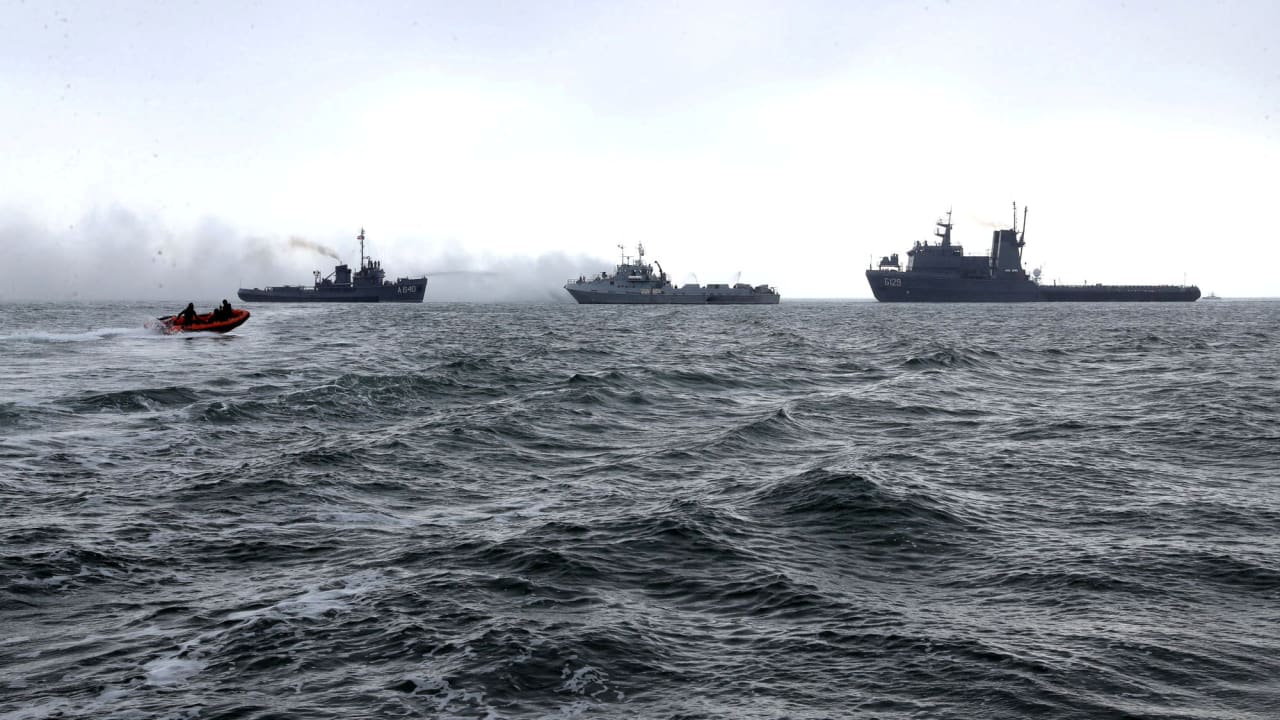
NOVEMBER 8, 2026 16:18US Central Command (CENTCOM) is focused on preventing Iran from acquiring advanced weapons and other materials. One of the new initiatives is to focus on the Caspian Sea as one of the routes that Iran has used during the war. This is not the first time the Caspian Sea has been in the spotlight.The Caspian Sea has emerged as an increasingly important strategic corridor linking Iran and Russia, providing a route for commercial trade, military equipment, and sanctioned goods. The establishment of CENTCOM's Task Force Iron Gate on November 7, aimed at restricting Iranian weapons transfers across land borders and the Caspian Sea, spotlights the growing importance of this inland waterway.Russia has used the Caspian in the past to carry out airstrikes in Syria and Ukraine. As such, this area is already known to be militarily important to Russia. Iran has also invested in the Caspian in various ways. It maintained a naval presence there and expanded infrastructure along the coast, hoping to knit the coastline into a north-south trade corridor with Azerbaijan, Russia and Central Asia.The Caspian is the world's largest enclosed inland body of water. Five countries border it: Russia, Iran, Azerbaijan, Kazakhstan and Turkmenistan. During the Soviet era, Iran and the Soviet Union were the only two major states on the sea. Following the Soviet collapse in 1991, newly independent countries emerged along its shores, transforming the region's landscape.Historical trade across the sea dates back centuries, including commercial links between northern Iran and Russian ports. In modern times, the Caspian has become part of the International North-South Transport Corridor, a network connecting Russia to Iran and onward to Pakistan and India by rail, road, and maritime shipping. Iran was investing in this before the war began in February. Iran sought to shift its trade to China and Central Asia as it was cut off from the West.A man stands near a boat moored along a beach on the Caspian Sea coast in Sorkhrud in Iran's northern Mazandaran province on March 24, 2026; Illustrative. (credit: ATTA KENARE / AFP via Getty Images)Russian, Iranian ports handle agricultural trade, industrial goods, other cargoRussia's key Caspian ports include Astrakhan and Makhachkala, while Iran operates ports such as Bandar Anzali and Amirabad. These sites handle agricultural trade, such as grain, as well as the transport of industrial goods and other cargo.The Caspian route became more important after Russia's invasion of Ukraine in February 2022, when Western sanctions increased pressure on both Moscow and Tehran. Unlike the Persian Gulf, the Caspian is not directly accessible to Western navies.The sea is important for Moscow’s military moves. Russia launched strikes in Syria from the Caspian in 2015. In November 2024, the spokesman of the Ukrainian Navy, Dmytro Pletenchuk, said, “There are also missile carriers in the Caspian Sea that can launch Kalibr missiles, but the Russians more often use the Caspian Sea to launch strikes from the air.They enter this water area specifically, and from there they have launch lines in order to fire at Ukraine. They are doing this most likely to prevent casualties among their own civilian population in the event of an accidental dropping of old missiles.”In August 2025, a website named militarnyi.com noted that “Ukrainian forces have struck a Russian vessel in the Caspian Sea that was transporting military cargo from Iran, marking the first confirmed loss of its kind. The cargo ship Port Olya-4 was hit in an airstrike by Ukraine’s Special Operations Forces.” In December 2025, more strikes may have happened. In September 2026, a report claimed that Ukraine may have targeted the Russian warship Tatarstan.After the US and Israeli strikes on Iran, the Caspian was in the crosshairs. For instance, Radio Free Europe noted in April that “while the inland waterway has served as a sanctuary for Iranian drones bound for the battlefields of Ukraine in Moscow's ongoing full-scale invasion, Israel recently launched air strikes on Bandar Anzali, an Iranian naval outpost on the Caspian.Growing media reports based on intelligence say the corridor is now being used to transfer Russian-produced weaponry back to the Middle East, bringing Israeli air strikes closer to Moscow's backyard.” This may have hampered Russian arms shipments.Iran's supply of weapons to Russia brought new attention to Caspian shipping. According to an April 2023 Wall Street Journal report, Iran shipped more than 300,000 artillery shells and one million rounds of ammunition to Russia across the Caspian in 2023. Iran also supplied Shahed drones and technology that helped Russia establish domestic drone production. Now that Iran is under blockade via the Gulf, Tehran may need shipments from Russia.The military relationship has also developed in the opposite direction. In May 2026, US officials told The New York Times that Russia was sending drone components to Iran through the Caspian, potentially helping Tehran replenish military capabilities following American and Israeli strikes. The report called the sea a “long-overlooked” trade corridor.Iranian naval facilities in Caspian Sea struck in March 2026The Caspian itself became a witness to the war in March 2026, when airstrikes hit Iranian naval facilities at Bandar Anzali. The March 18 strikes appear to have destroyed an Iranian Navy corvette, missile boats, and several auxiliary vessels. On July 25, President Volodymyr Zelensky said Ukrainian forces had struck vessels involved in military cargo shipments connected to Iran, as well as a Russian warship. Ukraine dismissed Iranian threats of retaliation at the time.Commercial shipping has continued despite the attacks. According to Lloyd's List Intelligence, the number of active Iranian- and Russian-flagged vessels in the Caspian increased 21% year on year in August 2026, while general cargo capacity on the bilateral corridor rose 36%. The Caspian route faces limitations, including shallow waterways, restricted port capacity, and other challenges.For the US, the challenge now is distinguishing civilian commerce from military shipments and sanctions evasion. Task Force Iron Gate indicates that the US increasingly views the Caspian as part of Iran's wider military and economic supply network. The sea, once a commercial link between Russia and Iran, has become a strategic corridor linking two major conflicts.How the US will implement its new policy in the Caspian remains unclear. The statement is certainly a warning to Iran and Russia. However, the US administration has sought to improve ties with Moscow. This means that the US would be wary of harming Russian shipping. In addition, countries on the Caspian may be wary of seeing the war spread to the sea.Follow us on Google
Why Iran’s Caspian Sea trade route matters - analysis
Full Article
Original Source
Read the full article at Jpost →KhanList aggregates and links to publicly available news content. We do not host full articles from third-party sources. Always verify important information with original sources.