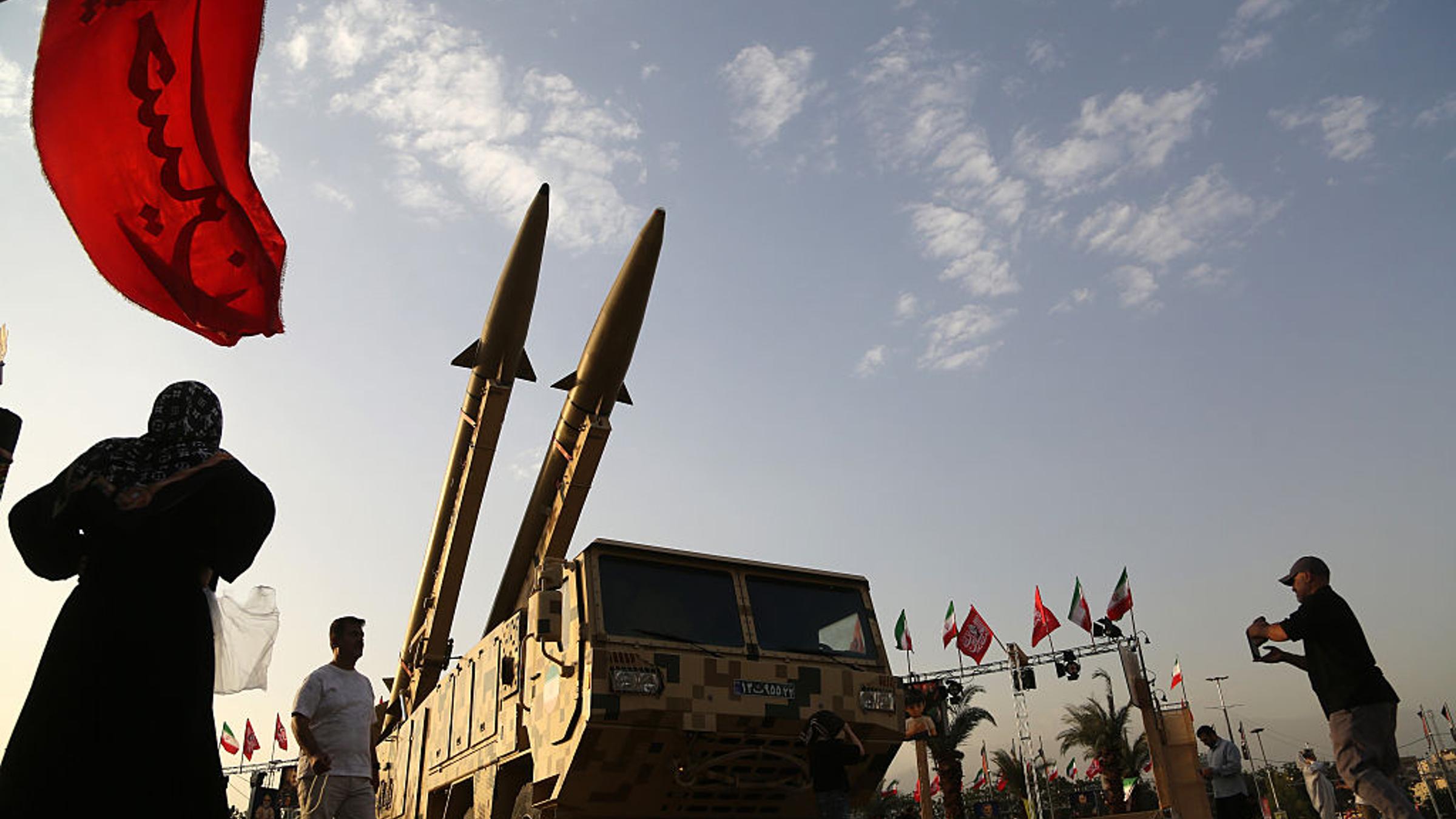
The United States and Iran are again at war. The renewed conflict is not about Iran's nuclear program or regime change, but over the Strait of Hormuz through which a fifth of the world's oil must pass.For two weeks, American missiles have struck Iran. In turn, Iran has retaliated against American allies: Kuwait, Bahrain, and Jordan. Four U.S. soldiers have been killed and 142 wounded; at least 53 Iranians have been killed and 592 injured since July 6. Iran’s Islamic Revolutionary Guards Corps (IRGC) claimed to have destroyed an oil tanker in the Strait of Hormuz. Traffic in the strait has slowed to a trickle and oil prices have jumped again.The ceasefire and the initial agreement signed on Jun. 17 lasted barely three weeks, undone by rival readings of a deliberately vague text. Washington wanted free navigation in Hormuz restored; Tehran insisted that it was the master of the strait. When traffic resumed, ships and tankers avoided the mined central route of the strait and hugged its southern coast close to Oman under American protection or sailed along the northern coast of Hormuz close to Iran, where it levied a “toll” for safe passage.On July 7, the IRGC fired on ships defying routes designated by Iran; American airstrikes followed. Three days later, on July 10, President Donald Trump notified Congress that the war between the U.S. and Iran had resumed. Iran formally suspended the agreement, citing strikes, sanctions and Israel's operations in Lebanon.The costs are mounting. For decades, maritime traffic from Saudi Arabia, whose eastern border sits on the Persian Gulf, has passed through Hormuz to reach the Arabian Sea and the Indian Ocean. Since the closure of Hormuz, the Kingdom has been moving roughly four million barrels a day—around four times its pre-war volume—through the port of Yanbu on the Red Sea, along its western border.But the Red Sea has a chokepoint of its own: the Strait of Bab al-Mandab, at its southern end, off the coast of Yemen, which connects it to the Gulf of Aden and the broader Arabian Sea. On July 20, the Houthis, Iran’s allies in Yemen, declared a maritime embargo on Saudi Arabia at Bab al-Mandab, invoking “an eye for an eye.” They have already struck two Saudi tankers in the Red Sea. With the chokepoints of Hormuz and Bab al-Mandab now contested simultaneously, the Gulf's energy systems face an unprecedented strain. American strikes have targeted Iran’s southern coastline and the approaches to Hormuz, with inland strikes largely reserved for the missile bases that allow Iran to reach the U.S. bases across the region. Its intensity is lower than the 40-day military campaign that preceded it, and it is an open-ended campaign: a war of attrition fought over a waterway. This is, for now, a bilateral contest, with Washington keeping Israel outside the frame for as long as Iran refrains from striking Israeli territory directly. American objectives have contracted to reopening the Strait of Hormuz. Having survived the war and denied the U.S. and Israel their stated aims, Iran now regards the outcome as a victory and is working to shape and cement its terms. Why Iran thinks it has wonIran has managed to impose significant human and material costs. The war has already cost the U.S. more than $37.5 billion, 18 U.S. service members have been killed and 624 have been injured. Wartime learning, intelligence and technological cooperation with Russia and China, and better access to satellite imagery have markedly improved Iran’s missile and drone strike accuracy. And Iran has been able to rattle the global energy markets by closing the Strait of Hormuz, weaponizing a chokepoint that offers continuous leverage over the global economy.Iranian strategists are aiming for something more ambitious: raising the cost of hosting American forces until the U.S. thins out its regional military presence. The U.S. has indeed moved some military assets away from the Persian Gulf toward Jordan and Israel. American radars, bases and surveillance systems across the Arab states also function as early-warning systems for Israel. Iran’s concentrated attacks on those systems in March and April likely improved its ability to attack Israel with its long-range missiles.Tehran seems to hope that a combination of its control of Hormuz and the coercive power of its drones and missiles would make the Gulf states reluctant to host U.S. forces and facilitate military operations against Iran. That instead, the Gulf states would seek security arrangements with the Islamic Republic.Iran is also tailoring its approach to different Gulf countries: it has no appetite for a direct war with Saudi Arabia, so the Houthis in Yemen carry the Saudi file. The Houthis imposed their embargo on the Bab al-Mandab Strait on July 20, days after Iranian officials signaled that the strait would close if American strikes on Iran’s infrastructure continued. The Houthis had their own reasons to move, especially Riyadh’s siege of Yemeni ports and a military strike on Sanaa airport. But either way, Tehran gained a second strategic chokepoint.Intense Iranian attacks on Kuwait are the lesson intended for every Gulf state hosting U.S. forces. Kuwait facilitated American strikes on Iran from its territory, and Iranian drones have answered by striking the power and desalination plants that Kuwait depends on for roughly 90% of its drinking water. The strikes on Kuwait are also aimed at degrading a potential staging ground for a potential U.S. ground operation in southern Iran.What this strategy lacks is a clear account of how Iran would convert wartime leverage into a durable political settlement. Tehran has shown how it can disrupt global energy supplies and impose costs on the U.S. and its allies, but it is not clear how it can remain in a permanent state of confrontation with America and the Gulf states. Iran, America, and the limits of forceThe first challenge Iran faces is the asymmetry of pain thresholds. American credibility is on the line, but Iranian territory is being hit hard. Year-on-year inflation in Iran reached an astonishing 88.6% by late June. In southern provinces, which are facing the brunt of the renewed conflict, inflation has crossed 101% in Hormozgan, 99% in Khuzestan, and 96.5% in Bushehr. Iran’s energy ministry has asked the citizens to ration electricity in extreme heat as American strikes strain the electricity grid. The Islamic Republic crushed a nationwide uprising in January, has an economy in free fall, and is fighting a war with America. Its most dangerous front may prove to be the domestic one.Iran’s coercion of the Gulf states may produce the very coalition it fears. Attacks on Kuwaiti power and desalination plants are pushing Kuwait, Saudi Arabia, and the United Arab Emirates toward closer security cooperation with each other, with Washington, and eventually, with Israel. Given the disparity in economic resources between Iran on one side of the Persian Gulf, and Saudi Arabia, the United Arab Emirates, and Qatar on the other side, a counterbalancing bloc would hold the stronger hand over time.The biggest challenge Iran faces: Israel’s secretive nuclear powers. Iran has been trying to destroy the U.S. surveillance and radar systems in the Gulf that serve as early warning systems for Israel. If Iran continues succeeding in degrading those early warning systems, Israel would have to confront its missiles with less warning and thinner interception depth. A more vulnerable Israel could lean harder on its nuclear deterrent. Iran’s success could turn out to be extremely dangerous.Washington’s options are no better. Trump has promised to destroy “one bridge or power plant” for every ship Iran fires on. A war on infrastructure would amount to war crimes by Washington, and it would not change Tehran’s calculations. Iran would retaliate against Gulf infrastructure, and the destruction would spread across states that are party to none of this. Airstrikes on Iran’s most sensitive nuclear facilities would also yield little. Trump has threatened to “very heavily” hit the area around Pickaxe Mountain, a fortified underground site near Natanz, one of Iran's primary nuclear enrichment facilities. Such an attack would produce symbolic effects and trigger Iranian retaliation against energy and other critical infrastructure in the Gulf. With the International Atomic Energy Agency locked out of Iran since June 2025 and the fate of nearly 400 kilograms of highly enriched uranium unverified, fresh air strikes on nuclear facilities in Iran would make it even harder to determine what nuclear material and capabilities remain, where they are located, and how quickly the program could be rebuilt. Subsequently, greater ambiguity around Iran’s nuclear capabilities would make any settlement harder to negotiate and verify.That leaves ground operations. On July 15, Trump reportedly convened a meeting to weigh seizing Kharg Island, through which some 90% of Iran’s crude exports pass, and other territory along the strait. U.S. officials told the Wall Street Journal that Trump remained reluctant to commit ground forces. The threat of a ground invasion is only a threat as long as it stays a threat. Kharg and other such Iranian islands are hard to take and harder to hold. Their occupation would sharply reduce Iran’s oil revenue, but it would not necessarily compel Tehran to reopen the Strait of Hormuz or accept American terms. Iran could respond by intensifying attacks on Gulf energy infrastructure and shipping, while presenting the seizure of its territory as proof that the war had become one of national defense.Neither Iran nor America has a credible military path to a durable settlement that ends the fighting, restores freedom of navigation through the Strait of Hormuz, and prevents another rapid return to war. Iran’s problem is the long-term cost of its current strategy; Washington’s problem is the diminishing returns on each additional night of bombing.The choice Tehran and Washington have to makeThe way out runs through the initial agreement. Its basic bargain remains workable: Iran would restore freedom of navigation through the Strait of Hormuz and halt attacks on U.S. forces, while Washington would lift its naval blockade of Iran, end its air campaign and suspend the punitive measures imposed after the agreement collapsed. Pakistani and Qatari mediators are still working. What sank the previous deal was ambiguity: obligations without sequencing, commitments without monitoring, and no mechanism for containing an incident at sea before it became a campaign. Any new agreement will have to specify who verifies what, in what order, and what happens when a ship is hit. Iran faces a larger decision. It cannot strike American assets in Gulf states indefinitely while expecting those states to put up with the attacks. Tehran must choose between a region organized around coexistence and one it hopes to dominate. Bids for hegemony summon their own opposition: the counter-coalition Iran could provoke, backed by Washington and Israel, would leave it more encircled than the war that began in February ever did. That is the calculation Tehran has yet to make, and the one on which everything else now depends.
Why Iran Cannot Fight a Forever War
Full Article
Original Source
Read the full article at Time →KhanList aggregates and links to publicly available news content. We do not host full articles from third-party sources. Always verify important information with original sources.