
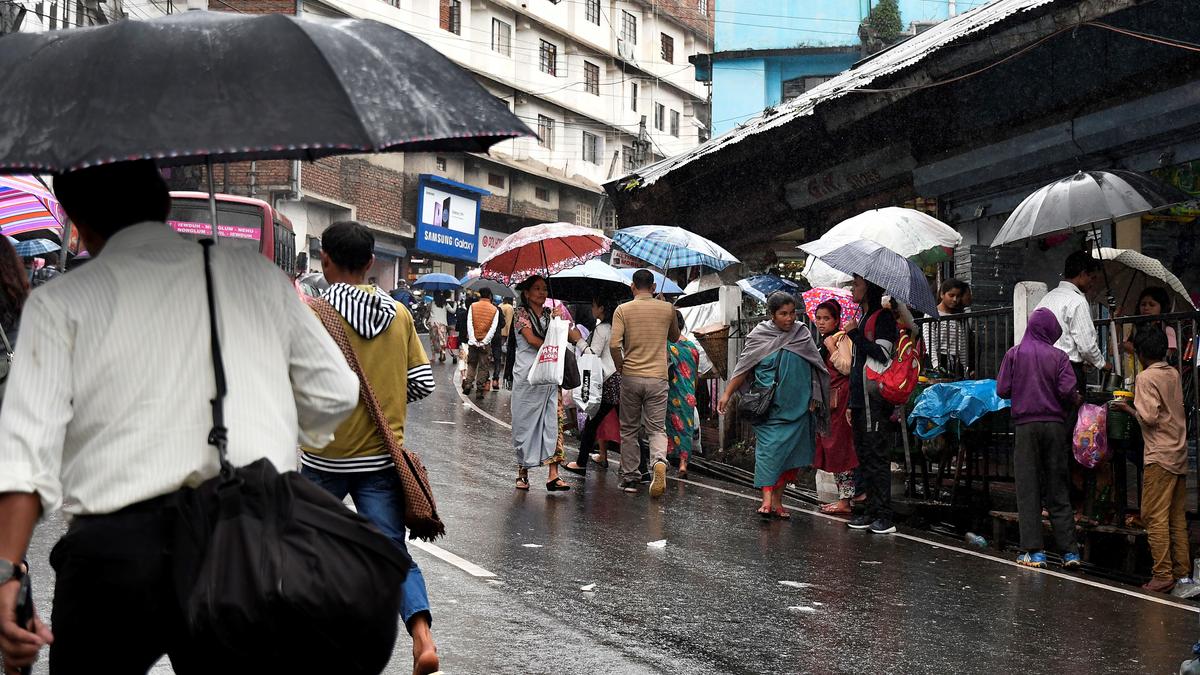
People during a monsoon rain in Shillong. | Photo Credit: Ritu Raj Konwar The story so far: The Indian Himalayan Range (IHR), comprising 11 States and two Union Territories, had a decadal urban growth rate of more than 40% from 2011 to 2021. Towns have expanded, and more urban settlements are developing. However, Himalayan towns require a different definition of urbanisation.Almost all Himalayan towns, including State capitals, struggle with managing civic issues. For example, cities like Srinagar, Guwahati, Shillong, and Shimla, as well as smaller towns, face significant challenges in managing sanitation, solid and liquid waste, and water. Planning institutions in these States often fail because they use models copied from the plains and have only limited capacities to implement these plans. City governments are short of human resources by almost 75%. For instance, in the Kashmir Valley, excluding the Srinagar Municipal Corporation, there are only 15 executive officers across over 40 urban local bodies. Published - August 09, 2024 08:30 am IST
Why Himalayan towns need a different kind of development | Explained
Full Article
Original Source
Read the full article at Thehindu →KhanList aggregates and links to publicly available news content. We do not host full articles from third-party sources. Always verify important information with original sources.