
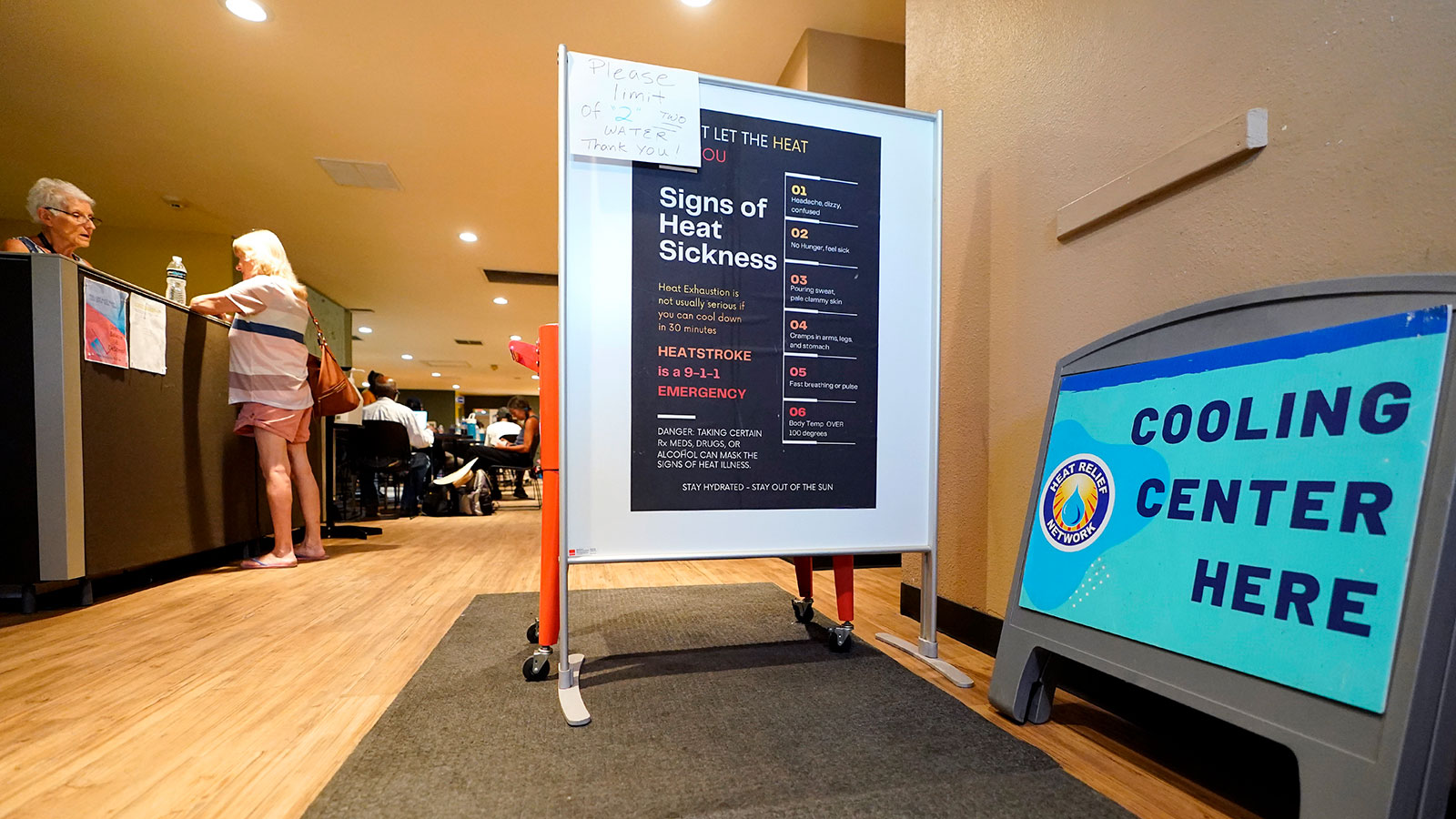
Skip to content (Image credit: AP Photo/Ross D. Franklin) Transcript: As the climate warms, many areas are experiencing more extremely hot days. And in places unaccustomed to the heat, people are often unprepared. Ulmer: “Our challenge in Vermont is that people are well-equipped and well-informed about what to do during the cold times but not so much during the hot times.” Jared Ulmer is with the Vermont Department of Health. Ulmer: “For the last decade or two, we’ve started to get these heat waves of 90 plus, you know, approaching 100 for a couple days in a row.” He says many people’s bodies are not acclimated to those temperatures – especially in the early summer. So they’re more susceptible to heat-related illness. And many homes and buildings lack air conditioning, so people cannot escape the heat indoors. Ulmer: “We see a lot of impact in the indoor environment. … Most of our heat-related deaths in Vermont actually occur inside of people’s homes.” The dangers are greatest for older adults and people with chronic health conditions. To help protect people, Ulmer’s department provides a map of community cooling centers and publishes information in 12 languages about the signs of heat-related illness, ways to stay safe, and how to care for others who are vulnerable. So Vermonters are better prepared as temperatures rise in the region. Reporting credit: Myriam Vidal Valero / ChavoBart Digital Media
Why heat waves can hit residents of cooler states especially hard
Full Article
Original Source
Read the full article at Yaleclimateconnections →KhanList aggregates and links to publicly available news content. We do not host full articles from third-party sources. Always verify important information with original sources.