
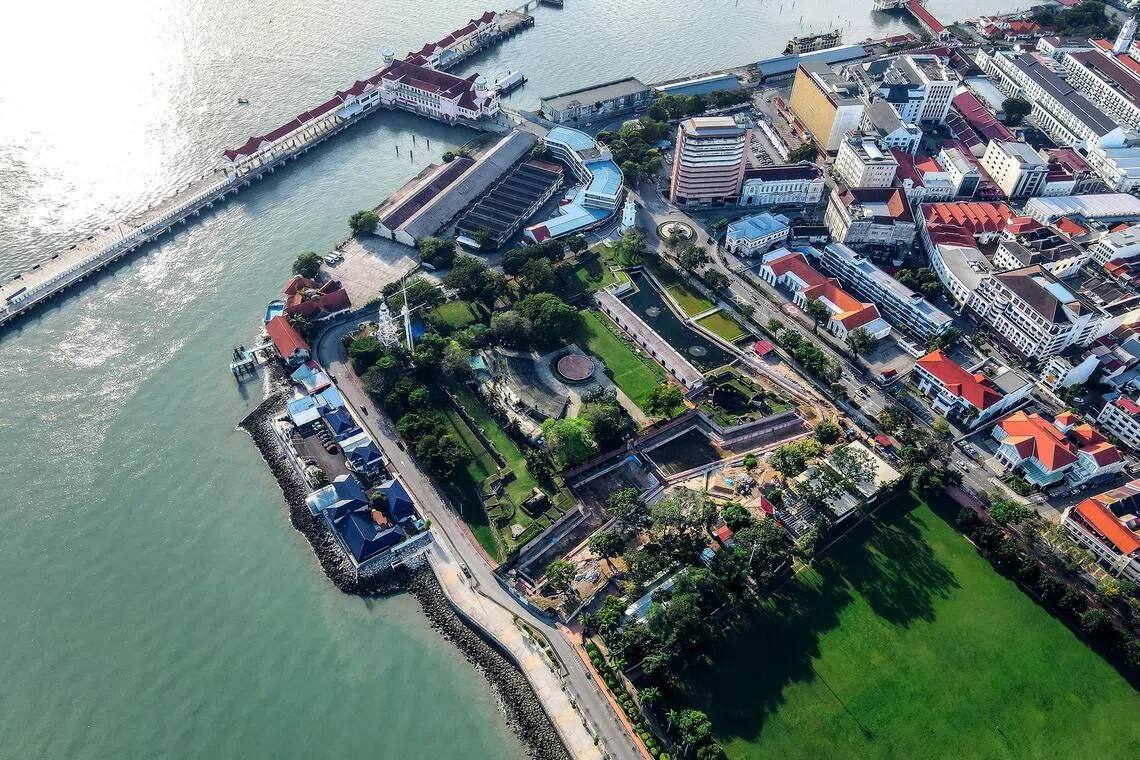
GEORGE TOWN – It has been 18 years since the historic towns of George Town and Melaka were inscribed as UNESCO heritage sites, driving a boom in their cultural economies. But while both Penang and Melaka states have benefited from tourism dollars, George Town’s careful management of its heritage has helped it retain its sense of place.Local residents and businesses have not simply been displaced by the influx of visitors and investment; many have ridden the rising tide while continuing to call the city home.The 2008 inscription brought more visitors and investment to Penang, but George Town has avoided becoming a heritage theme park.Generations-old businesses, associations, hawkers and residents still occupy its historic core, where some buildings date back more than two centuries – a distinction that sets it apart from some other UNESCO-listed cities where tourism has displaced much of the original community.“A space has layers of history, stories. It’s about people. It’s about what creates that identity. It’s the spirit of the place,” said Hamdan Majeed, managing director of urban impact organisation Think City.“We live in an age when identity has become very important because the world homogenises,” he said at the July 25 reopening of Fort Cornwallis.The UNESCO inscription has driven tourist arrivals to Penang, with annual hotel guest numbers rising from around four million to five million previously to more than six million in 2008.In 2024, the figure surpassed eight million.The George Town World Heritage Incorporated, a Penang state agency tasked with safeguarding the capital’s UNESCO status, still maintains a register of hundreds of traditional trades in the heritage zone.Reinstating the moats for Fort Cornwallis' relaunch is more than just restoring the landmark to its original design. It also has a contemporary function for stormwater management, helping to mitigate flash flooding, which is becoming an increasingly common problem across urban Malaysia. ST PHOTO: SHANNON TEOHThat does not mean George Town has been immune to gentrification. Property values and rents have risen, some traditional businesses have disappeared and parts of the historic core have shifted towards tourism-oriented uses.The difference, proponents of the city’s conservation model argue, is that enough of the original community and economy remain for George Town to function as a living city.But there are now trendy boutique hotels, cafes and other businesses on the island, while rising rents and the influx of tourists have contributed to a significant attrition of residents who find the surrounding suburbs cheaper and less crowded.Baker Sherliyn Kang, 51, was born and raised in George Town’s heritage core and now runs a business supplying cafes there.Her husband has had a computer services shop in the heritage street of Lebuh Carnarvon for the past 22 years. The couple have since made their home in neighbouring Pulau Tikus.Kang finds herself conflicted.The UNESCO listing was followed by rent increases that affected residents like her grandparents and parents, and many, even those who owned their own homes in the heritage zone, eventually had to move away.“My children grew up in a George Town shophouse. But it eventually got too chaotic,” Kang told The Straits Times.“On the other hand, I taught myself to bake and businesses here needed computer systems. It’s sad to see how George Town has changed but it has also brought a lot of opportunity for young people.”Joachim Leong, co-owner of Ome by Spacebar Coffee, which was ranked the 56th best cafe in the world in 2025, is among those who have benefited from the surge in visitors to Penang since the UNESCO inscription.He has lived and worked in George Town’s heritage area for the past 11 years.Leong, though, recognises that George Town’s success – and queues outside establishments like his shophouse cafe – are a double-edged sword, he told ST.“Any business would welcome more footfall. But tourism has its peaks and troughs. Our local regulars give us a sustainable baseline and a sense of place. It’s not just the decor or products that we sell but the actual people who frequent us that makes Ome what it is.”That contrasts with the experience in Melaka, and in other South-east Asian UNESCO cities such as Hoi An and Luang Prabang, where historic buildings may have been preserved but much of the experience within the designated heritage zones is overwhelmingly geared towards tourists, who vastly outnumber the locals.In George Town's Little India, generations-old trades such as jewellers and traditional costumes still thrive thanks to local customers who have not been driven out from overtourism since Penang's capital was inscribed as a UNESCO heritage site in 2008. ST PHOTO: SHANNON TEOHShops peddle trinkets and souvenirs, riverfronts are occupied by bars and cafes, while historic landmarks have been converted into museums.Researchers and experts have documented the phenomenon of historic buildings being preserved even as the communities that gave them life are displaced. Italian writer Marco d’Eramo described it as “UNESCO-cide” in a 2014 New Left Review article.George Town has so far avoided the most extreme version of this outcome – partly by design and partly by accident.Keeping heritage aliveThe inscription came in 2008, when Penang’s ruling Democratic Action Party (DAP) was still part of the federal opposition. The then UMNO-led federal government later established Think City, an arm of sovereign wealth fund Khazanah Nasional, to manage urban rejuvenation in George Town.Think City has since evolved into more than just an overseer of grants to become an urban planning partner – with projects across Peninsular Malaysia, including Kuala Lumpur and Johor Bahru, as well as the wider north-western corridor around Penang. Its work focuses on place-making, as well as environmental and social resilience.The RM40 million (S$12.6 million), decade-long restoration of Fort Cornwallis – built in 1786, when the British established George Town – is perhaps the jewel in the crown for the collaboration between Think City, Khazanah and Penang’s administration to preserve heritage while rejuvenating urban spaces with an eye on liveability.The fort is now a ticketed attraction within what is being dubbed the North Seafront, a once-neglected waterfront transformed into a green public space for both locals and tourists.The surrounding area includes the esplanade known as Padang Kota Lama, or “Old Fort Field”, home to the legendary Hameed Pata squid fried noodles, alongside City Hall, the state legislature and other colonial-era architecture.But the fort was not simply restored as a historical monument. Its reinstated moats, costing more than RM23 million, also double as a nature-based stormwater and flood-mitigation system.Nearby, the Astaka Kota Selera foodcourt retains a hawker presence on the waterfront, with a structure that incorporates passive cooling, natural ventilation and rainwater harvesting within the heritage setting.A George Town hawker frying Penang's famous char kway teow early across from Ren I Tang, a boutique hotel which uses the Mandarin phonetic spelling of Yin Oi Tong, South-east Asia's oldest Chinese medical hall wholesaler which was established in 1796. Yin Oi Tong moved from the site to faciliate a restoration in 2009 and is now located in the nearby suburb of Ayer Itam. ST PHOTO: SHANNON TEOHThese touches focused on residents’ well-being are central to keeping the heritage site as an active urban district with a lively local economy, rather than one designed primarily around tourists.“This is quite a unique case of conservation started by the impulse of the citizens themselves that felt that this historic urban site was an asset – first as an anchor for certain identities but also a potential economic asset for the future,” said Luis Monreal, general manager of the Aga Khan Trust for Culture, a key technical partner in the revitalisation of George Town’s heritage core.Where locals still belongFor Kang, after living and working there for five decades, “George Town will always feel like home”.“We weren’t chased out. But the reason people move away is the rent,” she said, explaining that the same shophouse she used to live in would now cost at least RM6,000 a month in rental, more than five times what she used to pay.“To the next generation, George Town is a place you go to, not a place to build a life any more.”Leong recognises the challenge of keeping George Town bustling while conserving its built and living heritage. “The ideal outcome would be making Penang more liveable for more people,” the 39-year-old said, citing factors such as walkability and having the right balance of commercial, residential, tourist and “third and fourth spaces” – the informal places where people gather and spend time outside home and work.That emphasis on liveability is also reflected in the state government’s longstanding pitch.Chief Minister Chow Kon Yeow has repeatedly framed Penang as a place where people should be able to “work, live and play” – even as the state continues to court investment and tourism.Built in 1907 and completed in 1909, the Malayan Railway building in George Town is now disused after the Customs Department vacated the premise in 2021. One of the challenges of heritage preservation is the cost of upkeeping old buildings and finding contemporary uses for them. ST PHOTO: SHANNON TEOHTourism is only one part of Penang’s economy. Its manufacturing sector has also gone from strength to strength, making up 5 per cent of global semiconductor sales and about 60 per cent of Malaysia’s electrical and electronics exports.For Monreal, that combination of an active local population and a diversified economy is precisely what has allowed George Town to retain its character.“The great advantage of George Town is that you have an active population that has not abandoned their quarters in the old city,” he said.“One of the greatest dangers in historic cities is the phenomenon of gentrification. The worst example in the world is Venice because the Venetians don’t live in Venice. They live in Mestre, which is nearby, and the city has become a kind of a museum city,” he added.Sign up for our weekly Asian Insider Malaysia Edition newsletter to make sense of the big stories in Malaysia
Why George Town stands out among UNESCO cities: It still belongs to Penangites, not tourists
Full Article
Original Source
Read the full article at Straitstimes →KhanList aggregates and links to publicly available news content. We do not host full articles from third-party sources. Always verify important information with original sources.