
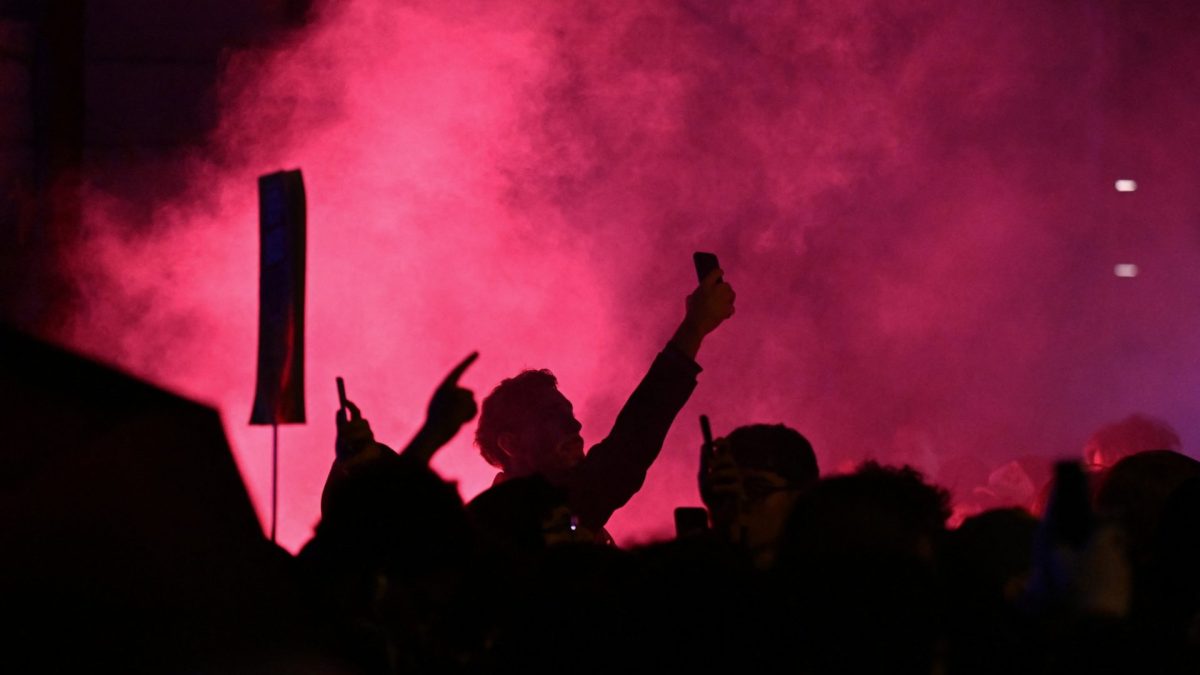
Youth-led protest movements spread to Germany and Switzerland over the Halloween weekend, and demonstrations continued in France, Spain, Italy and Portugal, in a continent-wide wave dubbed “Europe’s hot autumn”. Events were organised in dozens of cities by student groups, trade unions and movements such as Gen Z Regelt (“Gen Z takes charge”) in Germany, or the Yellow Vests in France. Protesters cite a range of causes from the cost of living, lack of employment and housing, and funding for public services, to the rise of far-right political parties and rearmament in European countries that some call “militarisation”. France has seen many of the largest protests, in some cases leading to disorder, and hundreds of thousands joined marches in Paris, Marseille and other cities on Saturday. Police fired tear gas and stun grenades to disperse crowds after some were joined by masked rioters. But the weekend also saw mass protests take place in Germany with tens of thousands joining events in around 30 locations. The majority passed peacefully, but clashes between police and protesters were reported in Berlin, Frankfurt and Hamburg, with bottles and fireworks thrown at the police, who used water cannons on protesters. In Frankfurt, some shops were looted and 54 people arrested. German interior minister Alexander Dobrindt told Bild newspaper that police had prevented “violence like that seen in Paris”. He added: “I expect there to be severe penalties. We are not prepared to accept, in the slightest, that such incidents and such rioting should take place here.” Roman Poseck, interior minister of the state of Hesse in which Frankfurt is situated, said that “around 100 clearly identified left-wing extremists” had infiltrated protests, and called how the protests ended “shameful”. Young people marching in Leipzig. Tens of thousands joined events in around 30 locations across the country (Photo: Craig Stennett/Getty) A person dressed in a Batman costume stands in front of a fire in Frankfurt (Photo: Florian Wiegand/DPA via AP) A spokesperson from the Gen Z Regelt group in Frankfurt, where they estimated 7,000 students and young workers took to the street, said there are many different opinions within the movement, but cited several factors driving protests, which extend beyond national borders. They said activists were protesting against “very extensive cuts in social services and services for young people or women fleeing patriarchal violence. It’s very similar to the situation in France which is why we are in solidarity with them”. They also raised concerns over the country’s massive rearmament process. “We want money not to be spent on war, but on social welfare and we want young people to be able to choose how their future can be and that the choices are not made by old people and corrupt politicians.” The spokesperson addressed criticism over violence by noting that the movement is not just composed of the “rich and educated”, but of young people who are “very angry at their living situation, but don’t have ways to speak about it”. Rioters and looters “weren’t really part of the demonstration, but I don’t want to legitimise them”, they added. Gen Z Regelt protests also took place in Switzerland, where demonstrators clashed with police in Zurich and Basel. Officers used water cannons to disperse crowds, and claimed rioters reportedly started fires on city streets. Youth-led protests also continued in Spain, with local authorities arresting protest leaders and sealing off parts of Barcelona city centre in an effort to avoid unrest. In Portugal, thousands marched over housing costs and wider affordability issues. Yellow Vest protesters in Paris (Photo: Ibrahim Ezzat/Anadolu via Getty) In Italy, students and workers took to the streets in several cities on Friday, with the Union Sindicale di Base (USB) union estimating over a million took part. The government did not publish an official figure. Students said they were protesting about the rising cost of living and a lack of housing. Workers cited rising costs of living, stagnating wages and increased military spending. The USB described the event as “a major day of general strike action, a mobilisation called by USB against the war economy imposed by the [Prime Minister Giorgia] Meloni government, against the high cost of living that is strangling the population and against the repression of young people and workers protesting for better living conditions.” “It’s time to lower prices, energy tariffs, rents and mortgages, raise wages and say enough with the war.” The protests also coincided with an international day of action by dock workers protesting against their ports being used to transport weapons to war zones, including dockers in the Italian city of Genoa striking over the sale of weapons to Israel by the Meloni government. Maria Bianchi, 31, a teacher who was protesting in Genoa told The i Paper: “Young people were protesting against the rising cost of living and against fascism, it’s a very similar sentiment to in France. The main issues facing young people include unemployment, or where people are employed, low and stagnant wages and financial precarity. “Another major issue is the fact that 90 per cent of people under 40 aren’t going to be homeowners unless they inherit a house or a flat from a family member”. Students and workers protest cost of living issues at a tent city in Rome (Photo: Simona Granati/Corbis via Getty) Analysts suggest the movements spreading across Europe have much in common. David Madden, an associate professor of sociology and director of the Cities Programme at the London School of Economics, told The i Paper: “Housing is a key issue in most European countries and it’s clearly a major issue in the current wave of protest. This is absolutely clear in Spain but I think it also applies elsewhere.” He added: “If you listen to what youth protesters are saying, they talk a lot about the idea that the future was stolen from them, that the things that were promised to them have been made much harder to acquire. Secure, affordable housing is central to this. It’s not something that people feel they can take for granted anymore, and that scares and angers people.” “If you look at what people are saying and marching about, they’re really not demanding more homeownership. They’re demanding less precarious housing, less expensive housing, more housing stability, more security of tenure, more affordability. Different countries face different policy issues but the general direction is clear. Less money going to landlords every month. More social housing. More power for tenants. More of a sense that everyone will have a place to live in the future.”
Why Gen Z protests are sweeping the continent in ‘Europe’s hot autumn’
Full Article
Original Source
Read the full article at Inews →KhanList aggregates and links to publicly available news content. We do not host full articles from third-party sources. Always verify important information with original sources.