
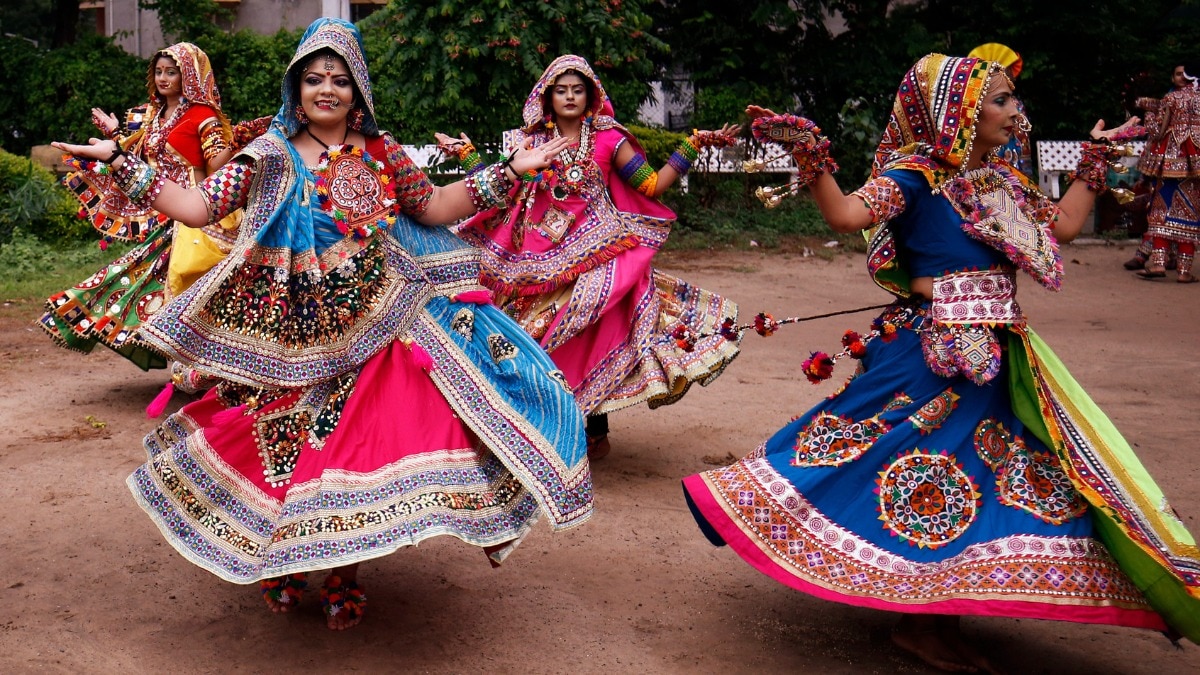
Navaratri, the festival of nine nights, is incomplete in Gujarat without revellers doing the garba—dancing around an idol of the Goddess Amba in concentric circles—making it one of the world’s largest dance carnivals. Following two silent Navratris in 2020 and 2021, when Covid curbs emptied Gujarat’s garba grounds, the first unrestricted season in 2022 arrived like a release and Gujaratis danced as if to make up for the lost nights. The Navaratri industry boomed, often fuelling local economies for the rest of the year, and has kept expanding since at a breakneck speed, delighting and surprising stakeholders and revellers.In the pre-Covid era, the traditional dance form belonged to the bylanes of towns and cities, largely as a community exercise. In housing societies, Sheri Garba meant a neighbourhood circle and a borrowed speaker, with entry dependent on invitations from friends and family. A few dozen ‘commercial’ garba events were organised by private clubs in a few cities such as Ahmedabad and Surat, charging a modest entry fee of around Rs 300 a person.The situation, however, changed over the past five years, with the bylanes and housing societies no longer setting the tone of the season. The mainstay now comprises thousands of uber chic commercial events, whose entry passes have increased by an average of ten times. “Navratri was not a business earlier and commercial events were on the fringe,” says Ahmedabad-based Jaydeep Mehta, a veteran garba organiser for over three decades and president of Event Management Federation Global. “Now every small part of the festival is a monetisation and branding opportunity.”With photo booths aplenty, the curated ‘theme garba experience’ with dcor like a film set comes with a handsome price tag. Industry sources peg the size of the Navratri economy as around Rs 2,500 crore in Gujarat alone. On the upper side, the fee for passes to filtered, influencer-dominated events have crossed Rs 15,000 a night, and one needs to flaunt at least a certain number of followers on social media to be eligible to buy them. Private party plots, air-conditioned domes, restaurants running mandli nights, accompanied by foot massages, make-up makeover lounges, multi-cuisine food court, handicraft bazaar and children’s play area, are commonplace. The nine nights have become notional now, as the revelry stretches over two weekends at least.While many garba events are organised in Mumbai, this year such events have been more than a fringe phenomenon in central and north Indian cities and towns, too.Even the soundscape has shifted. Punjabi pop and Bollywood numbers are giving way to Gujarati songs, and the film promotions and starlet cameos that once drew crowds have faded. In their place, a wider pool of local singers, vocalists and musicians now fills the season. DJs remix traditional garba tunes over electronic bass and Techno Garba is a trending theme among the young. Composer Bhargav Purohit calls Techno Garba “a novelty form” whose “longevity remains to be seen”, while insisting that devotion to the Mother Goddess remains the anchor.Boutiques report demand for lighter, dupatta-free chaniya cholis in tissue, gajji and modal silk, designed for all-night wear and reuse after the nine days. “Techno Garba participants don’t want the restrictions of the typically heavy chaniya cholis,” says Prachi Shah, a Surat-based designer and boutique owner. Jewellery, dcor and event management ride the same wave. Venues are designed around photography, with reel-making corners and light shows, turning the ground into a social-media studio. The talent industry sustains thousands of folk artists, and pre-Navratri nights and after-parties have stretched the earning window for caterers, technicians and event managers. Some dancers now “garba-hop”, moving through several venues in a night in search of different artists and moods.The government earlier had a rule that prohibited the use of loudspeakers at garba venues after 11 pm. Since that restriction was removed in 2022, the revelry has seen a reincarnation of sorts. In 2023, UNESCO inscribed the garba of Gujarat on its list of intangible cultural heritage, a recognition that arrived mid-boom and gave the commerce a cultural certificate.What looks like a social awakening may be pent-up demand finding a business model. When Gujarat returned to the circle after the pandemic silence, it priced it well, designed it chic and scaled it big. Meanwhile, the bylanes are brighter and, as the money floods into the local economy, few are complaining.Subscribe to India Today Magazine- Ends
Why garba is big business in Gujarat today
Full Article
Original Source
Read the full article at Indiatoday →KhanList aggregates and links to publicly available news content. We do not host full articles from third-party sources. Always verify important information with original sources.