
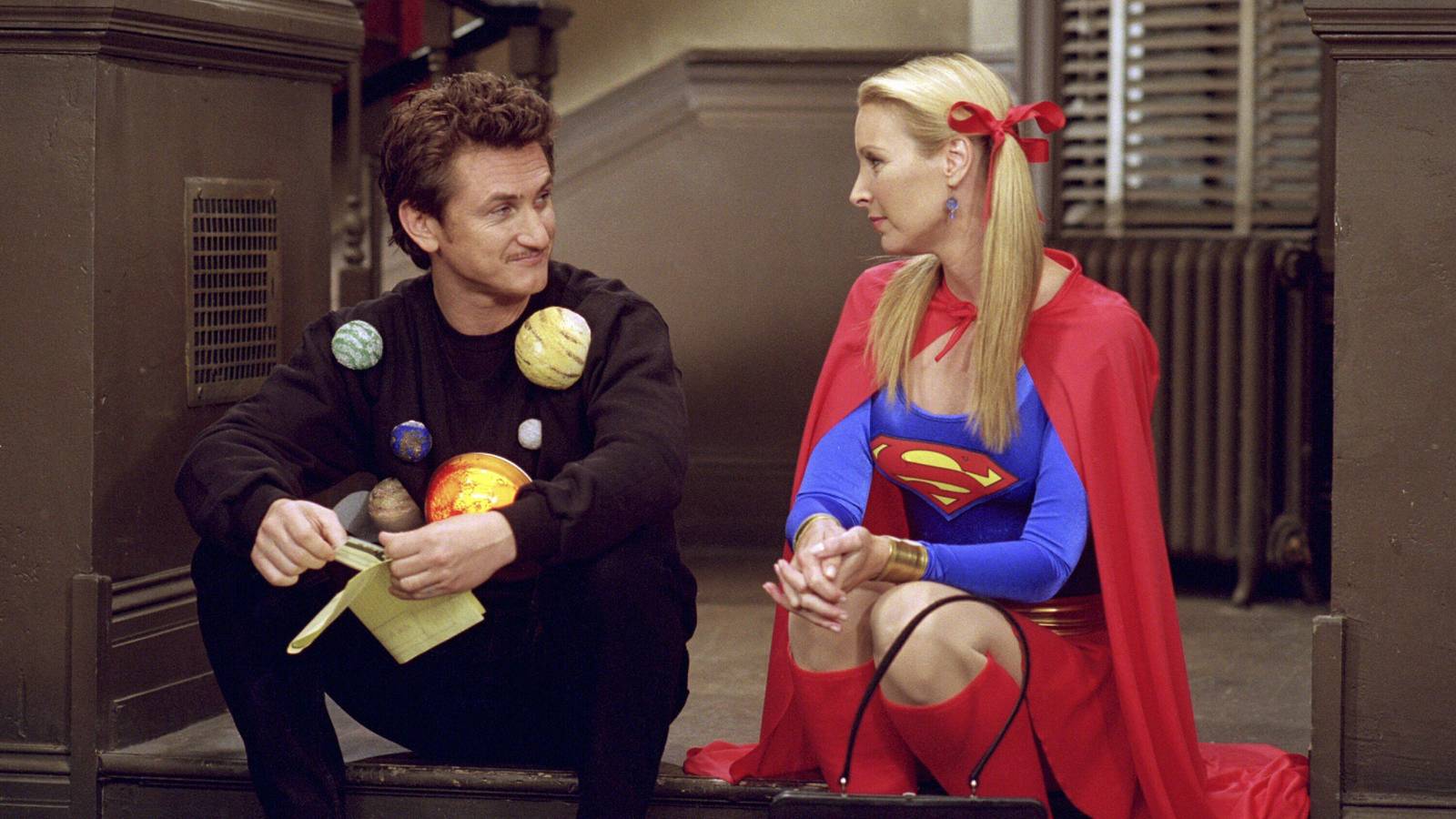
Image via MovieStillsDB Published Oct 18, 2026, 1:30 PM EDT Adrienne Tyler is a movies & TV features writer, with a focus on horror. She has written for Netflix, FanSided, & more. She was a regular guest on the Netfreaks podcast and was a YouTuber at some point. Guillermo del Toro said “hi” to her once. Sign in to your ScreenRant account Nowadays, it’s a common practice for sitcoms to have Halloween episodes, at least one per season, but surprisingly, the biggest sitcoms of the 1990s, Friends and Seinfeld, had either just one Halloween episode or none at all. Halloween has become an event, with networks putting together spooky and horror marathons, streaming platforms preparing their best Halloween content, and TV shows often looking to add it to their content. Not only is Halloween a well-known cultural holiday, but it also helps a TV show add more realism and better connect with its audience. With time, it has become common for TV shows to have Halloween episodes, and this is mostly seen in sitcoms. Shows like New Girl, How I Met Your Mother, Parks and Recreation, and Brooklyn Nine-Nine have some of the best sitcom Halloween episodes, but it might come as a surprise that two of the most influential sitcoms of all time weren’t that big on Halloween: Friends, which only had one Halloween episode, and Seinfeld, which had none. First came Seinfeld, created by Larry David and Jerry Seinfeld, and which premiered in 1989. Seinfeld was famously a “show about nothing”, following a fictionalized version of Seinfeld (played by himself) and his best friends. Seinfeld changed sitcoms, and Friends was heavily influenced by it, following its formula of centering on a group of close friends and their daily lives. However, while both had Christmas, New Year, and Thanksgiving episodes, they almost completely forgot about Halloween. Friends Doesn’t Have A Halloween Episode Until Season 8 As mentioned above, Friends follows the close group formed by Monica (Courteney Cox), Chandler (Matthew Perry), Phoebe (Lisa Kudrow), Joey (Matt LeBlanc), Rachel (Jennifer Aniston), and Ross (David Schwimmer), and the many ups and downs in their personal, professional, and social lives. Such a premise allowed Friends to show the group in a variety of social settings, including holidays, but it only took Halloween into account once, until season 8. Although this is Friends’ only official Halloween episode, season 9’s “The One With Phoebe’s Birthday Dinner” takes place on October 31st. Appropriately titled “The One With The Halloween Party”, the episode sees Monica and Chandler hosting a Halloween party, with the rest of the group attending and dressing up: Monica dresses as Catwoman, Chandler as a pink bunny due to a confusion with his costume, Phoebe arrives as Supergirl, Joey as Chandler, Ross as “spud-nik”, and Rachel wears a simple black dress she wants to wear before she doesn’t fit in it due to her pregnancy. The episode introduces Eric (Sean Penn), the fiancé of Phoebe’s twin, Ursula, whom she invited to the party. Eric and Phoebe end up getting along pretty well, with Phoebe realizing Ursula had been lying to Eric. Meanwhile, Chandler and Ross try to determine who would win in a fight, and Rachel tries to awaken her maternal side by handing out candy to trick-or-treaters, but it doesn’t really go well. The episode has all the elements of a Friends story, with fun chaos, heartwarming moments, and adding to the season’s arc. It’s strange that Friends chose to only have one Halloween episode throughout its 10-season run, especially as it had a Thanksgiving episode per season, eight Christmas episodes, and three New Year’s Eve episodes. Seinfeld Never Made A Halloween Episode Despite Celebrating Other Holidays Friends had at least one Halloween episode, but Seinfeld never gave this holiday a chance. Seinfeld follows Jerry, his best friend George Costanza (Jason Alexander), his ex-girlfriend and now friend Elaine (Julia Louis-Dreyfus), and his neighbor Cosmo Kramer (Michael Richards), showing their daily lives and their struggles with a good dose of comedy. Seinfeld ran for nine seasons, and it did explore other holidays, just not Halloween. Seinfeld has a total of six Christmas episodes, one New Year’s Eve episode, and one Thanksgiving episode, all of them done in the show’s peculiar style of comedy. It’s important to note that even though Seinfeld has Christmas and New Year’s Eve episodes, sometimes they were approached in non-traditional ways, meaning that instead of seeing the group having Christmas dinner all together and exchanging gifts, sometimes it would only show Christmas decorations while the story focused on something completely different. The most notable of Seinfeld’s holiday episodes is season 9’s “The Strike”, which popularized Festivus, celebrated on December 23 and being a non-commercial celebration, going against all the traditional activities of Christmas. This was very fitting with Seinfeld’s vibe, characters, and their own beliefs, and it’s widely regarded as one of the best holiday sitcom episodes of all time. While the absence of a Halloween episode doesn’t make Seinfeld any less great and important in TV history, and the existence of one wouldn’t have made much difference in the show’s legacy, it is definitely notable that it never had one, as the show was key to shaping the genre into what it is now. Friends & Seinfeld Each Have Their Own Reasons For Avoiding Halloween Episodes Seinfeld and Friends having no Halloween episodes or just one is strange given the popularity of Halloween, but as it turns out, each show had reasons for avoiding this specific holiday. In Seinfeld’s case, a Halloween episode, or any traditional holiday episode, wasn’t fitting with its style, as the show avoided sitcom tropes and chose to focus on mundane, everyday struggles and situations rather than on holidays and more sentimental stories. The main characters of Seinfeld are also famously cynical and self-absorbed, so having them celebrate Halloween and dress up for the occasion just wouldn’t have fit their personalities – but Christmas, Thanksgiving, and New Year’s Eve are holidays that are harder to avoid and ignore. On top of that, co-creator Larry David has openly spoken about his dislike for Halloween, even saying that he hates costumes and never wore one as a child (via NY Daily News), and has also shared his strong dislike for holidays in general. As for Friends, the show focused more on the major holidays – Christmas and Thanksgiving – rather than Halloween, which is fitting as the show never really saw its main characters at parties, except on very rare occasions such as their birthday parties. Friends’ Christmas and Thanksgiving episodes also have more of a family vibe, which plays more into the show’s “found family” message. Like with Seinfeld, a Halloween episode or lack of it doesn’t really change Friends’ legacy and success. Seinfeld and Friends are still some of the best and most influential sitcoms of all time, and they certainly established the dos and don'ts for subsequent shows, but when it comes to Halloween, they chose to skip it and focus on other celebrations. Source: NY Daily News. Seinfeld 9/10 Release Date 1989 - 1998-00-00 Network NBC Seinfeld is a television sitcom that follows stand-up comedian Jerry Seinfeld and his three eccentric friends, George, Elaine, and Kramer, as they navigate everyday life in New York City during the 1990s. Premiering in 1989, the series humorously explores the mundane and often trivial aspects of social interactions. Friends 8/10 Release Date 1994 - 2004-00-00 Network NBC Friends is a television sitcom that debuted in 1994, revolving around six young New Yorkers navigating the complexities of adulthood. The series highlights their friendship as they support each other through personal and professional challenges, encapsulating the ups and downs of life in a comedic and relatable manner.
Why Friends Only Has 1 Halloween Episode (And Seinfeld Doesn't Have Any)
Full Article
Original Source
Read the full article at Screenrant →KhanList aggregates and links to publicly available news content. We do not host full articles from third-party sources. Always verify important information with original sources.