
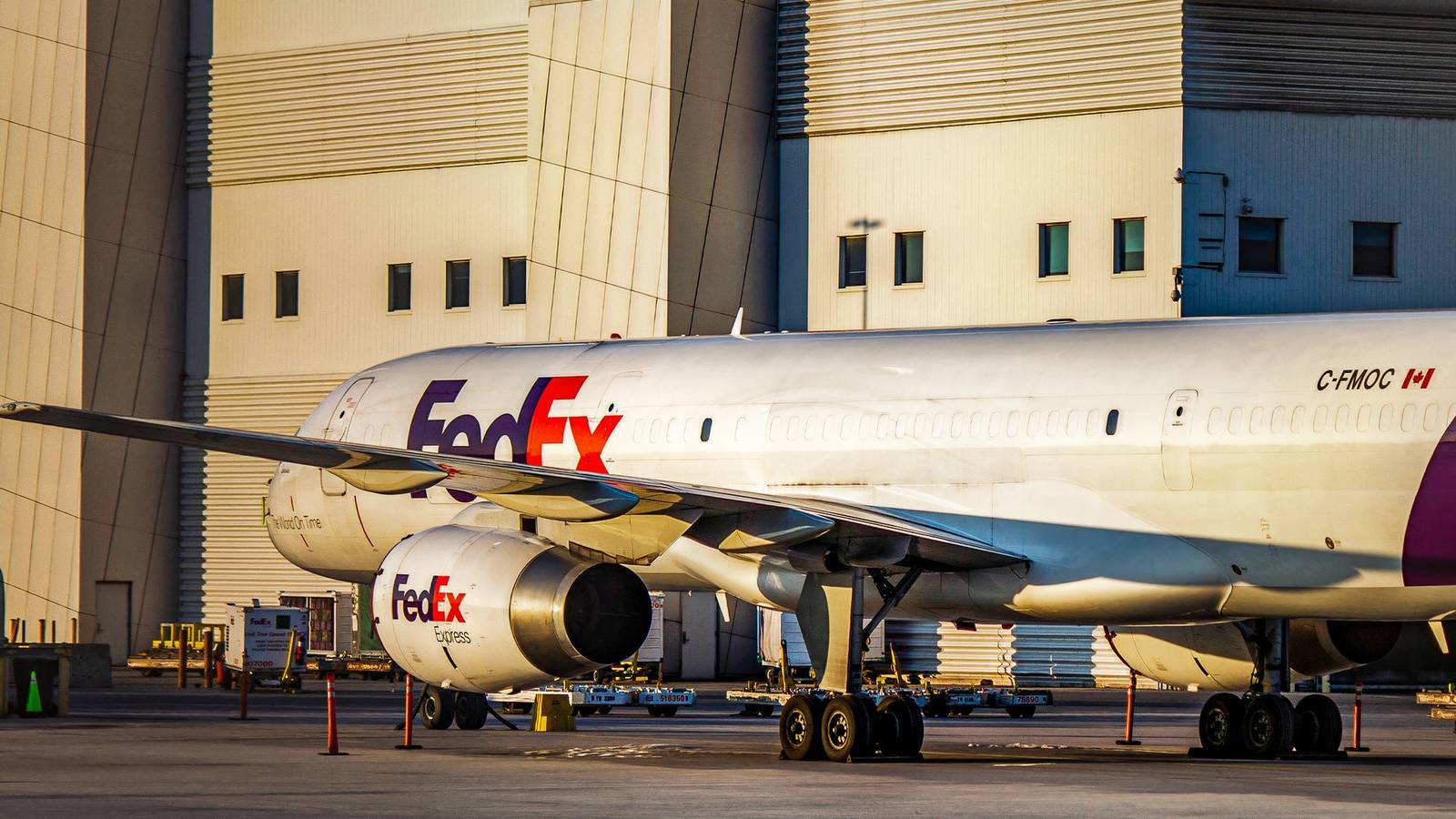
Published Nov 15, 2026, 11:00 AM EST An aviation writer, pilot, and flight operations professional who sees aviation from both sides of the cockpit door. With a background in aeronautics, safety, and human factors, she brings curiosity, firsthand experience, and a love of the details that turn aircraft and airports into stories worth telling. The Airbus A321 passenger-to-freighter conversion was once expected to become a natural successor to the Boeing 757-200 freighter. It offered cargo operators a relatively modern narrowbody platform, substantial capacity, and the prospect of lower operating costs than an aging aircraft that had become an established part of the express freight industry. The introduction of the A321-200P2F and A321-200PCF appeared to give airlines and lessors another option as passenger aircraft became available for conversion. That anticipated transition has not materialized. Despite the retirement of 757 freighters, the A321 conversion market has struggled to attract the number of operators originally expected. By August 2026, 85 A321-200P2F and PCF conversions had been completed, compared with 265 737-800 freighter conversions. More concerning for lessors, 34 converted A321s, representing approximately 42% of the fleet, were in storage. FedEx's fleet reductions therefore do not automatically translate into a replacement opportunity for Airbus. The reasons extend beyond the number of aircraft leaving service and involve capacity, operating infrastructure, conversion economics and the wider market for narrowbody cargo aircraft. The A321 Was Expected To Replace An Established Freighter Credit: ChenHao Kuo | Shutterstock The A321-200P2F and A321-200PCF programs entered service around the end of 2020. The P2F conversion was developed by Elbe Flugzeugwerke (EFW), a joint venture involving Airbus and ST Engineering, while Precision Aircraft Solutions developed the PCF program. Their arrival came during a difficult period for commercial aviation, but the converted aircraft attracted interest from operators and lessors looking for additional narrowbody cargo capacity. The A321 appeared to occupy a useful position in the freighter market. It was larger than the 737-800 conversion and offered a maximum payload of approximately 28 tonnes in the EFW configuration. Airbus lists 14 pallet or container positions on the main deck and another 10 in the lower hold. This gave the aircraft considerable capacity for parcel and express operations without moving into the widebody freighter category. The 757-200, however, offered a stronger payload proposition. A representative 757-200PCF configuration has a maximum payload of approximately 38.1 tonnes, considerably above the A321P2F's published maximum. The difference matters because cargo operators do not select an aircraft based on volume alone. The amount of freight an aircraft can carry, the distance it can transport that load and the conditions at the airports it serves all influence its usefulness. The A321 offered a modern alternative, but it did not reproduce every capability that had made the 757 valuable. The 737-800 Took Much Of The Narrowbody Conversion Market Credit: Stefan Lambauer | Shutterstock The A321's market position was complicated by the rapid growth of 737-800 passenger-to-freighter conversions. The 737-800BCF, BDSF and other conversion programs attracted considerable interest as cargo operators looked to replace older 737-300 and 737-400 freighters. Strong e-commerce demand and optimism about future air cargo growth encouraged airlines, lessors and investors to pursue additional conversions. That activity created a difficult market once the anticipated demand failed to absorb the available aircraft. IBA reported that 63 converted 737-800 freighters were in storage in February 2024. The resulting surplus made it harder for lessors to place aircraft and reduced the opportunity for another narrowbody conversion type to gain traction. The A321 entered a market in which operators already had access to substantial converted capacity, rather than one with an obvious shortage waiting to be filled. Market indicator Airbus A321-200P2F/PCF Boeing 737-800 conversions Completed conversions since January 2020 85 265 Aircraft in storage, August 2026 34 53 Share of converted fleet in storage Approx. 42% Approx. 20% The difference in conversion numbers illustrates how far the two programs have diverged. Between January 2020 and August 2026, 265 737-800 conversions had been completed, compared with 85 A321-200P2F and PCF aircraft. The A321 total was therefore less than one-third of the 737-800 figure. This does not mean the smaller Boeing is a direct substitute for every A321 mission, but it does show that the 737-800 secured a much larger share of the narrowbody conversion market. With demand weakening and converted aircraft already available, operators had less reason to introduce another type. Storage And Operator Changes Have Weakened A321 Demand Credit: Markus Mainka | Shutterstock The number of A321 conversions in storage is one of the clearest indications of the program's difficulties. IBA reported that 34 of the 85 converted aircraft were stored in August 2026, equivalent to approximately 42% of the fleet. That figure is particularly significant because it shows that the challenge is not simply persuading operators to order additional conversions. A substantial proportion of the aircraft already produced had not found sustained active employment at the time of the assessment. Several operator changes have contributed to the surplus. Smartlynx Airlines decided to phase out its A321-200P2F and PCF fleet in early 2025 after losing a DHL contract amid cost-control measures and weaker conditions in the narrowbody cargo market. Levu Air Cargo, which had operated an A321-200PCF on behalf of DHL, also returned its sole leased aircraft. These decisions put additional aircraft back into the leasing and placement market when demand was already under pressure. Lufthansa CityLine's closure has added another complication for the type. Four A321-200P2F aircraft associated with Lufthansa Cargo operations face an uncertain future following the Lufthansa Group's decision. These cases do not establish that every operator has struggled with the aircraft, but they demonstrate how dependent the conversion market can be on individual contracts and network requirements. When an operator withdraws, the aircraft does not necessarily move directly to another customer. Lessors must find a new placement, and the available market may not have enough demand to absorb the aircraft quickly. The 757 Still Offers Capabilities That The A321 Cannot Fully Match Credit: Mauvries | Shutterstock The A321 conversion was frequently presented as a potential replacement for the 757-200 freighter, but the two aircraft are not interchangeable. The A321P2F has a published maximum payload of up to 28.1 tonnes, while the 757-200PCF specification lists a maximum payload of 38.1 tonnes. That difference gives the 757 an advantage for operators whose networks depend on carrying heavier loads or maximizing payload on particular routes. The 757's established operating role is another consideration. Cargo operators have spent years building schedules, maintenance arrangements, crew experience, ground-handling procedures and airport relationships around the aircraft. Replacing it involves more than acquiring a different airframe. An operator must assess whether the new aircraft can serve the same routes, carry the required loads and integrate into existing operations without introducing unacceptable costs or limitations. IBA describes much of the supporting infrastructure as heavily Boeing-centric, which helps explain why some operators have chosen to retain their 757 freighters rather than transition to the A321. The difference is especially important when considering aircraft retirements. An operator may retire a 757 because it no longer fits its network, because its capacity is no longer required, or because another aircraft type offers a more suitable operating cost. That does not mean the operator intends to replace it with an A321. A smaller freighter may not provide the payload or range needed for the same assignment, while a larger aircraft or a revised network structure may be more appropriate. The A321 can serve a useful role, but it does not automatically inherit every route or contract previously operated by a 757. Conversion Economics Have Become More Challenging Credit: JJWorld | Shutterstock The financial outlook for the A321 conversion has also weakened. IBA's historical assessment of a 1998-delivered A321-200 placed its market value at $27.3 million, with a monthly lease rate of $260,000. By its Q3 2026 assessment, the estimated monthly market lease rate for the same delivery year had fallen to $168,000. That represents a decline of approximately 35% from the earlier figure and reflects the weaker market position of the converted aircraft. IBA also reported that its Q3 2026 half-life market value assessment for a 1998-built A321-200P2F/PCF was $19.3 million, below its $20.31 million base value. For a 2006-delivered aircraft, the corresponding figures were $22.1 million and $24.2 million. The difference between market and base values indicates that the aircraft were not achieving the valuations previously anticipated. For lessors, lower lease rates and weaker asset values make it more difficult to justify additional conversions, particularly when existing aircraft are already waiting for new operators. Assessment detail Earlier IBA assessment Q3 2026 assessment Aircraft delivery year 1998 1998 Market value $27.3 million $19.3 million Monthly market lease rate $260,000 $168,000 Engine-related considerations add another layer to the economics. The A321-200 conversions use high-thrust versions of the CFM56-5B and IAE V2500 engine families. IBA identifies engine-related technical challenges, high engine lease rates, limited availability and lengthy shop-visit turnaround times as factors affecting the market. Engine maintenance is a significant part of freighter operating costs, and prolonged shop time can reduce aircraft availability. These issues do not make the A321 uneconomical in every operation, but they complicate the cost comparison that initially helped attract interest in the conversion. FedEx's Retirements Do Not Guarantee A Replacement Market Credit: The Bold Bureau | Shutterstock The next phase of the narrowbody freighter market will depend less on how many 757s leave service and more on whether operators find suitable aircraft to take over their routes. For the A321, that means demonstrating that its payload, range and operating economics meet specific network requirements while competing against established 757 fleets and the substantial number of converted 737-800s already available. Retirements alone will not create demand if operators do not need the capacity being removed. FedEx's remaining fleet provides a useful measure of how gradual that transition could be. Its fiscal year 2026 annual report recorded 86 757-200s in the Federal Express fleet as of May 2026. Whether that number declines further, and which aircraft FedEx selects to support the routes those 757s currently serve, will offer a clearer indication of the company's longer-term narrowbody strategy than the retirement figures alone. The A321's future will also depend on whether operators such as Qantas Freight can continue expanding their networks around the type. Its planned increase to nine A321 freighters dedicated to Australia Post is a concrete example of demand developing where the aircraft fits an established parcel operation. The key development to watch is whether similar requirements emerge elsewhere, giving stored conversions new homes without relying on the assumption that every retired 757 needs an A321 replacement.
Why FedEx Retiring Its Boeing 757s Isn't Opening The Door For The Airbus A321 Freighter
Full Article
Original Source
Read the full article at Simpleflying →KhanList aggregates and links to publicly available news content. We do not host full articles from third-party sources. Always verify important information with original sources.