
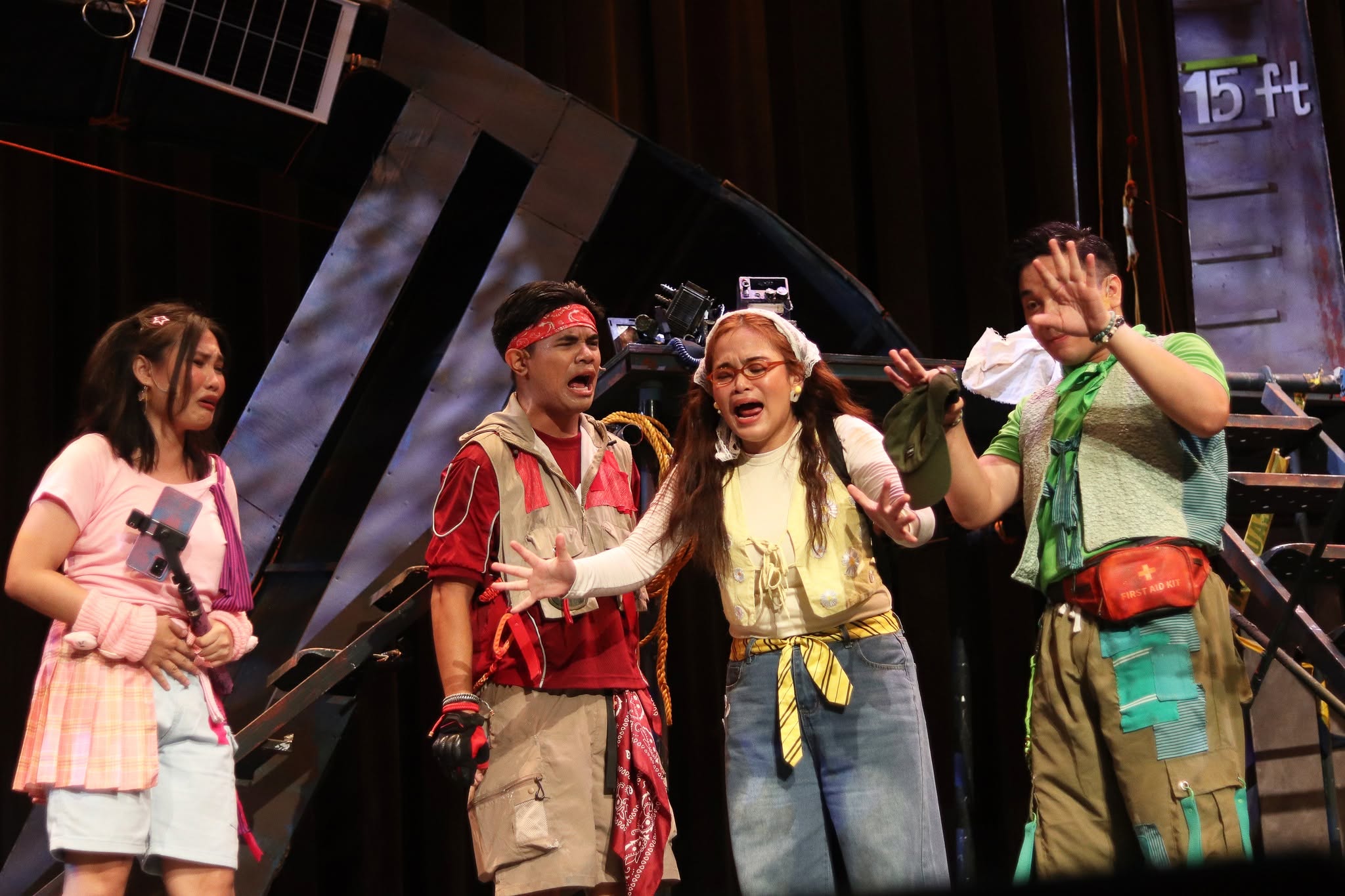
The interactive theater show 'Gen G: GG na ‘To' engages a Gen Z audience by allowing them to make real-time choices that influence the story's outcome, reflecting the complexities of decision-making in their lives. The narrative centers around characters navigating rising floodwaters in Balangay Gen Zones, symbolizing community and the shared systems that shape their realities. The production aims to empower youth by highlighting the importance of their choices and encouraging them to actively participate in shaping their future, with performances continuing until December 2026. This is AI-generated. Read the article for full context. Report any errors. The show begins with the Joker asking the audience to help guide the story toward a satisfying ending. Most of the crowd belongs to the younger generation, or the digital natives widely known as “Gen Z.” “Gen G began by listening to young people talk about how they make these choices,” said Ian Segarra, director of the interactive theater show Gen G: GG na ‘To! “Through our conversations with them, what emerged is that choosing is rarely simple. Our decisions are shaped by our families, friends, fears, responsibilities, circumstances, and the systems we live in. What seems like the wrong choice from the outside may feel like the only choice available to us.” Organized by the Philippine Educational Theater Association (PETA) and Move to Change Foundation, Inc. (M2C), Gen G: GG na ‘To allows viewers, particularly the younger audience, to make choices as they watch the play. Inspired by what Filipinos commonly say, “Kabataan ang pag-asa ng bayan (The youth is the nation’s hope),” the story features the characters Dex, Achi, Chloe, and Sid, all fighting for survival amid rising floodwaters in Balangay Gen Zones. “At the heart of Gen G is the image of the Balangay — a vessel built to carry people together. It becomes a symbol of community and of the systems we inherit and build together,” Segarra said. “We may not have created the world we are given, but we are constantly participating in how it is maintained, shaped, and transformed.” Perhaps more than entertainment, Gen G is a live exercise in democracy. The show relies on real-time choices from the crowd, which, Segarra noted, resulted in unpredictable choices during the play. This, he shared, also provided the production team with fresh insights. “There are surprising answers. Merong mga hindi namin ine-expect na makikita nila, na nakita nila (We see things we didn’t expect them to catch),” said Segarra. “It’s surprising and sometimes it’s also enlightening. Na parang, ‘Ah okay, ganito pala talaga…ganito mag-isip ang mga kabataan ngayon (Ah okay, so this is how today’s youth actually think).” This choose-your-own-adventure setup forces the audience to stay fully immersed in the story, with the active, live-voting feature directly dictating the fate of Dex, Achi, Chloe, and Sid as they navigate the rising waters. Since the cast must adapt to the audience’s decisions, the story flow changes with every single performance. “I thought that theater is very powerful in evoking the emotions or evoking the capacity and potential of the youth. Hence, we considered to mount this play with PETA,” said Liza Abaya, founder of Move to Change Foundation, Inc. Youth-centered effort The cast, all Gen Zs themselves, makes the play even more relatable to the young target audience. On stage, they portray characters with clashing personalities and conflicting ideas — forcing the audience to carefully weigh options during crucial decision-making moments. Ultimately, the characters have to make choices to achieve their common goal: saving their Balangay. “In our practice, we cannot prescribe it. We will always pick it up from the audience,” said PETA president Melvin Lee. “If they will bring up a specific issue, the audience has to resolve it and come up with their own stand about a specific issue. Us artists, we cannot prescribe it for the audience.” Zoe Damag, the cast member who plays the Joker, emphasized how this interactive approach empowers both the actors and the students. “When students perform and engage, they come alive and realize their true capabilities. You are forced to research and deeply understand your reality, because you cannot portray a character — or make a choice — with half-baked knowledge,” Damag said in Filipino. Despite the different choices within the story, the casts come in well-prepared to execute different scenarios every show, having rehearsed all possibilities. “That’s why it’s difficult at times, challenging at times, but it’s beautiful also because you get to understand how the young people also react to what is [in front of them],” Damag said. Gen G will continue to tour schools and universities until December 2026. As the play respects the young audience’s real-time decisions, it also allows them to realize the weight of their choices. “What if the future of our community depended on the choices we make today?” EO Masilungan, M2C’s executive director, asked. “Young people saw something that mattered, and they decided to do something about it. And that is change-making.” – Rappler.com Angel Camille Dio is a Rappler intern studying BA Journalism at Polytechnic University of the Philippines.
Why every audience vote matters in PETA’s ‘Gen G’ play
Full Article
Original Source
Read the full article at Rappler →KhanList aggregates and links to publicly available news content. We do not host full articles from third-party sources. Always verify important information with original sources.