
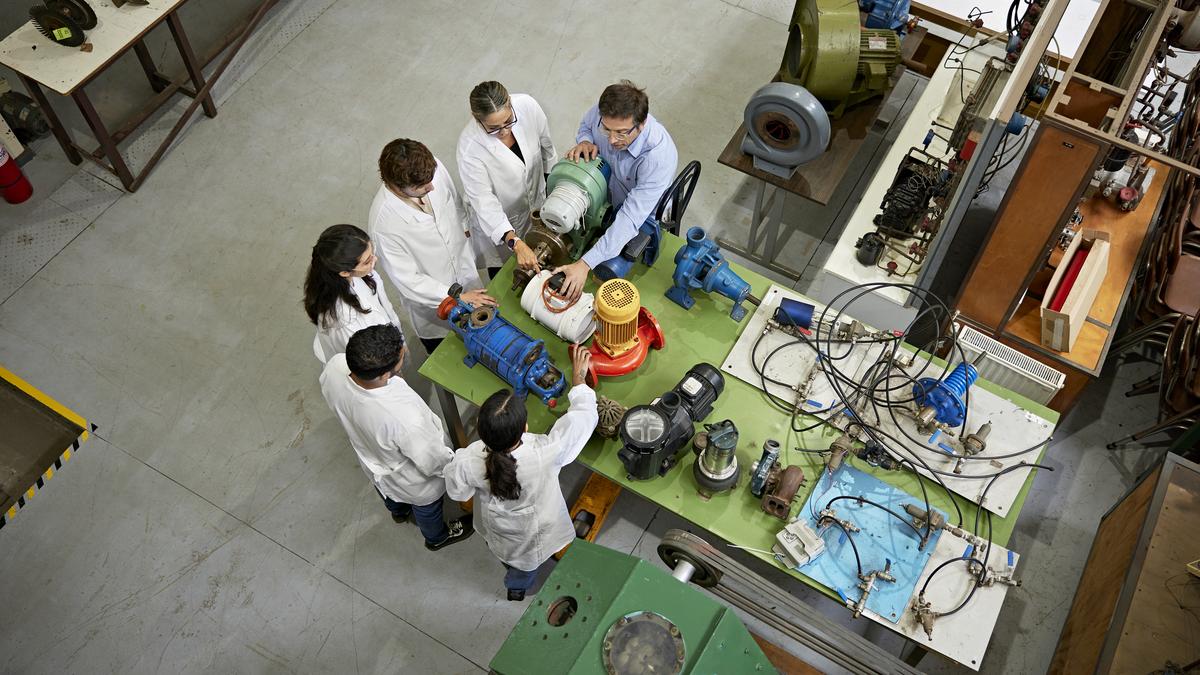
Much of an engineer’s value sits in the gap between resolving the divergence between a clean simulation and hardware that refuses to cooperate. | Photo Credit: Getty Images/iStockPhoto Across UG Engineering laboratories in India, practical coursework is built to confirm known results, not to investigate unknown ones. Instruments are calibrated before students arrive. Test rigs use components chosen because they behave. The lab manual is a checklist that terminates at an answer already printed in the syllabus. Students power on the supply, take six predictable readings, plot a curve that reproduces the theoretical derivation, and leave. When a reading drifts or refuses to settle, the unwritten convention — tolerated by instructors running back-to-back batches of 60 or more — is to nudge a potentiometer, discard the outlier, or quietly adjust the numbers until they clear the grading threshold.The result is a graduate fluent in how idealised systems behave and inexperienced with actual hardware. Someone has to isolate a physical defect the textbook never modelled; usually under time pressure, with incomplete information. This diagnostic deficit is not an accident of pedagogy. It is an economic consequence of how mass technical education is assessed. Deterministic labs scale cheaply: checking whether a student’s calculated output lands within 5% of the expected value takes a grader seconds. Judging how that same student traces an intermittent cold solder joint or a clogged sensor port requires an experienced instructor watching an investigation unfold in real time; a resource a department running a 100 students per practical slot does not have. Published - November 22, 2026 08:00 am IST
Why Engineering students need to know what to do when the machine doesn’t work
Full Article
Original Source
Read the full article at Thehindu →KhanList aggregates and links to publicly available news content. We do not host full articles from third-party sources. Always verify important information with original sources.