
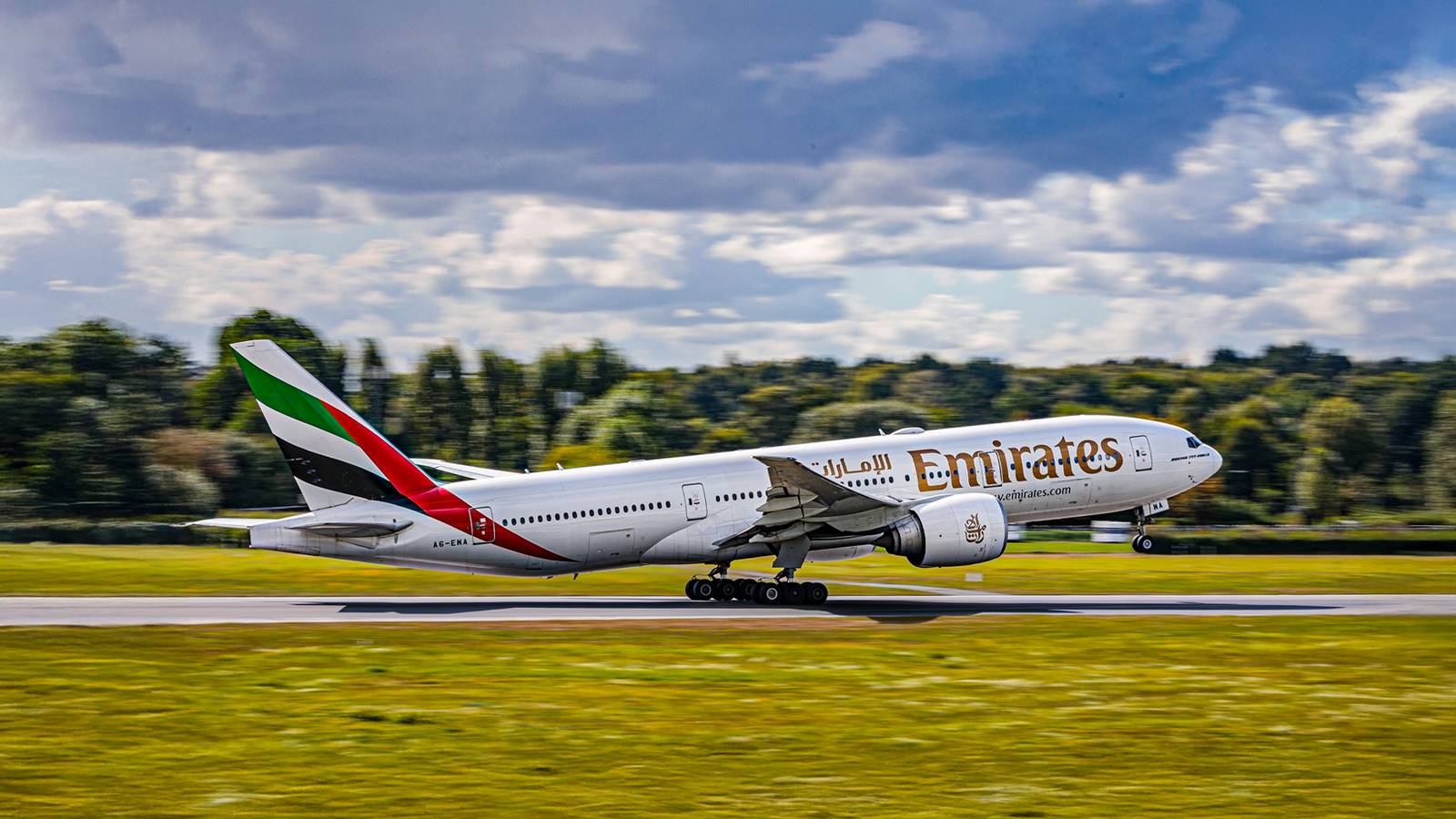
Published Sep 18, 2026, 3:01 PM EDT Based in the UK, Josh is a keen writer with a degree in Military History. Having worked previously as a financial journalist, he has covered the aviation industry extensively, reporting on airlines' results and monthly passenger statistics in the aftermath of the pandemic, alongside the likes of regulation around sustainable fuels, and the prospects for hydrogen-powered commercial flight. He joins Simple Flying with a lifelong love of all things aviation. Emirates is in the midst of the largest retrofit program ever embarked upon by an airline. An eye-watering $5 billion worth of investment will bring 219 of its aging jets up to modern standards, positioning them to remain in service for years to come. Specifically, this will give them fresh interiors, in line with a wider industry shift toward premium-heavy products. But with well over 300 orders for latest-generation widebodies on its books, a discrepancy appears in the funding the UAE co-flag carrier is pouring into keeping older models around longer. Indeed, many of those earmarked for overhaul are existing Boeing 777 variants — themselves in line to be succeeded by the Boeing 777X for which Emirates has a vast number of firm commitments. So the question is: Why? How Is Emirates Revitalizing Its Boeing 777s? Credit: Emirates One glaring reason behind the retrofits is surging premium travel demand. According to the International Air Transport Association (IATA), the number of business and first-class airline passengers globally rose 4.5% in 2025 to hit 109.7 million. While that meant just 5.5% of international passengers paid for such fares, the Middle East saw premium-class passengers rise to 9.5% of total travelers. That meant local airlines like Emirates filled the second-most premium-class seats as a share of total passengers worldwide, behind only those in the US. There is little surprise that Emirates’ refurbishment program has sought to increase the amount of premium-class seating aboard the aircraft already in its fleet. Specifically, the work will primarily focus on stripping out the traditional two- or three-class configurations on its jets and replacing them with new layouts featuring premium economy sections. On its 777s, Emirates has historically operated a mix of conventional economy, business, and first-class cabins. The updated aircraft are progressively being fitted with all-new premium economy seating, with refurbishments that incorporate “next-generation seating, fully refreshed interiors, and a sleek, modern design aesthetic and color palette,” per the airline. Such plans do not solely apply to Emirates’ 777s, mind. Emirates' Airbus A380s Also Being Upgraded Credit: Emirates Emirates Airbus A380 fleet is also receiving attention under the $5 billion investment. So far, they have flown in high-density two-class layouts, or with varying three-class configurations depending on the range of flights they serve. Like the 777s, they will be fitted with fewer seats spread across more classes following the upgrades. That means so-far refurbished A380s host between 484 and 569 seats, against up to 615 in those yet to be overhauled. Meanwhile, its 777s that have already been worked on have been left with 328 or 332 seats. Previous-generation cabins aboard these aircraft have capacities of either 354 or 360 across three classes, or 421 between two. All told, 110 A380s and 109 777s will have had their interiors entirely replaced once the project is completed, based on current plans. For context on the complexity of the process, that means engineers will work with over 4,000 parts for each A380 and more than 2,500 for each 777, according to the airline. As to why Emirates has committed to such an undertaking — especially since each retrofit has removed an aircraft from service for over a month on average — factors outside its control have played a major role. Emirates’ Replacement Boeing 777Xs and Airbus A350s Overdue Delays in delivering new aircraft have forced Emirates’ hand somewhat. These would otherwise have let Emirates toy with its premium offerings and even retire older models, but it has instead had to improvise with what it already has in its fleet. In particular, repeated setbacks in the 777X program have increasingly hampered Emirates’ fleet modernization. After placing an initial order for both the family’s new Boeing 777-8 and Boeing 777-9 models in 2013, Emirates was expecting deliveries from 2020. Instead, it is still waiting on these almost seven years later as Boeing continues to seek certification. Meanwhile, unfilled orders have grown to 270 jets, pushing Emirates to look elsewhere. “A huge tranche of the [old] 777s were supposed to be handed back in 2022, 2023, and 2024, but knowing that we were going to be drastically impeded on capacity, it was appropriate for us to extend the leases,” as Emirates’ engineering head Ahmed Safa told AeroTime in May last year. Emirates’ order book as of March 31, from the latest annual results: Aircraft family Number on order Airbus A350 54 Boeing 777X 270 Boeing 787 35 Boeing 777F 8 Total 367 However, Boeing issues are not the only ones that have plagued Emirates. Delays in Airbus A350 output, for which Emirates has also built a substantial order book, have also played a part. So far, Emirates has received 27 of these and has 54 more on order. Last May, though, it had only received four when it should have already received 21, per Safa’s comments. Combined with the headache of going without new 777X variants for so long, Emirates has operated with an unexpected lack of new aircraft and has had to rely on its established portfolio longer. That is, one that relies on the 777 just as much as the A380. Emirates Is The Largest Operator Of The 777 Globally Credit: Emirates Where the Emirates name is part and parcel with the A380 — the largest operator of the superjumbo by a stretch and the program's key customer — the 777 is just as much the backbone of the carrier’s operations. In fact, Emirates is also the world's largest operator of 777 family planes, boasting a greater number of such variants than A380s. According to data from Planespotters.net, Emirates currently has 116 A380s and 145 777s among its ranks. Admittedly, 18 of these 777s are freighters. Nonetheless, the 127 passenger 777s — 10 Boeing 777-200 and 117 Boeing 777-300ER — still outnumber the vast, 116-aircraft-strong A380 fleet that Emirates maintains. Emirates’ fleet, from Planespotters.net: Aircraft Number in fleet Average age Airbus A319-100 1 15 years Airbus A350-900 27 0.9 years Airbus A380-800 116 11.7 years Boeing 777-200 10 18.3 years Boeing 777-300ER 117 13.2 years Boeing 777F 18 3.8 years All of that means the 777 is a significant part of Emirates’ network, and it was always going to remain vital for some time as new aircraft gradually arrived to ease the strain. Delays in A350 arrivals and, importantly, the uncertainty created by the 777X remaining uncertified to this day have only kept older 777s relevant for longer and longer. It is the 777X program’s own mishaps that have really pushed Emirates to spend so heavily on its existing fleet, with no guarantee when the newer models will eventually arrive and then further complications when they finally do. Some Boeing 777Xs To Be Refused By Emirates Naturally, while Boeing has been waiting for the green light to start shipping variants of the 777X, it has been laying the groundwork to do just that as effectively as possible when the time comes. That means several airframes have been built already and left parked in anticipation of approval. Per reports, that rose to 26 models earlier this year, including five for testing and another 21 to fill initial deliveries. Unfortunately for Boeing, Emirates itself has threatened to upset that plan by refusing a number of these pre-built models. President Tim Clark told reporters at the 2026 Farnborough International Airshow that deliveries of “ten or 11” 777Xs earmarked for Emirates would not be accepted. At around eight years old, he explained, “they are going to need a complete upgrade on the mod status because, since they were produced, there is quite a lot that has happened to the airframe and all the other bits and pieces." How that affects delivery timelines for the new widebodies for Emirates, time will tell. Either way, with the 777X out of the question for so long and deliveries of all 367 aircraft on Emirates’ order book now due through 2038, focus on extending the time its existing planes can remain in service has been a necessity. The truth is, Emirates is already some way through the process of bringing these up to scratch. Emirates Nearly Halfway Through Retrofits Emirates At the project’s core was speed. Having first announced it would start overhauling existing aircraft back in November 2021, Emirates is now approaching the halfway point in the project. Albeit, only 105 jets were originally pegged for upgrades, with that number having since ballooned to 219. But of these, around 120 should have passed through the process come December this year. As of July, 100 aircraft had been refurbished under the effort, including 47 A380s and 53 777s. Emirates at the time flagged that an additional 20 aircraft would then be upgraded by the end of the year. On the whole, that will leave Emirates with a fair portfolio of freshly refurbished jets capable of bridging the gap until newer variants arrive in such numbers that it has some flexibility around what it does with the older models — whenever that may be.
Why Emirates Is Spending $5 Billion To Keep Its Boeing 777s Flying Longer
Full Article
Original Source
Read the full article at Simpleflying →KhanList aggregates and links to publicly available news content. We do not host full articles from third-party sources. Always verify important information with original sources.