
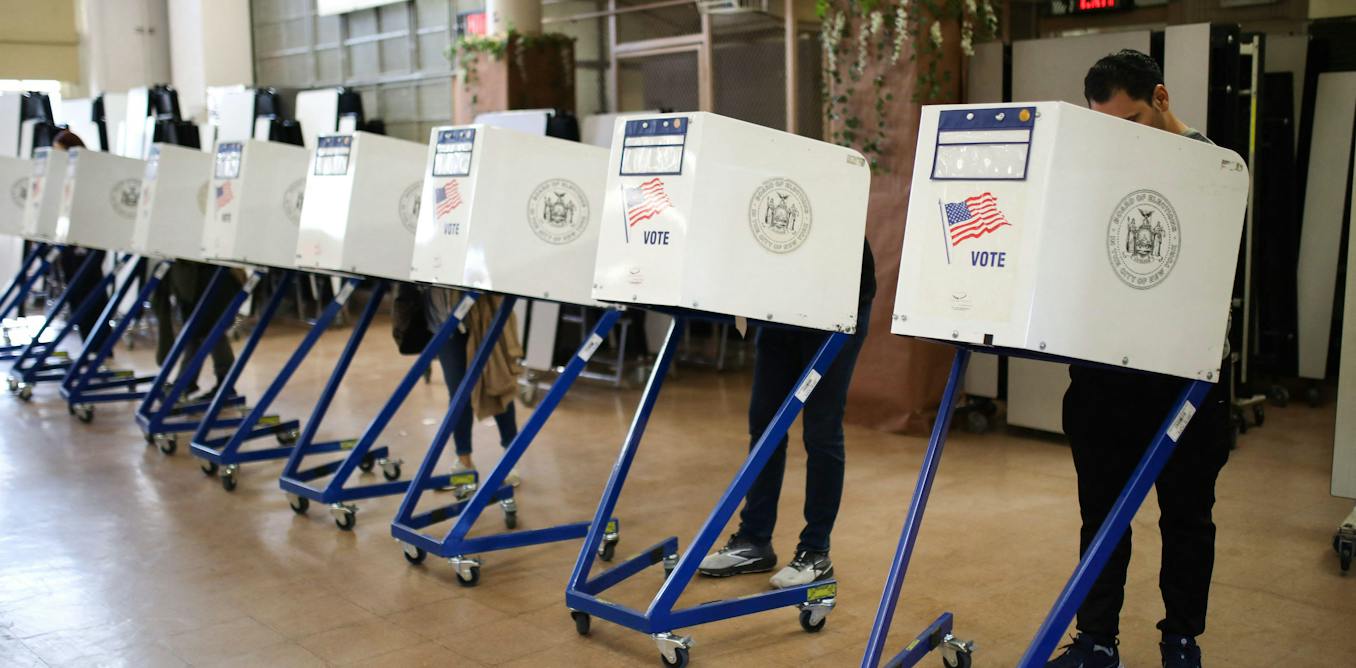
When voters enter polling booths across the United States next week to cast their ballots in the midterm elections, very few will be thinking explicitly about foreign policy. In a recent survey by the Chicago Council on Global Affairs, many people across the political spectrum named inflation and the cost of living as the issue which would affect the way they planned to vote (37% overall). This was followed by corruption (19%) and control of Congress (19%). The war in Iran barely registered, with just 2% putting it top of their list. At first sight this appears to support the conventional wisdom that US voters generally don’t care about foreign policy. But traditional understandings of the electoral importance of foreign policy often reflect misunderstandings about the way in which voters assess candidates for office. One reason a president’s foreign policy might lose him or his party votes is when their administration’s choices directly affect the daily lives of voters. War is the most obvious example of this. International politics may be complex and far removed from the daily lives of most citizens. But when blood and treasure is being invested in overseas conflict, the public tends to sit up and pay attention. This does not always show up in polls. Historically, the proportion of voters who rank international affairs among the most important problems facing the country has averaged around three times lower than the proportion who identify economic issues as their primary concern. But what these polls miss is the degree to which voters today are blaming the administration’s foreign policy choices for the poor state of the economy. According to a recent survey by the Institute for Global Affairs, an overwhelming majority of Americans (81%) say the war in Iran has increased the cost of living. When YouGov asked survey respondents why gas prices were going up in their area, the top three answers were the war in Iran (41%), Trump (18%), and war in general (17%). Trump’s tariff policy also comes at a political price. According to the Yale Budget Lab, the current effective tariff rate is 11% – almost quadruple what it was when the president assumed office in January 2025. And voters are feeling the pinch. According to the Chicago Council survey, a strong majority of respondents (81%) say tariffs have been bad for the cost of living at home. And three in four say tariffs will be important to their vote, according to a Cato Institute survey. Issues like the price of gas and groceries which affect people’s wallets will still play an outsized role in shaping the outcome of the midterm elections. But many Americans now hold the president’s conduct abroad responsible for the affordability crisis. With the president’s approval ratings already at a historic low of 36%, and support for his handling of several foreign policy issues even lower, Trump’s record is an albatross around the necks of many of his Republican colleagues. Reckless leadership Even voters who aren’t that interested in international affairs still form judgments about the competence of their leaders based on the way in which they execute their duties as commander-in-chief. Few people entered polling booths in November 2024 with the American withdrawal from Afghanistan in the front of their minds. Yet the way the Biden administration handled that episode did lasting damage to perceptions of the president’s image. Biden’s approval rating dropped almost overnight, and never recovered. Two years ago, Trump exploited this on the campaign trail, developing a reputation as a strong leader who would stand up against adversaries while keeping the country out of wars. In survey questions asking respondents which candidate would do a better job of handling foreign policy writ large in the run-up to the 2024 election, he regularly prevailed by at least five percentage points. Today, however, foreign policy is no longer a winning issue for Trump or his party. According to a New York Times/Siena survey, Democrats now enjoy a ten-point advantage over Republicans on the question of which party voters trust to do a better job handling foreign wars. In an Economist/YouGov survey, Democrats had a 24-point advantage on the question of which party would do a better job of keeping the US out of wars. Many people who voted for Donald Trump in 2024 now believe his foreign policy is responsible for higher prices. EPA/Laura Brett Worse still, the political damage has spread into broader perceptions of the president’s leadership style. When the war began, a YouGov survey found that 56% of respondents said the word “reckless” applied “a lot” to President Trump – up five points from a year earlier. The proportion of Americans who described Trump as a “strong leader,” meanwhile, dropped four percentage points. With midterms traditionally understood as a referendum on the performance of an incumbent president, the picture looks bleak for Republicans. The cost of wars Trump’s recent decision to temporarily lift US sanctions on diesel imports from Russia indicates the White House knows how much gas prices could cost it at the polls. But his decision to adress this by accommodating Vladimir Putin has only served to place the spotlight on another of Trump’s foreign policy weaknesses: his failure to bring the war in Ukraine to a close. And it could backfire. With experts doubting whether Trump’s moves will have any meaningful impact on gas prices, public opinion remains strongly in favour of Ukraine in its conflict with Russia. In 2006, a backlash to George W. Bush’s handling of a costly war in the Middle East handed the president’s party a “thumping” defeat, as Democrats rode a “blue wave” to claim majorities in both chambers of Congress. With voters now feeling the pain of yet another war in the Middle East and Trump’s trade wars, Republicans may be about to learn a similar lesson about the political perils of an unpopular foreign policy record.
Why Donald Trump’s foreign policy could cost Republicans in the midterm elections
Full Article
Original Source
Read the full article at Theconversation →KhanList aggregates and links to publicly available news content. We do not host full articles from third-party sources. Always verify important information with original sources.