
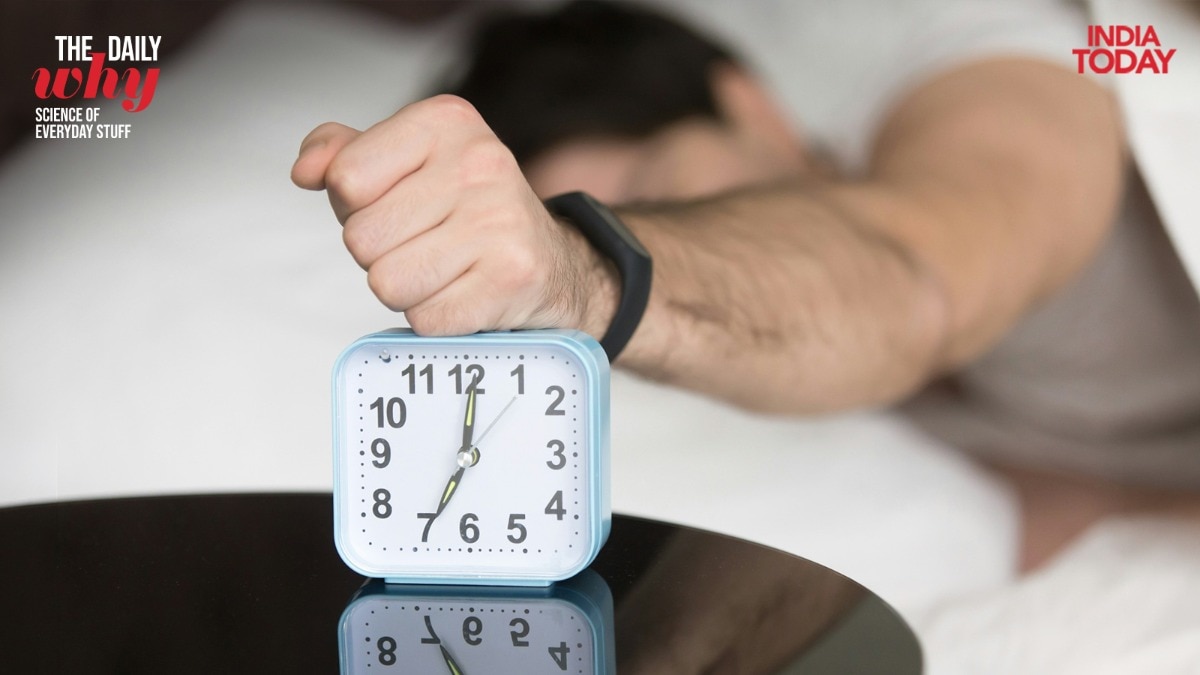
It is one of the small, uncanny things the body does, and almost everyone has lived it. You have somewhere important to be in the morning, so you set the alarm with great care. And then, in the grey hush before it is due, your eyes simply open. No ringing or buzzing.You lie there in the half-light, faintly astonished, and watch the clock tick over to the exact minute you set, as though your body had been counting down in the dark all along.It feels like a sixth sense. It is, in fact, something far more wonderful: a clock inside you, so precise it can beat the one on your bedside table.WHAT MAKES US WAKE UP RIGHT BEFORE THE ALARM GOES OFF?Deep in your brain sits a tiny cluster of cells called the suprachiasmatic nucleus, roughly the size of a grain of rice, which works as your body's master clock. It keeps what scientists call your circadian rhythm, the internal 24-hour cycle that quietly decides when you feel sleepy and when you feel awake, and it keeps surprisingly good time.When you wake and sleep at the same hours, day after day, this clock learns your schedule. It knows, without being told, roughly when morning will come for you. And so, rather than leaving you to be startled awake, it begins preparing your body for the day a little before you need to rise, winding you gently up towards the surface of sleep so that you arrive at waking almost exactly on cue.WHY DOES THE BODY WAKE ITSELF WITH A HORMONE?The clock does not nudge you awake with an alarm of its own. It uses chemistry. In the last hour or so of your sleep, your body releases a slow, rising tide of cortisol, a hormone best known as a stress hormone but which, in the morning, acts as a kind of natural wake-up call, lifting your alertness and readying you for the day.This morning surge even has a name, the cortisol awakening response.The truly remarkable part is that your body times this surge to your expected waking hour.In a now-famous experiment, researchers told one group of sleepers they would be woken at 6am and let another group sleep in. In those expecting the early start, the hormone began climbing more than an hour before 6am, as though the sleeping brain were setting its own alarm, published by Born and colleagues in the journal Nature. Your body, in other words, anticipates the morning, and starts the engine before you are even awake to turn the key.IS THERE REALLY A CLOCK INSIDE EVERY CELL?Here is the part that still amazes scientists. The master clock in your brain is not working alone. Almost every cell in your body, in your liver, your muscles, your skin, carries its own tiny timekeeper, a set of so-called clock genes that switch proteins on and off in a rhythm lasting close to 24 hours.The brain’s master clock acts like the conductor of an orchestra, keeping all these cellular clocks playing in time. It is why the sense of morning is not just in your head but written through your whole body.Scientists are still teasing apart exactly how much of the pre-alarm waking is this precise anticipation and how much the ordinary morning rise of cortisol happening to coincide with your alarm, published by Velazquez Sanchez and Dalley in the journal Brain and Neuroscience Advances.But the headline is not in doubt. Your body keeps time, and keeps it well.WHY DO WE WAKE EARLY BEFORE A BIG DAY?You may have noticed the effect is strongest the night before something that matters: a flight, an exam or an early train. That is no accident. The anticipation of an important or stressful morning raises your cortisol and keeps your brain in a lighter, more alert state of sleep, primed to surface.It is the same reason excitement or worry can have you blinking awake at 4am, long before any alarm, your body refusing to be caught off guard.So the next time you drift up out of sleep a minute before the alarm, lie still a moment and admire your internal machinery.Somewhere beneath your awareness, a clock you never wound and cannot see has been keeping careful watch through the night, counting down the hours, so that it might wake you gently, and just in time, before the harsh electronic version ever gets the chance.- Ends
Why do you wake up a minute before your alarm? No, it is not a coincidence
Full Article
Original Source
Read the full article at Indiatoday →KhanList aggregates and links to publicly available news content. We do not host full articles from third-party sources. Always verify important information with original sources.