
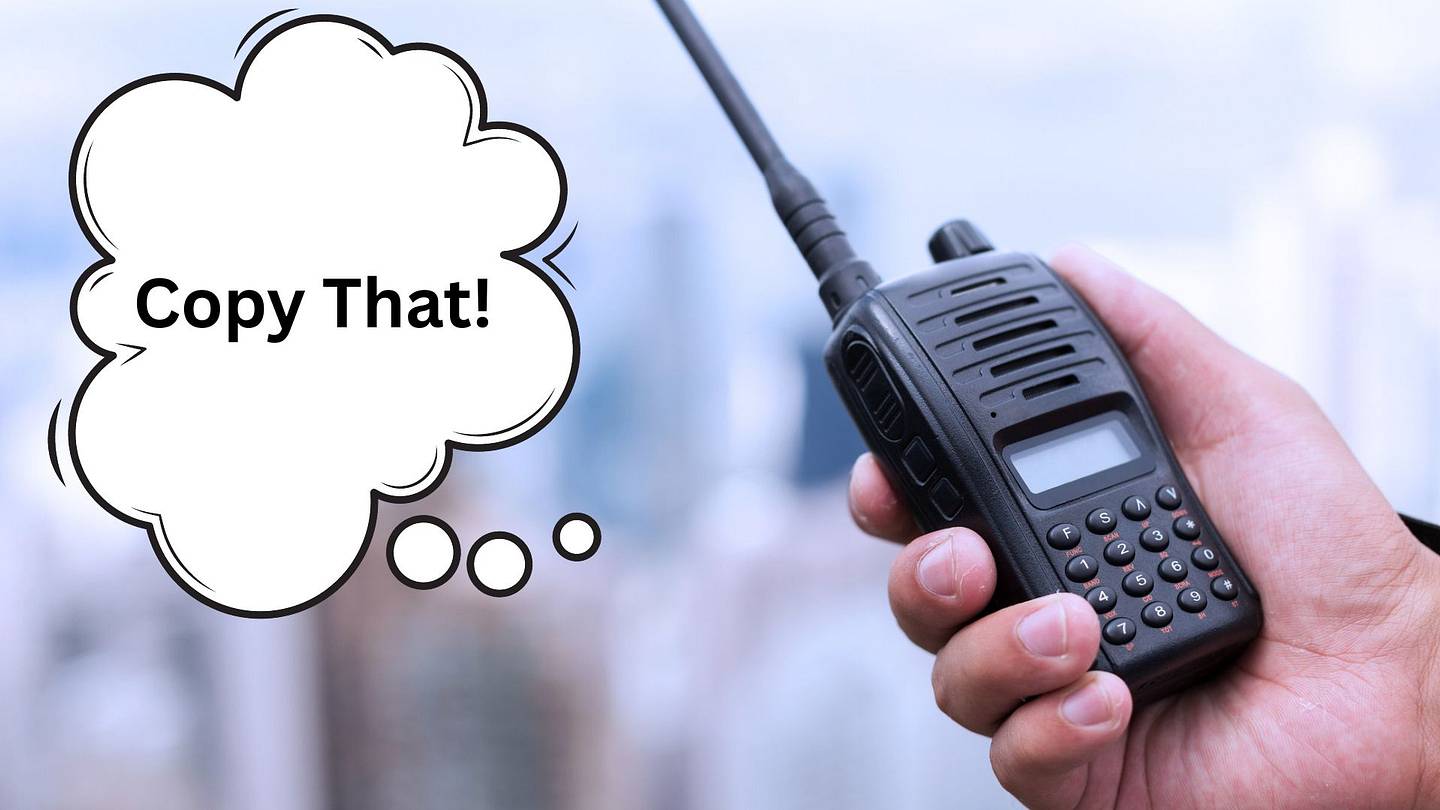
It’s something you might have read or heard in action movies and wartime thrillers time and again without ever giving it a second thought. But why do people say “copy that” (or just “copy,” in short) when they’re accepting a message, an order, or some kind of radio communication?The Meaning and Purpose of 'Copy That'Using A Handie-Talkie | PhotoQuest/GettyImagesGiven the kind of context in which you’re likely to hear it, it might be tempting to presume that “copy that” simply means “yes,” “I agree,” or something similarly compliant. In fact, in radio communication and military speak in particular, “copy that” is a term of acknowledgement rather than merely agreement, and so is used to imply that a communication has been heard and understood correctly, and that any order it might contain will therefore be carried out. Its use is also claimed to be particularly common when multiple stations or recipients are involved in a broadcast message. Like a lot of radio signalling jargon, the point of “copy” or “copy that” is brevity and clarity. In noisy environments or perilous and fast-moving situations, keeping military communication short and clear is understandably important, and therefore an entire vocabulary of so-called radio procedure words, or “prowords,” has emerged to speed that process along. But why say that you “copy” the message, rather than just that you’ve understood it? The Origins of 'Copy That' in Morse CodeTelegraph | menonsstocks/GettyImagesWell, according to the most commonly held explanation, the missing part of the puzzle here is the fact that, in the very earliest days of military communication, messages were sent not by spoken radio or walkie-talkie, but by Morse code. Early radio messages and orders would therefore have to be sent piecemeal, letter by letter, using the familiar beeping dots and dashes—or short “dits” and longer “dahs”—of the telegraphy code developed by American inventor Samuel Morse in the early 1800s. With messages painstakingly spelled out one beep at a time, rather than just spoken, the person on the receiving end would typically write down each letter as they heard it, to save them from having to try to remember and decode the entire message in their head as they went along. Each transmitted message, therefore, was quite literally “copied” down by the receiving party, who would then send an acknowledgement or reply to show that the message had been clearly received and understood. Over time, ultimately, “copying” a message simply became a shorthand means of acknowledging it—even long after spoken radio communication largely replaced Morse code transmissions in the 20th century. Read More:
Why Do We Say “Copy That”?
Full Article
Original Source
Read the full article at Mentalfloss →KhanList aggregates and links to publicly available news content. We do not host full articles from third-party sources. Always verify important information with original sources.