
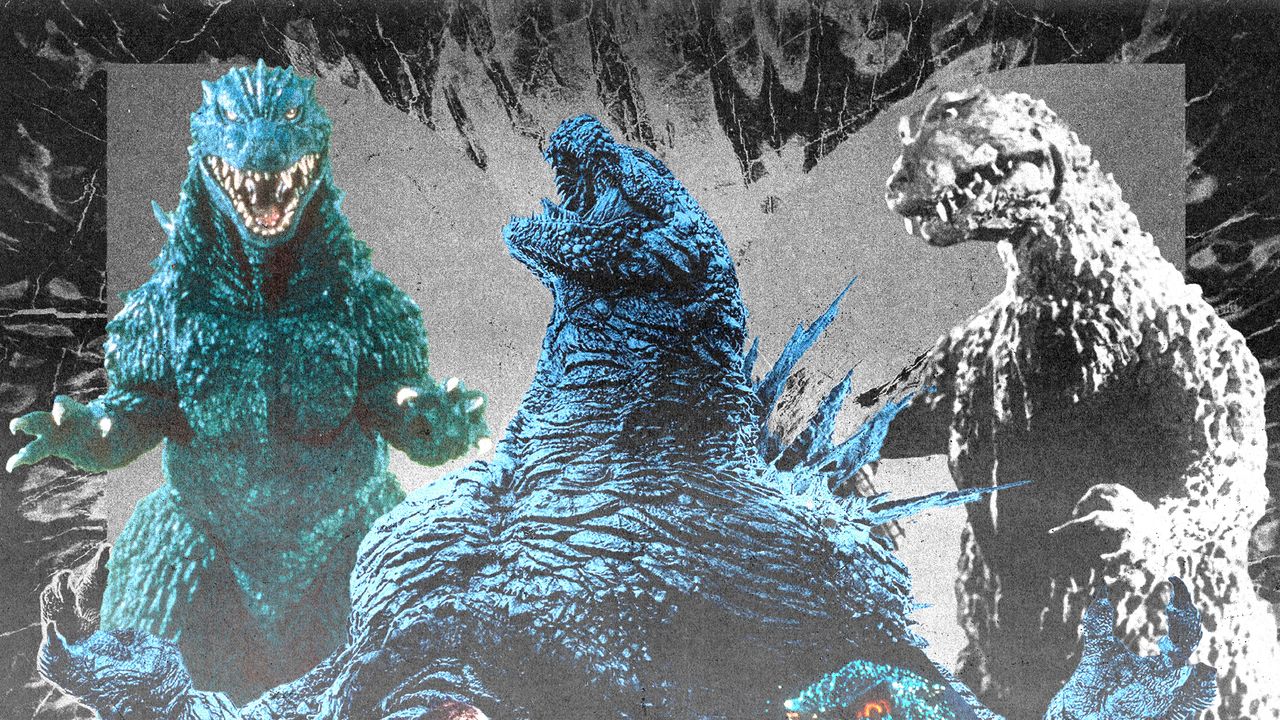
Since 1954, the King of the Kaiju has been terrorizing the city of Tokyo. But it wasn't until the two most recent installments, Godzilla Minus One and Godzilla Minus Zero, that the franchise became prestige fare.GQ; Everett CollectionLike most people born in the western world after 1954, I knew of a monster named Godzilla before I’d heard of a country called Japan. It’s not a rare perspective. For as long as nearly any living person can remember, Godzilla has been hugely popular, far exceeding the global recognition afforded most leaders, athletes, and certainly his human co-stars, those men and women whose dramatic dealings are the universally agreed-upon bargain for apocalyptic havoc that millions upon millions have gladly paid to see for over 70 years.What Godzilla hasn’t been is prestigious. The irradiated dinosaur of very few words—mainly deafening screams—is a beloved figure more in the key of Harry Potter, Batman, or James Bond than the loftier fare that typically gets recognized by major festivals or awards bodies. But exceptions to the rule do exist. The Criterion Collection issued Ishiro Honda's 1954 original on a deluxe Blu-ray in 2012 and marked their 1,000th release with a lavish set of Godzilla’s Shōwa era (1954-1975), which both documents film history and calls to mind John Huston’s Chinatown line about sticking around long enough to become respectable. Writing an introduction to Honda’s biography A Life in Film, from Godzilla to Kurosawa, Martin Scorsese deemed the series’ first director "an extraordinary artist and craftsman" and placed Honda’s 1954 film (alongside spin-offs Mothra and Rodan) among “pictures that haunted the imaginations of young moviegoers like myself and millions of others for years to come.” Kiyoshi Kurosawa—perhaps Japan’s greatest living filmmaker, and certainly its finest practitioner of austere horror—deemed Honda’s film an early lesson in both national trauma. Thomas Pynchon, too, had ambitious plans to write a novel about the insurance adjuster who responds to Godzilla’s wreckage (the idea never fully materialized, though it did become a nice tangent in his 1990 novel Vineland). We can look at the films and countenance such appreciations from geniuses. In the meantime, good luck to anyone counting the exact number of action figures, coloring books, sticker packs, and lunchboxes boasting Godzilla and friends.Embassy Pictures/Getty ImagesA critical shift started somewhere in the last decade. Toho ostensibly shelved Godzilla with 2004’s Final Wars, a grand finale that was the big-budget equivalent of a child smashing toys. (That is a compliment.) Godzilla LLC boasts enough films and ancillary products to be financially solvent until the sun burns out (or an indomitable monster rises from the sea), but that retirement was short-lived. Toho resurrected the franchise in aggressive form with 2016’s Shin Godzilla, both a complete series reboot and (across several stages, each grotesque and terrifying) character reinvention that dispensed with typical monster-movie hijinks. An unholy experiment that would make the series’ many mad scientists proud, Shin Godzilla fused the hilarious bureaucratic hallway-rushing of In the Loop or Veep with cosmic horror befitting its director, Hideaki Anno, whose contributions to Japanese culture are nearly Godzilla’s equal on the strength of Neon Genesis Evangelion alone. With time, it’s downright eerie to see Anno’s foreshadowing of the global unrest of Trump, Brexit, COVID, and our endless misinformation era. But rather than keep the great filmmaker on retainer for any number of sequels or spin-offs, Toho regrettably followed Shin Godzilla with an anime trilogy produced for Netflix, a rare class of films I’ve been too embarrassed to even log on Letterboxd.Whether genius or dreck, none of these films quite anticipated 2023’s Godzilla Minus One. It’s one thing to become the highest-grossing Japanese-language release in U.S. history—any Godzilla movie that doesn't at least aim for such a distinction isn’t worth its salt. It’s harder to imagine anyone, even or especially the franchise’s most ardent fans, anticipated lavish public praise from a quintet of Best Director winners in Steven Spielberg (who claims to have seen the film at least three times), James Cameron (who offered to work on a sequel), Christopher Nolan, Guillermo Del Toro, and Bong Joon-ho. In a recorded conversation with Yamazaki, Tom Cruise and Christopher McQuarrie credited the film as an inspiration; the actor went so far as to call it “perfect.” Which is to say nothing of the fact that Godzilla Minus One earned the series its first Oscar, a VFX prize awarded to none other than writer-director Takashi Yamazaki—a nice encapsulation of the film’s balance between spirit and spectacle.Because Godzilla Minus One resonated more than anyone could have anticipated, Godzilla Minus Zero, which arrives in theaters this weekend, shoulders the burden of expectation. The first shot across the bow was its world premiere at last month’s New York Film Festival, where Zero debuted alongside prestige fare like Luca Guadagnino’s Sam Altman biopic Artificial and Tony Gilroy’s star-studded Behemoth! There, NYFF’s artistic director Dennis Lim introduced the movie to a sold-out crowd at the Alice Tully Hall, praising Yamazaki for exemplifying "the endless possibilities of creative VFX and genre filmmaking." Minus Zero indeed thrives on spectacle: its opening sequence blazes a merciless path of carnage aided by an elegant long take, while subsequent scenes centered on one of Godzilla’s classic foes, the three-headed Ghidorah, inspire genuine terror more than cheap thrills. This is the first Japanese film shot for IMAX, a large-scale exhibition that’s often torqued for discomfort. Yamazaki’s centerpiece battle pitting the monster against a squadron of fighter planes is dogged by fatalistic doom: a mother and child screaming as their house crashes to the ground don’t get the last-minute salvation we’ve come to expect, and even the sentimental-seeming inclusion of a pilot named Honda is complicated by his eventual fate.If not quite so grave as the visions of death that imprinted upon a young Kiyoshi Kurosawa, Yamazaki’s narrative—including a face-melting sequence that U.S. distributor GKIDS have asked not be spoiled—provides a stark contrast to the bloodless carnage of American blockbusters. It’s quite the cultural coup, too, that a film this brutal and generally skeptical of American imperialism has secured a simultaneous international release: every English-speaking actor (none recognizable, each portraying arrogant allied military) bears an amusingly off-market quality à la the nefarious white time-travelers of 1991’s altogether underrated Godzilla vs. King Ghidorah.Nearly all Godzilla films are a total restart. Minus Zero is immediately notable as a direct sequel. The results suggest that Yamazaki overestimated his initial project. Godzilla is not much of a presence in Minus Zero, first appearing around the 50-minute mark and then again in a suitable, albeit brief climax. Far more time is spent with those we came to know and like during Minus One, each reprised by an entirely competent ensemble that fails to elevate interest higher than a certain co-star’s 50 meters. (The protagonists’ adopted daughter from Minus One returns here for the sole purpose of standing in place and crying.) Whatever its pretensions towards grandeur, this is still a film where a scientist explains his master plan by smashing together two monster figures. It takes little to delight in this moment, a literal and figurative collision of serious storytelling and childlike abandon. More of that spirit might’ve served the final picture.Dukas/Getty ImagesMy mild disappointment is nothing compared to the agony Godzilla has wreaked on the district of Ginza, which last week hosted the first public screenings of Minus Zero through the Tokyo International Film Festival. Godzilla’s annihilated the city’s landmarks enough times that when we think of all-out destruction on the sprawling megalopolis that is Tokyo, we’re probably picturing its uber-fashionable shopping sector laid to ruins. When he emerged from the sea in 1954, he wrecked the district’s historic Nichigeki Theater, which was again destroyed (in real life, of humans’ accord) and reopened as the Yurakucho Mullion building in 1984—the same year as The Return of Godzilla, where he inflicted yet more damage on the brand-new structure. Godzilla Minus One recreated the Nichigeki Theater in loving detail only to destroy it again in a sequence that deployed modern visual effects to cause maximum tactility and human misery. That Hiroshima-like site is revisited in Minus Zero, leading one character to declare that “Ginza is again the battleground.” Time’s healed those wounds, however. The night before Minus Zero’s Japanese premiere, a small crowd gathered outside the Yurakucho Mullion’s Seiko watch for an extravagant display: the clock lifted, and out came a small set of Godzilla puppets that strike chimes while Akira Ifukube’s iconic theme plays.Ginza’s Wako Clock Tower has fared no better: it was torn to ribbons in the 1954 original, 1995’s Godzilla vs. Destoroyah, Shin Godzilla, and Minus One. After a time you must wonder what keeps bringing Godzilla back to the neighborhood. Is it animal instinct, or mere coincidence, or an atomic hatred for its glowing consumerism? The Wako Annex, a nearby pastry shop that Google not-inaccurately describes as “chic,” currently advertises a Christmas-themed cake recreation of the oft-doomed Clock Tower with Minus Zero’s monster looming over it; accompanying text informs us that “Godzilla strikes Ginza’s Wako once again.” The nearby Toho cinema is within Hibiya Godzilla Square, featuring a small but impressively detailed statue and a plaque reading, “The human race must coexist with Godzilla.” Immediately adjacent is a three-story shopping mall hosting a Toho store selling numerous Godzilla ephemera. (I bought the tea cup.)Even Americans accustomed to the fetishization of disaster would be impressed by Japan’s ability to marry suffering and spectacle to great financial gain. Perhaps it’s the same haunted fascination of a young Martin Scorsese or Kiyoshi Kurosawa cast unto the world at large; Godzilla might be scary as he destroys Ginza, but he’s something to admire when shrunk down to human size and displayed inside the Yurakucho Mullion’s lobby. (The photo-snapping crowds that gather every time I walk past suggest that bit of marketing paid off.) Even as Minus Zero’s first reviews show a less rapturous response than Minus One, this series’ viability—and its newfound prestige—shows little indication of flagging. Ginza’s residents were beyond happy to see Godzilla, at least in ossified, action-figure form. But who's to say they wouldn't be just as excited if, one day, his path of destruction broke through the screen?
Why Do We Keep Coming Back to Godzilla?
Full Article
Original Source
Read the full article at Gq →KhanList aggregates and links to publicly available news content. We do not host full articles from third-party sources. Always verify important information with original sources.