
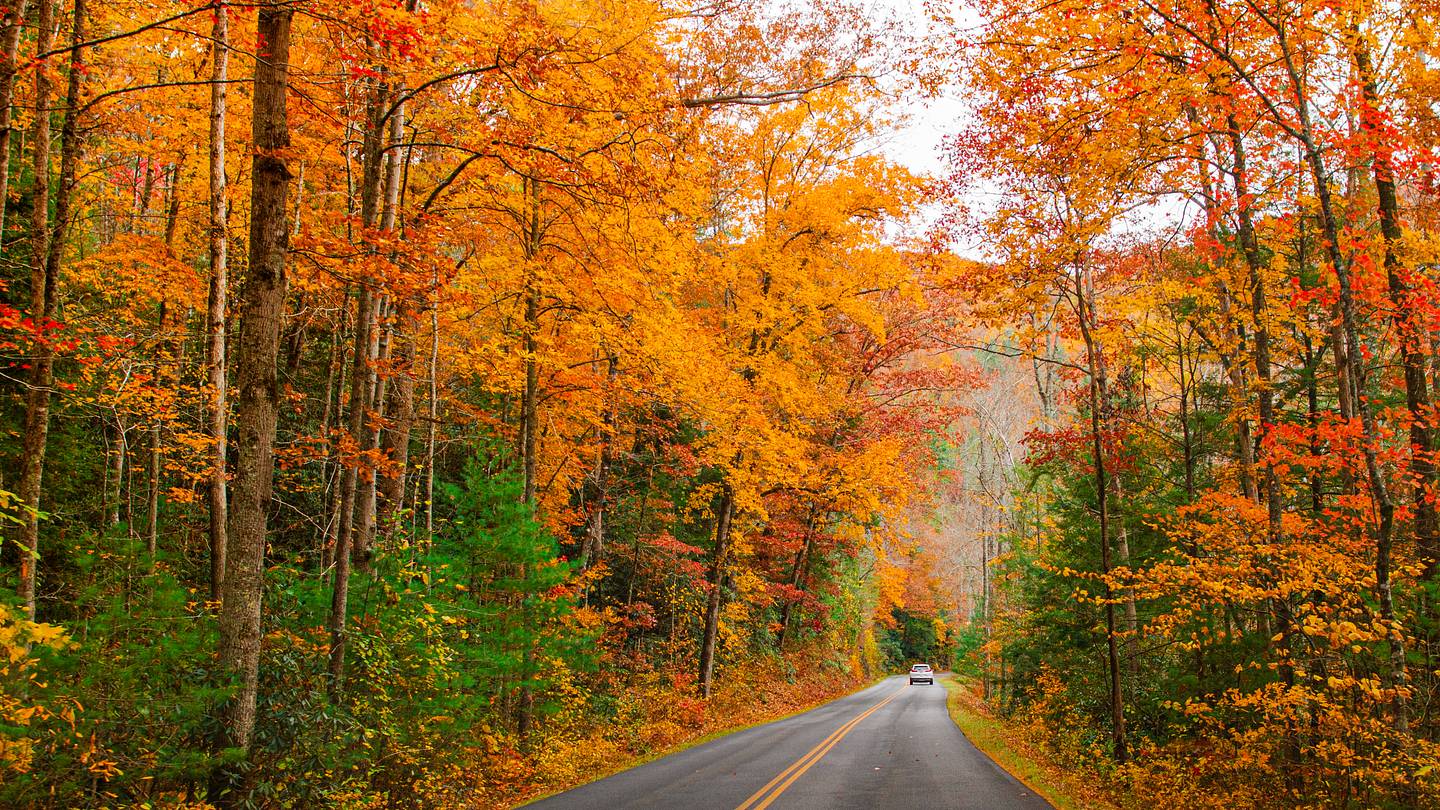
Leave it to nature to cushion the onset of cold weather with a literal golden lining. In exchange for red ears and runny noses, come fall, we get a sight for sore eyes: fiery red, golden-yellow, and even dark purple foliage. Depending on where you live, deciduous trees start to swap their green summer suits for a blanket of warmth from late September through November. And while the changing leaves might make the landscape look like a real-life painting, the scientific process behind it is a bit more complex than just swiping a brush. So, why exactly do leaves turn different colors in the fall? And what determines a region's color palette or peak foliage?Chlorophyll's Exitooyoo/GettyImagesAs magical as it might look, the transformation from bright green to vibrant shades of red, orange, yellow—and eventually brown—comes down to a simple scientific explanation. Rather than "turning" orange and yellow in autumn, these pigments simply shine through due to the absence of chlorophyll—the sunlight-induced compound that shows up as green in the summer. Think of it like sun-bleached strands of hair that fade as temperatures fall and the sun turns in for the season, emphasizing the underlying brown and auburn hues.Our planet's forests don't go by daylight saving time, and yet, they seem to have an internal clock that prompts the breakdown of chlorophyll production, letting yellow and, soon after, orange take center stage. The former comes from pigments called xanthophylls, while the latter stems from carotenes, the same compound responsible for the bright orange color of carrots. Xanthophylls and carotenes, two types of carotenoids, step out from behind chlorophyll's shadow, bringing in the first stage of fall foliage.The Recipe for Purple and RedsSlavkoSereda/GettyImagesUnlike the lighter hues, which are hiding in the leaf all along, the vibrant jewel tones we eagerly anticipate are freshly baked fall treats. These rich reds and purples come from anthocyanins, pigments produced in autumn when sugar gets trapped in the leaves.As the evenings grow cooler, the veins that carry sap in and out of the leaf start to constrict. Meanwhile, sunny fall days pump glucose into the leaf through photosynthesis. As these sugars pool, they create anthocyanins, which, depending on the sap's acidity, skew more scarlet or magenta. Seasonal conditions might spark the color change, but a tree's genetic code determines whether it can produce these deeper shades at all. While species like sugar maples, dogwoods, and sweetgums are more likely to have reddish-purple foliage, most deciduous trees only ever reach yellow or gold.Brown Before They All Fall Down borchee/GettyImagesOnce a leaf runs out of chlorophyll, carotenoids, and anthocyanins, it reaches the end of its life cycle. To the naked eye, this final phase of autumn evolution culminates in a dull brown, driven by waste compounds called tannins—the same chemicals that give red wine its dry finish. Before shedding its dead leaves, the tree forms a thin layer of cells at the base of each stem to seal itself off for winter. This process, called abscission, snips the leaves free, sending them floating down to decompose on the forest floor and fertilize the soil for next spring.Read More:
Why Do Leaves Change Color?
Full Article
Original Source
Read the full article at Mentalfloss →KhanList aggregates and links to publicly available news content. We do not host full articles from third-party sources. Always verify important information with original sources.