
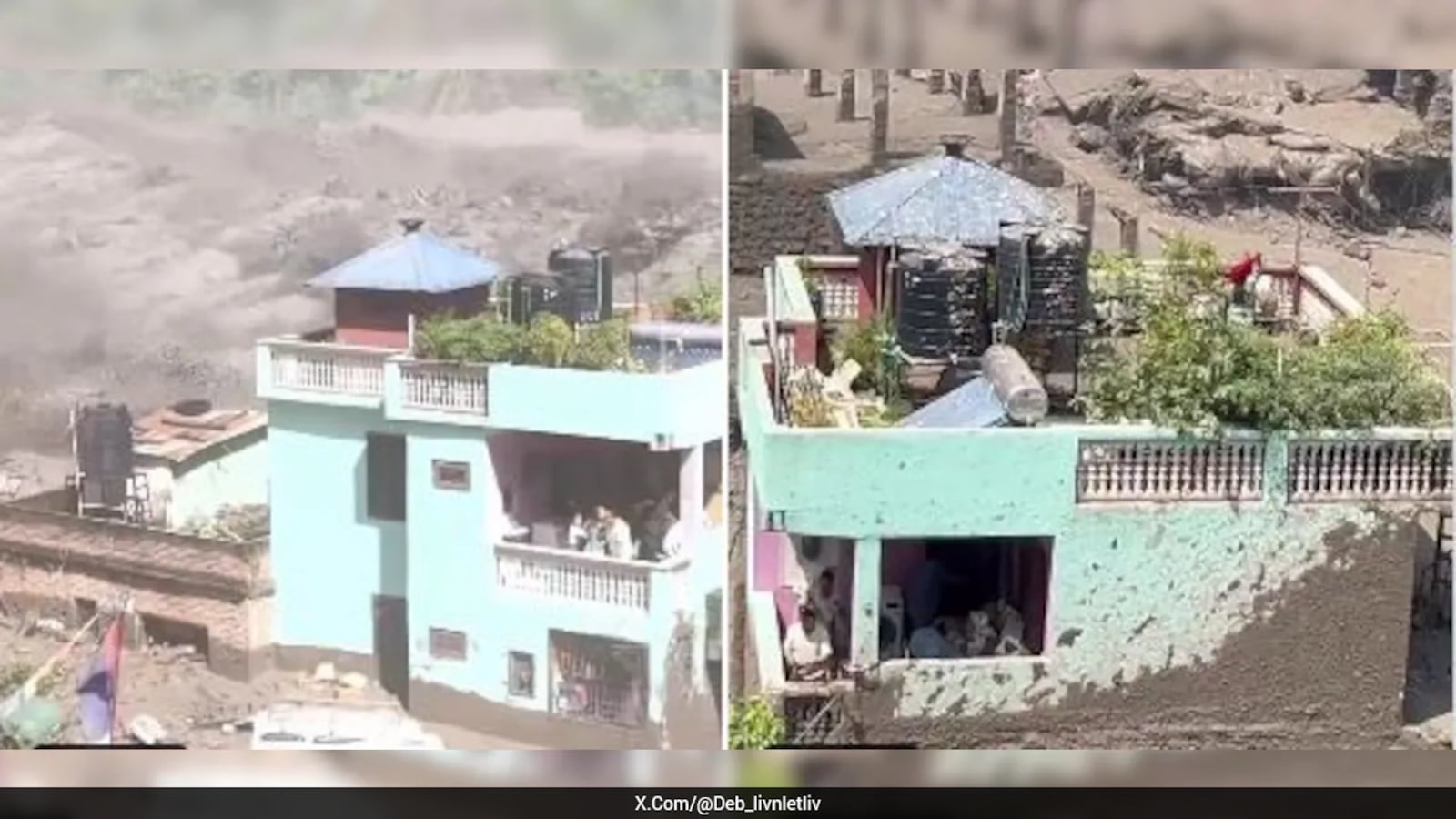
A massive stream of water mixed with huge boulders, mud, and uprooted trees was flowing relentlessly at a dangerous speed in a remote corner of Nepal. It had carved its own path, toppling buildings both large and small. Amid death and destruction all around, a small family was holding on to life in their green-colored house. Surrounded by water on all sides, they huddled on their balcony, hoping their modest home would survive the constant pounding and that they would live to see another day. Miraculously, both the family and the house survived the flash flood.A viral video of the incident has now triggered a debate on social media about why the structure passed this ultimate test of durability without crumbling under the lateral pressure from the wall of water. Structural engineering experts have also joined the discussion, clarifying that it wasn't pure luck; the house stood firm while most neighbouring structures collapsed within minutes of contact.— D (@Deb_livnletliv) August 28, 2026Why did the structure survive?Most homes in the Himalayan valleys of Nepal are built using stone masonry without a reinforced concrete frame, as explained by the X account Architecture Presentation.It said the standard house designs can handle vertical weight but will crumble inward when under pressure from lateral forces. This house, however, was an exception.Also read: In Nepal Flash Floods, A House Stands Amid Destruction. Family Rescued SafelyThe house was built on a reinforced concrete frame."Continuous steel rebar tied the columns, beams, and foundation together into a single, rigid skeleton," said an explanatory video on the handle.Explanation into how this house survived Nepal flood. pic.twitter.com/DAHHG0BSyh— Architecture Presentation (@arcpresentation) August 30, 2026When the wall of mud and water hit the house, the reinforced frame absorbed the lateral force and transferred it down to the ground.Another factor that contributed to the house's survival was that it wasn't directly in the path of the stream of water and debris.Also read: Nepal Flash Flood Speed Was 300 Kmph, Experts Warn Of A Second Deluge"A debris flow concentrates its heaviest boulders along the deepest central channel. This house sat slightly off that main path on marginally higher ground. Its compact shape allowed the fluid mass to split and flow around both sides, and the deposited mud quickly built a natural ramp that deflected later surges away from the structure," the channel further explained.
Why Did Viral Nepal House Survive Flood When Others Fell? X Video Explains
Full Article
Original Source
Read the full article at Ndtv →KhanList aggregates and links to publicly available news content. We do not host full articles from third-party sources. Always verify important information with original sources.