
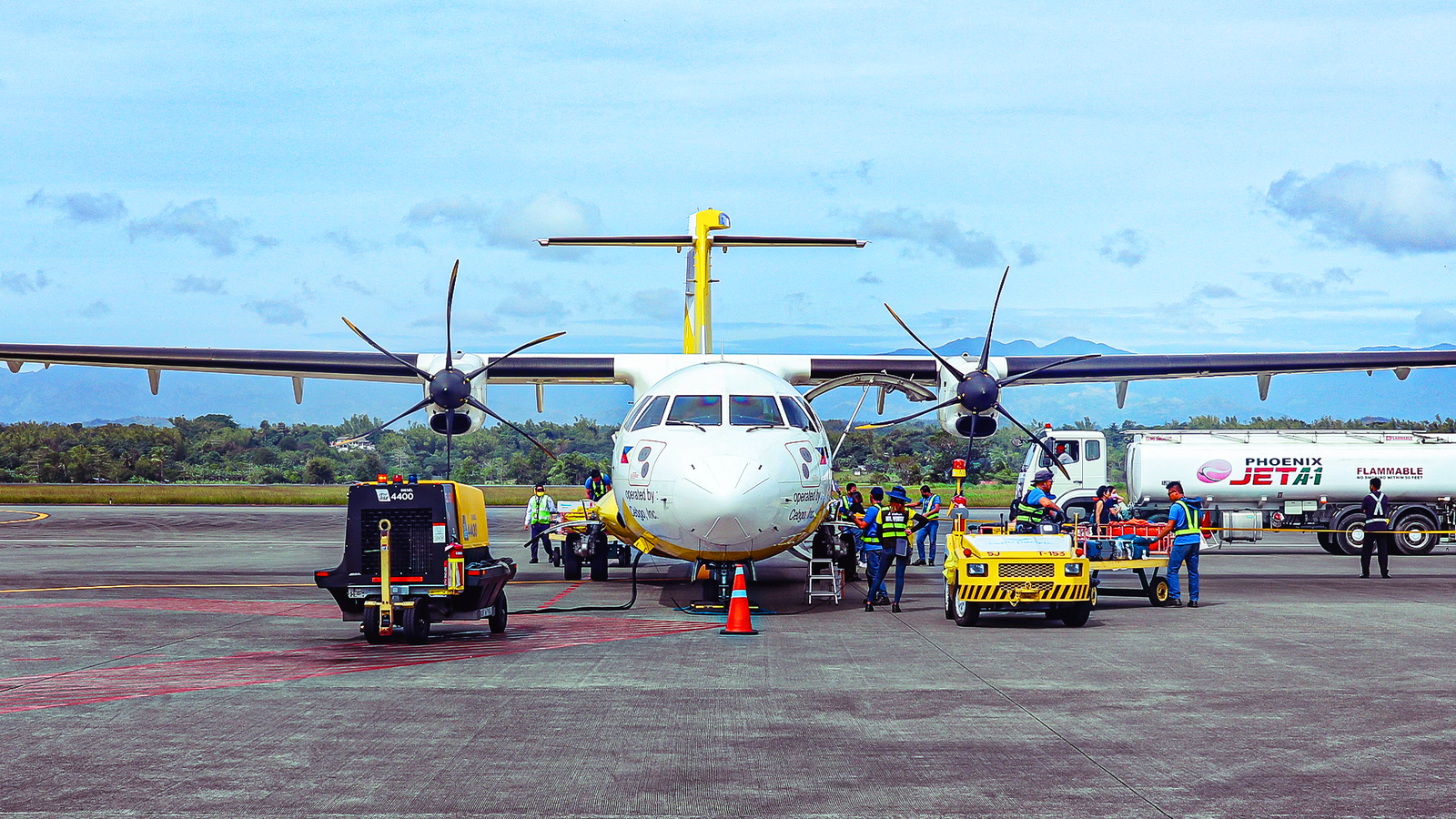
Published Sep 5, 2026, 4:00 PM EDT Airline and Airport Management Graduate, Student Commercial Pilot and Commercial Aviation Writer. Based in London & Nagoya A regional turboprop on a 13,000-mile (21,000 km) flight across half the globe is not something aviation enthusiasts see every day. When a 17-year-old aircraft built for short interisland hops suddenly embarks on a 12-leg journey spanning three continents and two oceans, it naturally makes many wonder why an airline would undertake such an extensive ferry flight. Fortunately, with Simple Flying's Live Flight Tracker, we can trace this extraordinary delivery route from the tropical heat of Southeast Asia to the wilderness of Northern Canada. The aircraft in question is an ATR 72-500F registered as RP-C7253, an airframe that spent over a decade carrying passengers across the Philippines before undergoing a freighter conversion. Its destination, Thunder Bay, Ontario, where Canadian cargo carrier North Star Air is bringing the twin-engine turboprop into its fleet to support remote northern communities. According to Cebu Pacific fleet records, this flight marks a major operational change for the veteran aircraft. The Only Safe Way Across The World North Star Air acquired the 17-year-old ATR 72-500F to expand its essential cargo operations into isolated First Nations communities in Northern Canada. A standard regional turboprop lacks the range for nonstop ocean crossings, so moving the airframe from Manila to Ontario required a long 12-stop ferry routing across Asia, the Middle East, Europe, and the North Atlantic. Flight data shows the aircraft making brief refueling stops to keep every leg well within safe operational fuel limits. Originally delivered to Cebu Pacific in March 2008 as a passenger airliner, the airframe served tropical island routes for 12 years before being retrofitted with a large main-deck cargo door in 2020. As detailed by Sabena Technics' conversion history, converting aging passenger turboprops into dedicated freighters gives mature airframes a second life in specialized cargo markets. Instead of retiring the aircraft, Cebu Pacific repurposed it for heavy freight, making it an ideal candidate for Canadian operators seeking rugged, high-capacity cargo lifters. Ferrying a regional turboprop across 13,000 miles (21,000 kilometers) needs meticulous logistical planning that differs drastically from standard commercial jet deliveries. With a maximum range of roughly 890 nautical miles (1,024 miles / 1,648 km) under standard fuel loads, the aircraft cannot take direct oceanic shortcuts. Records from AirHistory aviation archives document how similar regional ferry flights must hop between intermediate airports like Ho Chi Minh City, Kolkata, Al Ain, Larnaca, Malta, Dinard, and Reykjavik to safely traverse vast water barriers. Splitting Up Into Stages Credit: Shutterstock Planning a long-range ferry flight for a regional turboprop is a real challenge, especially given the severe fuel endurance constraints and strict oceanic navigation safety rules. Unlike long-haul commercial jets equipped with high-altitude engines and massive wing tanks, the ATR 72-500 is built for short regional routes under 890 nautical miles (1,024 miles / 1,648 kilometers). Getting an airframe across 13,000 miles (21,000 kilometers) with this limited range means operators must divide the journey into manageable legs that stay within safe fuel reserves and allow for mandatory diversions in hostile weather, as exemplified by Acumen Aviation's ferry flight tracking reports. The precise flight path during a multi-day ferry operation across continents often changes significantly and is affected by takeoff weight adjustments, available runway lengths at technical stops, overflight diplomatic permits across multiple airspaces, and oceanic search-and-rescue coverage. Operational updates from Malta Aviation Outlook coverage of RP-C7253 show that intermediate stops at locations like Al Ain, Larnaca, and Malta provide vital fuel replenishment, crew rest windows, and mandatory mechanical checks between long overwater legs. Ferry Leg Segment Origin Airport Destination Airport Operational Role Leg 1–3 Manila (MNL) Ahmedabad (AMD) Southeast Asia to South Asia transit Leg 4–6 Al Ain (AAN) Larnaca (LCA) Middle East and Mediterranean corridor Leg 7–9 Malta (MLA) Reykjavik (KEF) European positioning and North Atlantic staging Leg 10–12 Goose Bay (YYR) Bar River (YEB) Canadian entry and final delivery to Ontario Crossing the North Atlantic is easily the most dangerous phase of the entire delivery journey for a twin-engine turboprop. Flying between Dinard, France, and Goose Bay, Canada, via Reykjavik, Iceland, meant navigating sparse diversion options and severe low-altitude icing conditions. In these conditions, ferry pilots must closely monitor fuel burn rates over cold-water gaps, relying on survival suits, HF radio tracking, and auxiliary fuel bladders when payload space permits. Rugged And Ready Airlines operating across isolated regions in Northern Canada prioritize fleet durability and performance on unpaved airfields above all else. North Star Air has progressively built its business model around turboprops like the ATR 72 to connect more than 50 remote First Nations communities and mining encampments across three provinces and territories. Reflected in North Star Air's fleet specifications, bringing specialized freighters into service allows the airline to maintain critical supply chains when harsh winter weather isolates northern towns from road networks. Aviation experts frequently highlight the short-field and gravel-runway capabilities of the ATR 72-500 as the primary reason for its popularity in rugged climates. The twin-engine turboprop can operate efficiently from unpaved runways as short as 3,937 feet (1,200 meters), granting access to isolated strips that cannot accommodate commercial passenger jets. As detailed by Air Charter Service, retrofitting the airframe with a large forward cargo door creates a versatile platform capable of hauling up to 18,000 pounds (8,165 kg) of bulk goods, fresh food, and heavy machinery. Loading map… Drag to explore Integrating converted ATR freighters delivers profound operational impacts for remote communities that rely entirely on air transport for everyday survival. Expanding heavy-cargo airlift capacity enables regional carriers to lower per-kilogram transport costs while increasing the frequency of deliveries of essential medical supplies and building materials. Which Aircraft Can Survive These Harsh Conditions? When evaluating fleet choices for remote northern logistics, operators typically choose between old twin-engine jets, smaller regional turboprops, or vintage radial conversions. Aircraft like the gravel-kit equipped Boeing 737-200 Combi offer high payload capacity; however, their heavy fuel burn and aging airframes make them increasingly expensive to maintain. Smaller turboprops such as the DHC Dash 8offer exceptional short-field agility on unpaved ice strips, but they lack the containerized freight volume required for heavy supply runs. In contrast, the ATR 72-500F provides a spacious main cabin that accepts standard AKE unit load device containers through its forward cargo door. The ATR burns roughly 214 gallons (810 liters) of jet fuel per hour, delivering dramatically lower hourly direct operating costs than pure jet alternatives. Ultimately, the ATR 72-500F strikes an optimal balance among payload volume, fuel efficiency, and compatibility with unpaved airfields for northern logistics routes. Operating three or four turboprop freighters offers North Star Air greater scheduling flexibility across multiple remote communities than relying on a single high-capacity jet. If anything, these aircraft possess much of what makes a modern jet aircraft desirable, but with capabilities uniquely needed in these remote parts of the world. A Totally New Environment Credit: Shutterstock Regional turboprops like the ATR 72 fly at lower cruising altitudes, around 25,000 feet (7,620 meters), leaving them exposed to severe low-altitude weather patterns, icing conditions, and strong headwinds over open-ocean gaps. Ferry crews navigating cold North Atlantic corridors between Europe, Iceland, and Canada have to constantly evaluate weather windows to avoid severe airframe ice buildup. Operating in sub-zero environments across Northern Canada also introduces long-term maintenance challenges that differ radically from tropical interisland flying. Moving an airframe from humid saltwater environments in the Philippines to freezing gravel strips in Ontario means undertaking thorough anti-corrosion inspections and landing gear adjustments. The aircraft's new home introduces a new risk, as unpaved runway operations increase the risk of propeller blade chipping, foreign object damage, and airframe structural fatigue. Furthermore, long multi-stop ferry flights across international airspaces carry significant regulatory and diplomatic risks that can ground an aircraft mid-route. Confirming overflight clearances, arranging specialized fuel at remote technical stops, and maintaining temporary registration permits across multiple nations can create unexpected delays if mechanical issues arise. Any unbudgeted engine maintenance or navigational issues during an oceanic leg can quickly inflate delivery costs. There Is Always Another Home Credit: Shutterstock The extraordinary 13,000-mile (21,000 kilometer) delivery flight of RP-C7253 shows just how unique operational demands drive global ferry logistics. Rather than retiring after 12 years of tropical passenger service in the Philippines, this 17-year-old turboprop was retrofitted to answer the unique economic and geographic challenges of remote Canada, and the North Atlantic was the only practical way to position a short-range aircraft into its new operational home. For regional airlines serving remote First Nations communities and mining outposts, acquiring converted turboprops is a crucial investment in supply line resilience. Traditional jet platforms require long paved runways and burn substantially more fuel, whereas the ATR 72-500F offers an optimal blend of short-field gravel performance, heavy payload capacity, and lower operating costs. The demand for secondhand passenger-to-freighter conversions will continue to shape the regional cargo market across North America and beyond, particularly with older passenger airframes reaching midlife milestones. Repurposing these airframes into all-cargo configurations gives operators an economical alternative to purchasing brand-new aircraft. When an aircraft can offer these capabilities, even a 17-year-old regional airliner can successfully transition from tropical islands to the frozen North.
Why Did This 17-Year-Old ATR 72 Fly Across The World From The Philippines To Canada?
Full Article
Original Source
Read the full article at Simpleflying →KhanList aggregates and links to publicly available news content. We do not host full articles from third-party sources. Always verify important information with original sources.