
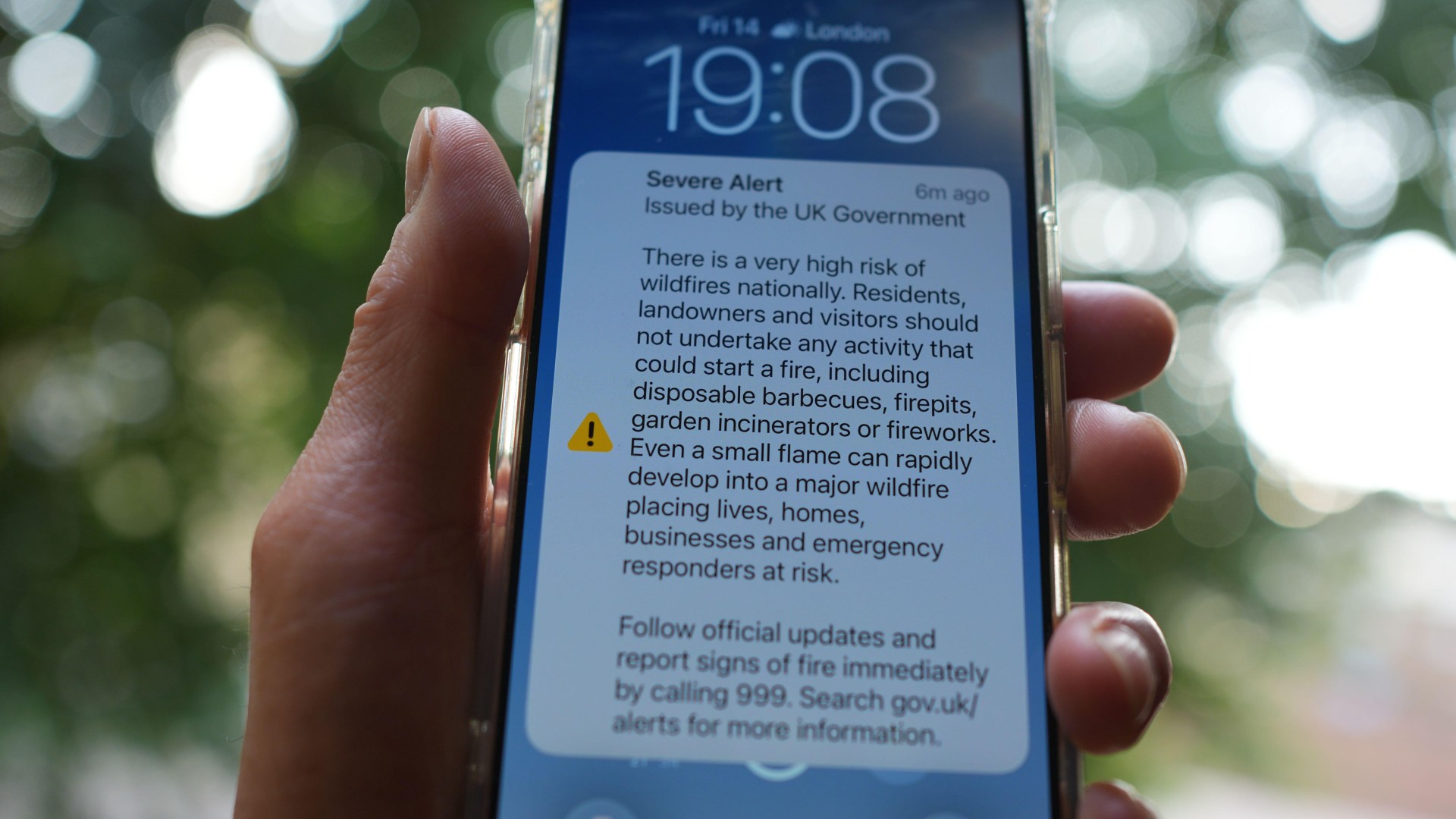
MILLIONS of Brits have been sent an emergency alert warning them of the high risk of wildfires. The blaring signal raised eyebrows as it pinged to the phones of millions across the nation at around 7pm today. But why was it sent, who gets the alerts and what should you do if one does not appear on your phone? Why was the emergency alert sent? The Government issued the warning as the wildfire risk remains very high during another spell of extreme heat. Sign up for The Sun newsletter Thank you! The alert urged people not to light anything that could spark a fire, including barbecues, campfires and fireworks. It warned that even a small flame can quickly become a major wildfire, putting lives, homes, businesses and emergency responders at risk. Recipients were also told to report any fire immediately by calling 999. Prime Minister Andy Burnham said the request for the alert “came directly from Fire and Rescue Services”. He said: “This evening, an Emergency Alert has been sent to people across England and Wales as the wildfire risk remains very high. “I was in Stourbridge today and saw first-hand the devastating impact these fires have had on people’s homes and lives.” Most read in The Sun Who sends the alert and who gets it? Emergency alerts are sent by the Government and emergency services using mobile phone masts in the affected area. Every compatible mobile phone or tablet within range of a mast can receive the warning. The system works across all 4G and 5G mobile networks in the UK. You do not need mobile data or Wi-Fi switched on to receive an alert. The alert can sound even if your phone is set to silent. When has the alert been sent before? The siren sound was part of a test in September last year. The last real use was on January 8, when a threat to life from high winds prompted an alert in Cornwall and the Isles of Scilly. In January 2025, alerts were sent to people in Scotland and Northern Ireland during Storm Eowyn. Around 3.5 million people across Wales and south-west England received a warning during Storm Darragh in December 2024. A 500kg unexploded Second World War bomb found in a Plymouth back garden also triggered an alert in February 2024 – around 50,000 phones received that warning. The system can also target much smaller areas. Some 15,000 phones were alerted during flooding in Cumbria in May 2024. And 10,000 received a warning during flooding in Leicestershire in January this year. What can I do if I didn’t receive the alert? There are several reasons why you may not have received the warning. Your phone will not get an alert if it is switched off, connected to a 2G or 3G network, Wi-Fi only or not compatible with the system. You may also miss one if your phone is in airplane mode. Emergency alerts work on iPhones running iOS 14.5 or later and Android phones and tablets running Android 11 or later. Older Android devices may still be able to receive them, so check your phone’s settings for “emergency alerts”. The Government advises keeping your device updated with the latest software. If you need to see an alert again, you can find current or past alerts in your phone’s settings. Android users may also receive more than one reminder about the same alert, which can be switched off through the emergency alert settings. Comment now
Why did I get an alert on my phone? The Government emergency wildfire warning explained
Full Article
Original Source
Read the full article at Thesun →KhanList aggregates and links to publicly available news content. We do not host full articles from third-party sources. Always verify important information with original sources.