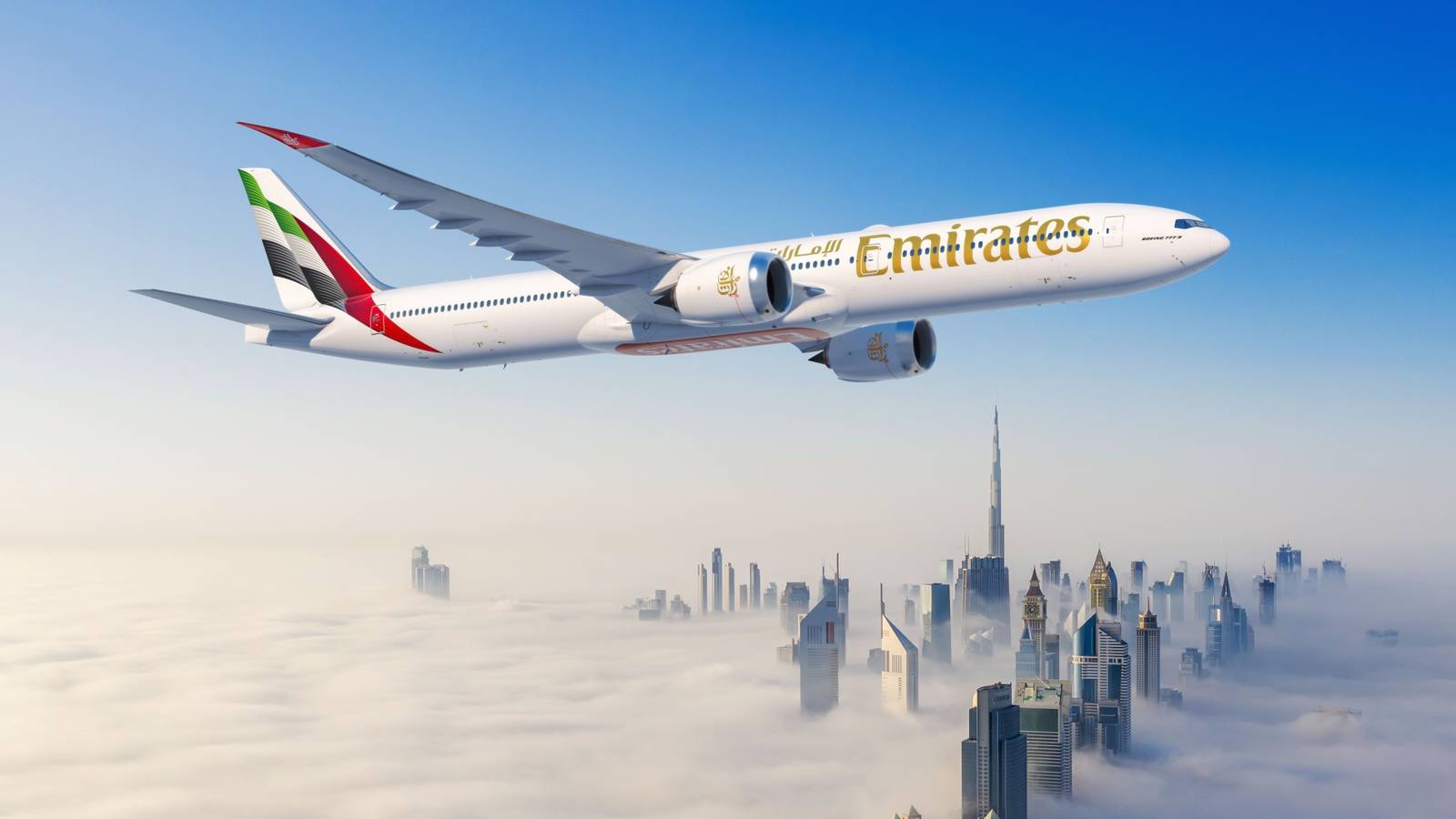
Published Jul 28, 2026, 1:30 PM EDT Daniel comes to Simple Flying with a business focused approach to the aviation world. Daniel enjoys analyzing strategy and how companies move against each other to gain a step ahead in the skies. Besides strategy, Daniel also has a passion for aircraft design and the history of aviation. Based in New York Almost every airline with long-haul operations has ordered either the Boeing 787-9 or Airbus A350-900. While the 787-9 is the more successful of the two, the A350-900 has also seen incredible sales, and most notably, has received more than double the orders of the Boeing 777-200ER, the aircraft that it is intended to directly succeed. These two aircraft have undoubtedly captured the 'sweet spot' of the widebody market. Emirates is one of the largest long-haul airlines in the entire world, with an all-widebody fleet of over 250 aircraft. Rather unsurprisingly, it currently operates the A350-900, with 25 examples in service and 48 remaining on order for a total of 73. However, it also has orders for over 200 Boeing 777X aircraft. This plane is larger than the A350, with less range and fewer overall customers than the A350. Why is Emirates committing so heavily to the 777X? Looking At Emirates' Current Fleet Credit: Shutterstock The Airbus A350 is one of three aircraft types operated by Emirates, alongside the Boeing 777 and Airbus A380. All of Emirates' A350 orders are for the A350-900, which is the smallest aircraft that the airline operates today. Per ch-aviation, the Dubai-based carrier also operates similarly-sized Boeing 777-200LRs, but only 10 of them, and it flies 117 Boeing 777-300ERs. Additionally, it flies 117 Airbus A380s, making it by far the largest operator of the type. The A350s are mainly for growth rather than to replace Boeing 777s. Emirates relies on its A380s and 777-300ERs, but both of these aircraft are massive, and as such, there are many destinations where Emirates is either providing too much capacity or simply isn't able to serve economically. The A350-900, being smaller and far more efficient, should allow Emirates to greatly expand its network and improve the economics of its more marginal routes. Not only does Emirates have the A350 and 777X on order, but it also holds orders for 30 Boeing 787s. Rather uniquely, this order is split between 15 787-8s and 15 787-10s. Emirates tends to operate large aircraft fleets, making this Dreamliner subfleet uniquely small. Additionally, the 787-8 and 787-10 are both relatively uncommon compared to the 787-9, which has sold nearly 1,400 examples on its own. However, Emirates has ordered zero 787-9s. Emirates' A350 & 777X Orders Credit: Boeing Emirates initially ordered the A350-900 at the Dubai Airshow in 2007, with initial deliveries scheduled for 2014. The A350-900 wouldn't enter service until early 2015, and Emirates' order also included the A350-1000. However, the carrier ended up canceling this order in 2014 and wouldn't order A350s again until 2019. These came as part of an agreement to cancel Airbus A380s (and for Airbus to discontinue the A380 program as a whole). Emirates was one of the initial customers for the Boeing 777X, ordering 150 examples at the 2013 Dubai Airshow, and it has grown its orderbook to 270 examples today. As such, Emirates' 777X order actually predates the current A350 order, and on top of that, 235 of its 270 777X orders are for the larger 777-9 model. Not only is the 777-9 the largest model of the 777X family, but it is also the largest airliner currently in production. Emirates Orderbook Number Airbus A350-900 57 (25 Already In Service) Boeing 777-8 35 Boeing 777-9 235 Boeing 787-8 15 Boeing 787-9 15 Emirates' A350 order appears to be more of an opportunistic buy that came at a time when Airbus was debating whether to continue A380 production. After discussions, Emirates agreed to drop its remaining A380 orders and convert them to 40 A330-900s and 30 A350-900s, later changing the A330s to more A350s. In contrast, the 777X has always been a part of the airline's long-term strategy and is poised to become the backbone of the Emirates fleet. Why So Many Boeing 777-9s? Credit: Shutterstock The relatively small Boeing 787-9 and Airbus A350-900 are the world's two most popular widebodies by far. The two aircraft have hit the sweet spot in the market, as they offer incredible capability while also being relatively low-risk due to their modest size. Whereas the 777-300ER received over 800 orders and was the most popular 777 variant by far, the A350-900 has dramatically outsold both the A350-1000 and the 777-9. Most airlines are building large fleets of A350-900s and 787-9s, while the A350-1000/777-300ER/777-9 fleets are smaller and serve as a 'flagship.' Emirates, however, is a little different, as it has built its entire business model around moving high volumes of passengers around the world through its hub in Dubai. It has mastered economies of scale in its Dubai hub, achieving lower unit costs, allowing it to offer competitive fares while simultaneously maintaining a pristine brand image. While the large size of the 777-9 occasionally makes it a hard sell, the extra seats compared to the 777-300ER make it perfect for Emirates. Dubai International Airport is constrained, so the only practical way for Emirates to significantly grow its network is to move from the 777-300ER to the 777-9. Going with more A350s would require Emirates to maintain the same capacity (with the A350-1000) or downgauge (with the A350-900). The Design Of The Boeing 777X Credit: Shutterstock The Boeing 777-9 was designed with input from Emirates, Etihad Airways, and Qatar Airways in mind, and as such, the program has been rewarded with large orders from all three carriers. The three carriers' hubs in the Middle East (Dubai, Abu Dhabi, and Doha, respectively) present unique operational challenges due to the region's climate, as these airports are extremely dry and routinely experience high temperatures, which degrade aircraft performance. The 777X comes with a larger wing and a larger fuselage. As such, it's designed to move a high volume of passengers on long-haul and ultra-long-haul flights. However, what's most important for the Middle Eastern carriers is the new General Electric GE9X engines. These are the largest turbofan engines ever made, and are essentially a blend of the powerful General Electric GE90-115B and the more efficient General Electric GEnx engines. The GE9X set a record for the most thrust ever produced from an engine when it produced over 134,000 lbs of thrust during testing. However, the engine is only rated to produce 110,000 lbs of thrust in service. What this means in a practical sense is that the engine is not very stressed, which is incredibly important for reliability and durability. Emirates, meanwhile, has expressed reservations about the durability of the Rolls-Royce Trent XWB-97 engines on the competing A350-1000. Replacing The Airbus A380 With The 777X Credit: Shutterstock Emirates is the largest operator of the Airbus A380 by far, with 118 examples in 2026. It's a key component of the carrier's fleet strategy, and it's expected to remain in service until the 2040s. Unfortunately for Emirates, there is no aircraft in service or in development that can match the A380's capacity, which represents a major issue for Emirates, seeing as how Dubai International is nearing its maximum capacity. The Boeing 777-9, while still smaller in comparison, is the closest match to the A380 today. For an airline that is so heavily focused on volume, it represents the best solution to replace the superjumbo as of now. Although the fleet itself is meant to stay in service for almost two more decades, the fleet will likely shrink over time. The most logical replacement for these older A380s is the 777X. Emirates may replace some of its older 777s with A350s or 787-10s, but what's most likely is that the 777X will serve as both a 777 and A380 replacement. For Emirates, the 777X will soon prove to be its most important aircraft. While the airline will eventually become one of the world's largest A350 operators, it's the 777X that will become the face of the airline. The Emirates Fleet Rundown Credit: Shutterstock Airlines usually operate more A350-900s than they do A350-1000s or 777s, but Emirates is the other way around. The A350 is essentially for niche markets in Emirates' network, and while it certainly has enough demand to sustain a large fleet of these planes, it's not the carrier's primary aircraft. Instead, it'll be the 777X that will become the mainstay of the Emirates fleet, replacing all of its Boeing 777-300ER aircraft and likely at least part of the A380 fleet. The 777X, with its immense size and excellent fuel efficiency, is the ideal aircraft for Emirates. As the carrier grows, improves profits, and modernizes its fleet, it will continue to solidify its position as an icon of the modern airline industry. While the airline is best known for its A380 fleet today, it will soon be the 777X that will become almost ubiquitous with the airline.
Why Did Emirates Order The Boeing 777X And Not More Airbus A350s?
Full Article
Original Source
Read the full article at Simpleflying →KhanList aggregates and links to publicly available news content. We do not host full articles from third-party sources. Always verify important information with original sources.