
I can pinpoint the exact moment that I fell in love with Wisconsin. I had always had a distant regard for that lake-ringed state. I had applauded its pioneering reforms on school choice, welfare and the right to work. I had admired the Republican politicians which it supplied so disproportionately: Tommy Thompson, Paul Ryan, Reince Priebus and the privately sweet-natured Scott Walker.But the coup de foudre came only last week, when I visited the state for the first time. Driving out of Milwaukee Airport, I passed a large billboard that proclaimed: “What’s worse than Chicago? Tariffs.”At the risk of alienating all my new Wisconsinite friends, I love Chicago, with its ice-fringed shore, and its armchair-shaped buildings. Still, what a glorious sentiment, and how pithily expressed. At every meeting in the state, I found the same complaint. Businesses in Wisconsin, many of which import and export components across the Canadian border, have been badly and needlessly impacted by President Donald Trump’s tariffs. The sense of irritation, though, goes well beyond the business community. Wisconsinites turn out to have an impressive understanding of how the economy works. So do Mainers and Michiganders, whose hostility to the tariff regime pushed their local Republican candidates into panicky rejections of Trump’s core policy.Perhaps you are laughing at my forecasts. Even so, I am going to stick my neck out and predict that the Republicans are going to pay a price for Trump’s trade antics in northern border states, and perhaps also in Texas.To be clear, the tariffs are unpopular everywhere. A major survey of American workers in September showed that the Democrats led the Republicans on trade (42% to 30%), the cost of living (44% to 27%), and the interests of American workers (44% to 29%). So much for that supposed Trump appeal to the blue-collar base. It is just that the tariff policy hurts less in states where commercial activity is largely within the United States.Few things in politics present a more pathetic spectacle than an unpopular populist. Voters have quietly and steadfastly rejected the only policy Trump has consistently favored. For a while, it did not matter much. The U.S. is, overall, an extraordinary success story: 4% of the world’s population, 25% of its output. Because its domestic economy is so vast, trade accounts for a relatively small proportion of its GDP. Bad trade policies could be more than offset by good policies on deregulation, tax cuts, and energy abundance.What an achievement, then, to pursue a trade policy so awful that it began tangibly and negatively to impact people’s lives. Quite apart from the economic disruption and price rises, the tariff policy had cost the U.S. its global leadership role, alienating long-standing allies and giving rise to new international supply chains, not least in defense, premised on the belief that America is not a reliable partner. The U.S. remains a wealthy and powerful nation, but she is poorer and weaker than she would otherwise have been.And all for what? The tariffs have neither brought in significant revenue nor led to any major reshoring of industry. Trump, in fairness, never pushed those arguments as hard as he pushed his obsession with closing the trade deficit.His misunderstanding of what a trade deficit is should be obvious to any high schooler who has looked at an economics textbook. A trade deficit is not, intrinsically, a problem. The U.S. has been running one since 1975, and has done pretty well since then. By definition, a trade deficit must be matched by an investment surplus and vice versa. Trump, by demanding both more investment into the U.S. and a trade surplus at the same time, was disqualifying himself from the conversation. Indeed, he went further, arguing that the U.S. must be simultaneously in surplus with every country in the world — and, scarily, no one in his circle dared contradict him.TRUMP HAS KILLED THE AMERICAN-LED WORLD ORDEREven by that measure, though, the policy has failed. The trade balance has barely changed. A sharp drop in imports from China has been offset by a rise in imports from Mexico, Vietnam, Taiwan and elsewhere. The provisional goods deficit for September is $134.9 billion, the largest since March 2025, when companies were rushing to beat Liberation Day. In its own terms, as well as by more normal economic measures, Trump’s policy has been a spectacular self-own.Something tells me that, just as every Frenchman over a certain age claimed to have supported the Resistance, the day will come when hardly anyone remembers having voted for any of this.
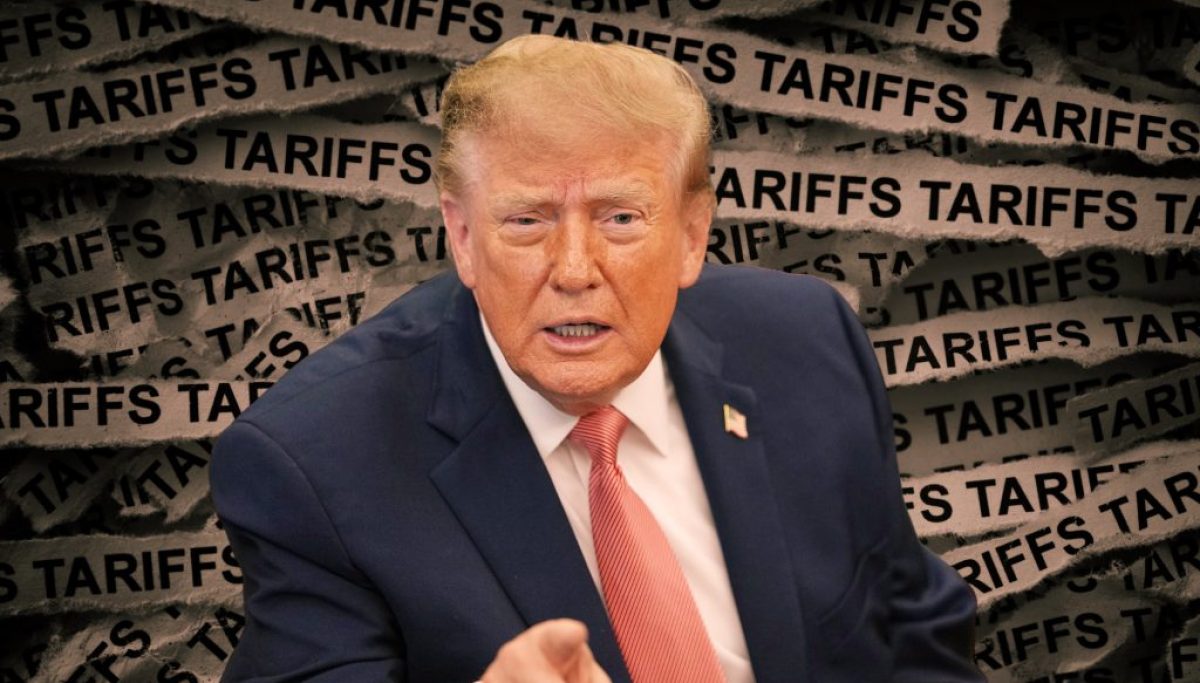
Why did anyone think Trump’s tariffs would be popular?
Full Article
Original Source
Read the full article at Washingtonexaminer →KhanList aggregates and links to publicly available news content. We do not host full articles from third-party sources. Always verify important information with original sources.