
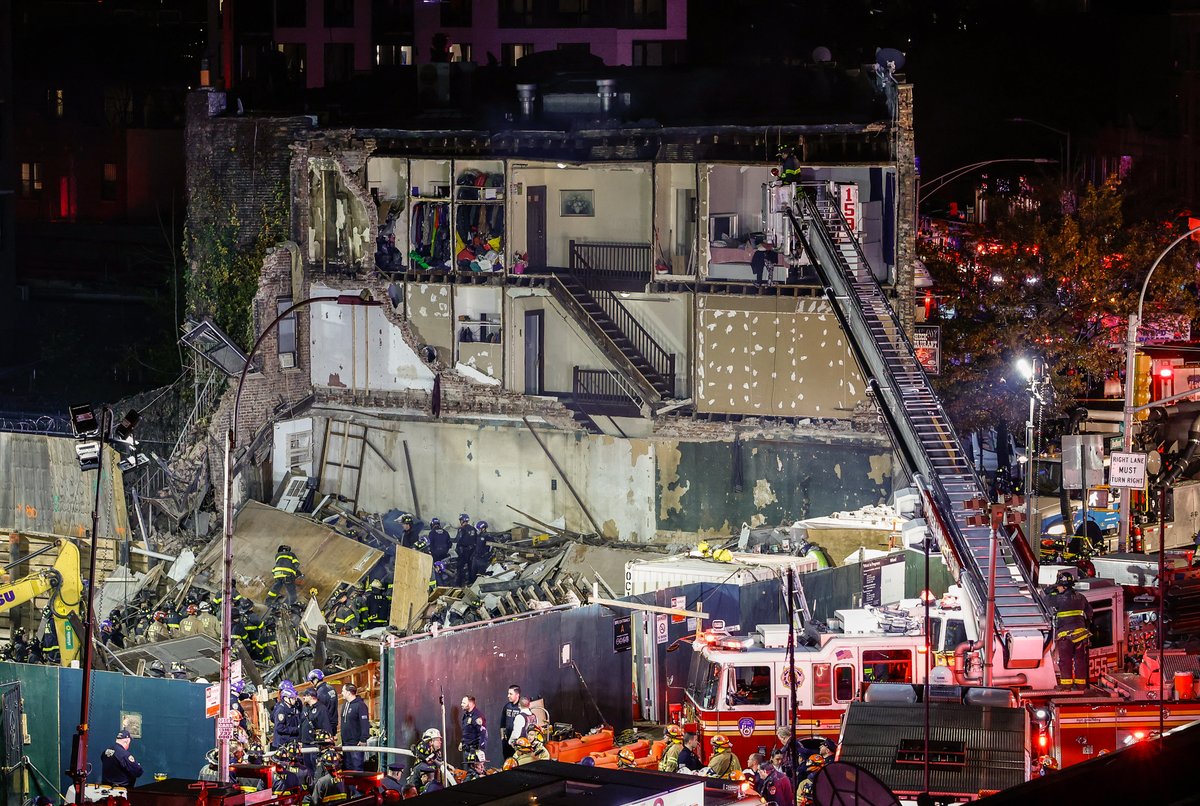
November 12, 20263 min read Add Us On GoogleAdd SciAmThe devastating incident on Wednesday has left at least eight people dead and more than a dozen injuredFirst responders tend to a collapsed building in Brooklyn on November 11, 2026. kena betancur/AFP via Getty ImagesThe devastating collapse of a Brooklyn building on Wednesday that has left at least eight people dead and more than a dozen injured may have been primarily caused by a failure to properly shore up soil at a neighboring construction site, according to multiple experts.The incident, which occurred at around 4 P.M. EST in the Flatbush neighborhood, saw the building give way into the construction site. City officials on Thursday said rescue operations are ongoing and urged the public to stay away from the area.A New York City Department of Buildings spokesperson said the department would conduct an investigation into the exact cause of the collapse, including “comprehensive reviews of the records and site conditions” at the fallen building and neighboring site. The developers responsible for the construction site have active permits for excavation and foundation work, the spokesperson said.On supporting science journalismIf you're enjoying this article, consider supporting our award-winning journalism by subscribing. By purchasing a subscription you are helping to ensure the future of impactful stories about the discoveries and ideas shaping our world today.It is possible that work may have disturbed the soil around the foundation of the destroyed apartment building. While pictures indicate that a shoring system had been used to hold that soil in place, that shoring may have failed, says Michael Chajes, a professor of civil and environmental engineering at the University of Delaware.“If there’s work going on and there’s extreme vibration, I suspect it was undermining the existing structure, causing a redistribution of forces, and causing a collapse is probably the most likely thing,” Chajes says.Shoring or bracing are a commonplace safety strategies during construction work. They can consist of steel piles driven into the perimeter of the construction site, with some form of board between them, forming a temporary wall that keeps soil from caving in, Chajes explains.“The tricky thing is when you’re right up against a neighboring building like this is there’s extra soil that’s adjacent to it that you’re trying to keep from caving into your construction site,” says Gregory Deierlein, a civil and environmental engineer at Stanford University. “That’s under high pressure from the building next door, so the wall needs to be stiff enough that it doesn’t allow the soil to deform or yield a little bit.”The design of the bracing needs to take into account the kind of soil in the area, as well as the weight of the neighboring building and that building’s foundation. Failure to do so accurately can cause weaknesses that mean even minor factors, such as an increase in rainfall in the area, can cause the soil to soften and shift, placing increased pressure on one side of a structure and causing it to give way.Shoring can also be disturbed by vibrations from heavy machinery that’s typical in construction sites, says Mehrdad Sasani, a civil engineering professor at Northeastern University.“At the same time, the building was an old building, and the integrity of that building could have also played a secondary role in this process,” he adds. “It’s likely the structure was not well integrated and sensitive to any amount of movement caused by lack of proper shoring, and that led to collapse.”The DOB did not offer a timeline for its investigation; Sasani says the department will likely conclude it was a combination of factors that led to the deadly collapse. The construction site’s developer did not immediately respond to a request for comment."There are codes and regulations—and codes and regulations, if properly followed, often we don’t see collapses,” he says. “Collapses occur because of not following the standards here and there and often is a combination of several factors.”Subscribe to Support Independent JournalismGreat science journalism requires human expertise, time, effort and creativity. And it costs money. That’s why I and the journalists here at Scientific American hope you’ll join our community.When you subscribe, you are supporting staff and freelance journalists who are passionate about telling science stories that are true, important and compelling. Our editors and reporters are often experts in their fields, which means they understand the nuances of big discoveries and can untangle the breakthroughs from the hype. With a subscription, you are also supporting rigorous fact-checking to ensure the words we publish are precise and accurate. And you’re supporting original illustrations, graphics and photos that bring you closer to an advanced laboratory, an ice sheet in Antarctica or a space mission in orbit. You’re helping us craft other types of high-quality journalism as well: Our newsletters are carefully written, edited and curated by staffers you have or will come to know and love. Our Science Quickly podcast is based on original reporting, collaboration with editors and scientists and exacting production.Subscriptions keep this engine running so we can continue to deliver thoughtful, rigorous and independent science journalism to you. In an era of viral misinformation, this work is crucial. If you value what we do, I hope you’ll consider joining us as a subscriber
Why did a Brooklyn building collapse so suddenly? Experts weigh in
Full Article
Original Source
Read the full article at Scientificamerican →KhanList aggregates and links to publicly available news content. We do not host full articles from third-party sources. Always verify important information with original sources.