
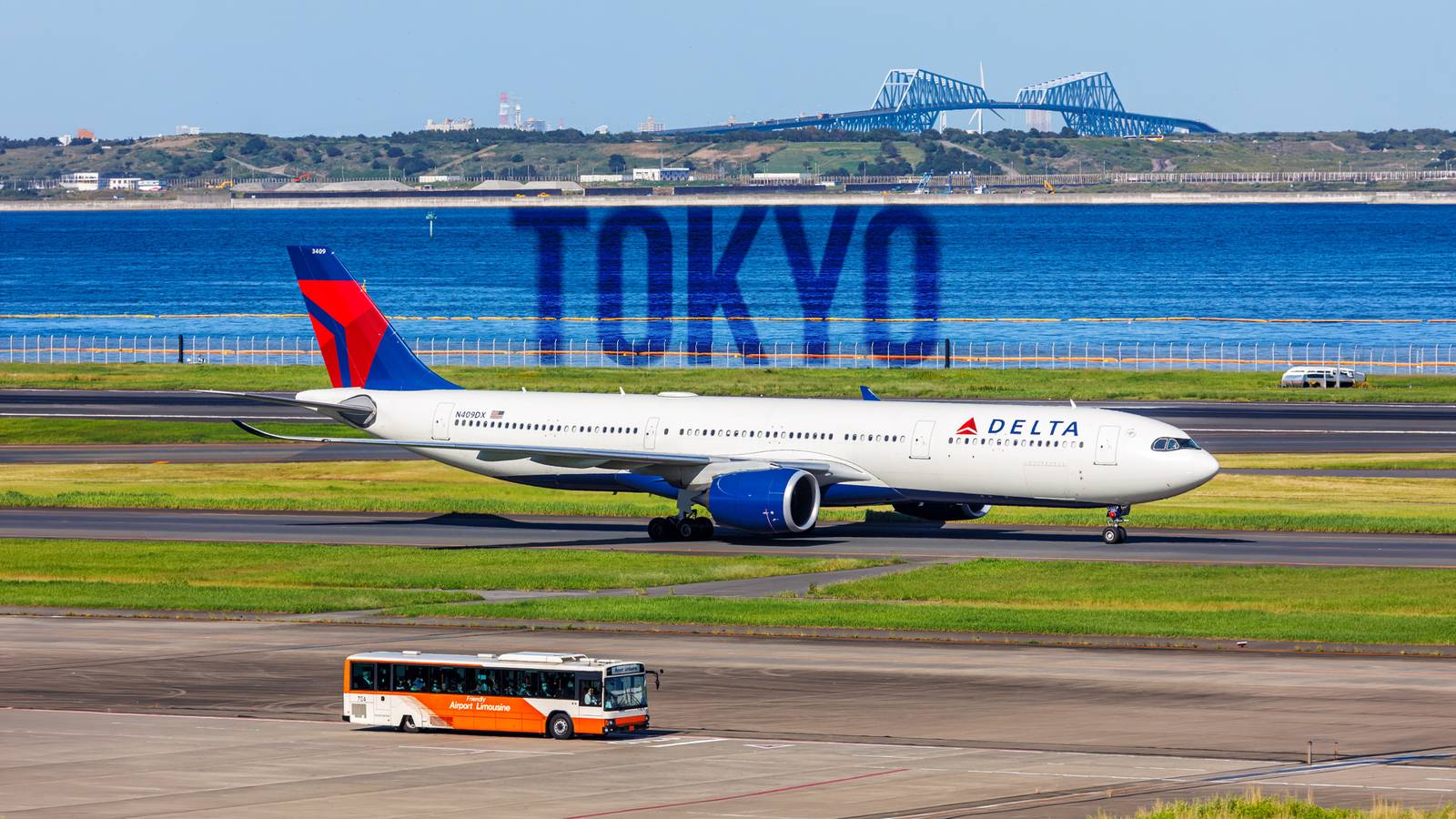
Published Aug 27, 2026, 12:00 PM EDT Daniel comes to Simple Flying with a business focused approach to the aviation world. Daniel enjoys analyzing strategy and how companies move against each other to gain a step ahead in the skies. Besides strategy, Daniel also has a passion for aircraft design and the history of aviation. Based in New York Delta Air Lines merged with Northwest Airlines in 2008, and one of the assets that the carrier inherited was a hub at Tokyo Narita International Airport (NRT). Narita had multiple flights to US cities, including non-Delta hubs, as well as an impressive intra-Asia network. However, it wasn't making much money, and Delta quickly began building Seattle as its transpacific hub to serve Asia nonstop from the US. At the same time, its later metal-neutral joint venture with Korean Air directly replaced the Narita hub. Delta gradually dismantled the Narita hub in the 2010s, but then another new development occurred at the same time, which was Japan opening up Tokyo Haneda Airport (HND) for international flights. Slots were limited, but Delta was able to eventually acquire enough slots that Narita was no longer necessary. Haneda is generally preferred due to its closer proximity to Tokyo's city center, and so Delta exited Narita entirely in 2020. Over six years later, however, the airline has announced that it'll return to Narita. Delta's New Route To Narita Credit: Shutterstock On August 7, Delta Air Lines announced new nonstop flights between Seattle-Tacoma International Airport (SEA) and Narita. Service will commence on March 27, 2027, and will be flown daily using an Airbus A330-900neo, which is unusual because Delta has otherwise been shifting all transpacific flights to the Airbus A350. Seattle is Delta's main transpacific hub, but the odd thing about this addition is that Delta already flies between Seattle and Haneda. However, as there are no available slots at Haneda, Delta can only expand by flying to Narita. For years, the carrier has operated daily nonstop flights between Seattle and Haneda, using an Airbus A350-900. As previously mentioned, Haneda is the preferred airport for passengers headed to Tokyo because it's much closer to the city center. Haneda opening up to long-haul flights was as impactful as if New York LaGuardia Airport (LGA) or Washington National Airport (DCA) opened up to long-haul services (setting aside the obvious infrastructure differences at the latter two). It's fairly unusual for full-service airlines to serve multiple airports in a single city on long-haul flights, with New York, Tokyo and London being the main exceptions. In all three cities, the preferred international gateways (JFK for New York, Haneda for Tokyo, and Heathrow for London) are slot-constrained. Still, Tokyo isn't nearly as large a market as London for the US, and even in London, JetBlue is the only US carrier to serve multiple airports. However, Delta's rivals have long served both airports, but the situation is different for the Atlanta-based carrier. Transpacific Joint Ventures Credit: Shutterstock American Airlines serves Haneda from Dallas/Fort Worth, Los Angeles, and JFK, but it also flies to Narita from DFW and will launch a new route to Narita from Chicago in 2027. Meanwhile, United Airlines serves Haneda from six airports and Narita from six airports in the US (with Chicago set to begin in 2027). At first, you'd think that there's clearly a market for nonstop flights from the US to both airports, but the real reason why American and United can sustain this level of service is due to their joint ventures. American Airlines partners with Japan Airlines, while United Airlines partners with All Nippon Airways. The nature of these agreements means that the airlines act as one entity on transpacific routes, coordinating fares and schedules. Whereas Haneda is mainly used by the joint ventures for local travel and connections to domestic flights, they operate Narita primarily as a connecting hub for international flights within Asia, meaning that the two airports serve distinct purposes for them. Delta's transpacific joint venture partner, however, is Korean Air. Tokyo purely serves as a spoke within Delta's network, which means that its flights have to rely on demand to and from Tokyo. This means that Delta cannot sustain as much capacity to Tokyo as United, since it's not filling the planes up with passengers traveling onwards to other cities in Asia. Meanwhile, Haneda generally commands stronger fares than Narita for travel in and out of Tokyo, so why would Delta add service to a market where it is weaker than rivals while serving the less desirable airport? Competition In Seattle Credit: Shutterstock Delta first declared Seattle as a hub in 2014, and it serves as the airline's transpacific hub. But while Delta has been building up its Seattle operations over the past decade, it remains a distant number two in the city, behind Seattle's long-time hometown carrier: Alaska Airlines. Alaska Airlines continues to hold significantly higher market share in Seattle, but Delta's advantage is the long-haul network. Alaska Airlines has long only operated narrowbody aircraft, with Delta positioning itself as 'Seattle's global carrier'. However, Alaska Airlines recently acquired Hawaiian Airlines, a carrier with an extensive long-haul network using Airbus A330s and Boeing 787s. While the A330s will remain in Honolulu, the 787s have been transferred to Alaska Airlines and repainted for long-haul flights out of Seattle, and all future 787s will go to Alaska Airlines as well. Alaska Airlines' Long-Haul Destinations Keflavik International Airport (KEF) London Heathrow Airport (LHR) Rome Fiumicino Leonardo da Vinci International Airport (FCO) Seoul Incheon International Airport (ICN) Tokyo Narita International Airport (NRT) The airline has already launched flights to Narita (currently using a Hawaiian-branded A330 but will switch to the 787 in October), as well as to Seoul and Europe. Delta is now losing its biggest advantage in Seattle against an airline that has a larger customer base in the city and a much more substantial domestic network. Alaska Airlines aims to serve at least 12 long-haul destinations from Seattle by 2030, whereas Delta currently flies to nine cities in Europe and Asia. As such, it's led many to believe that this is an attempt to put pressure on Alaska Airlines by adding capacity to a crowded market (if counting the Haneda flights) and ensuring that Alaska loses money. It wouldn't be the first time that Delta has done this, even recently. Delta's Recent Competitive Moves Credit: Shutterstock Delta is a much smaller player in Seattle than Alaska Airlines, and long-haul has traditionally been its main advantage, but now Alaska Airlines is entering this space. Narita was actually its first long-haul route out of Seattle (using a Hawaiian-branded A330), followed by Seoul (again using an A330 at first, but now an Alaska-branded 787). However, Delta really started responding when Alaska Airlines announced nonstop services to Rome, which was its first long-haul route using an Alaska-branded aircraft. Delta responded by launching new services to Rome and to Barcelona, two cities that have become exceptionally popular with US tourists in recent years. Alaska Airlines has also since commenced flights to London, but this is already served by Delta, and Delta will likely look to compete head-on against Alaska Airlines on many of its future routes. While it might not seem like good business to deploy an expensive widebody just to make a competitor bleed, route planning is more complicated than simply finding the most profitable routes to serve. Delta Air Lines Long-Haul Destinations Served From Seattle Amsterdam Schiphol Airport (AMS) Seoul Incheon International Airport (ICN) Josep Tarradellas Barcelona–El Prat Airport (BCN) Shanghai Pudong International Airport (PVG) London Heathrow Airport (LHR) Taipei Taoyuan International Airport (TPE) Paris Charles de Gaulle Airport (CDG) Tokyo Haneda Airport (HND) Rome Fiumicino Leonardo da Vinci International Airport (FCO) Using Delta as an example, the carrier began flights between Los Angeles and Chicago in June 2026, with three daily Boeing 737s. It's competing against American and United, both of which have hubs in Chicago as well as Los Angeles. Delta is a minuscule player in this market, but given how massive the Chicago market is, Delta needs to serve this market. This increases its relevancy with local customers in both markets and helps keep customer loyalty, as Delta SkyMiles members can now fly their preferred carrier nonstop between the two cities. Why Delta Would Launch This Route Credit: Shutterstock While market presence, relevancy, and fighting back competition are factors in route planning, it's not the main reason why an airline would launch an expensive transpacific route. However, travel demand from the US to Japan is on the rise, and Delta cannot expand at Haneda because it lacks slots. In addition, Delta is looking to generally expand its transpacific network, having launched Taipei from Seattle and Hong Kong from Los Angeles in recent years. In 2027, Delta will also launch Manila from Los Angeles and is reported to be planning Singapore from Seattle. The Narita route will not make as much money as the Haneda service, and the added capacity could potentially put downward pressure on fares. However, Delta is capitalizing on high demand to Japan. While it could have potentially launched Narita from a hub like Salt Lake City or JFK, where it currently doesn't operate service to Haneda, Alaska Airlines becomes a factor given the market dynamics in Seattle. The rising demand, a lack of slots at Haneda, and the competition combine to make Seattle the logical addition for a route to Narita. Undoubtedly, Delta would prefer to add another flight to Haneda, but this isn't possible today. It may be difficult to make real profits from this route, but it helps the airline's market position in its fight against Alaska Airlines since it'll operate two daily flights to Tokyo as opposed to Alaska's single flight. Meanwhile, if/when more Haneda slots open, those will probably be used to launch service from other hubs, but the Narita route could possibly fall on the chopping block as well if Delta finds it more suitable to add a second Haneda flight from Seattle.
Why Delta Air Lines Is Reversing Its 4-Year 'Haneda-Only' Tokyo Strategy & Returning To Narita
Full Article
Original Source
Read the full article at Simpleflying →KhanList aggregates and links to publicly available news content. We do not host full articles from third-party sources. Always verify important information with original sources.