
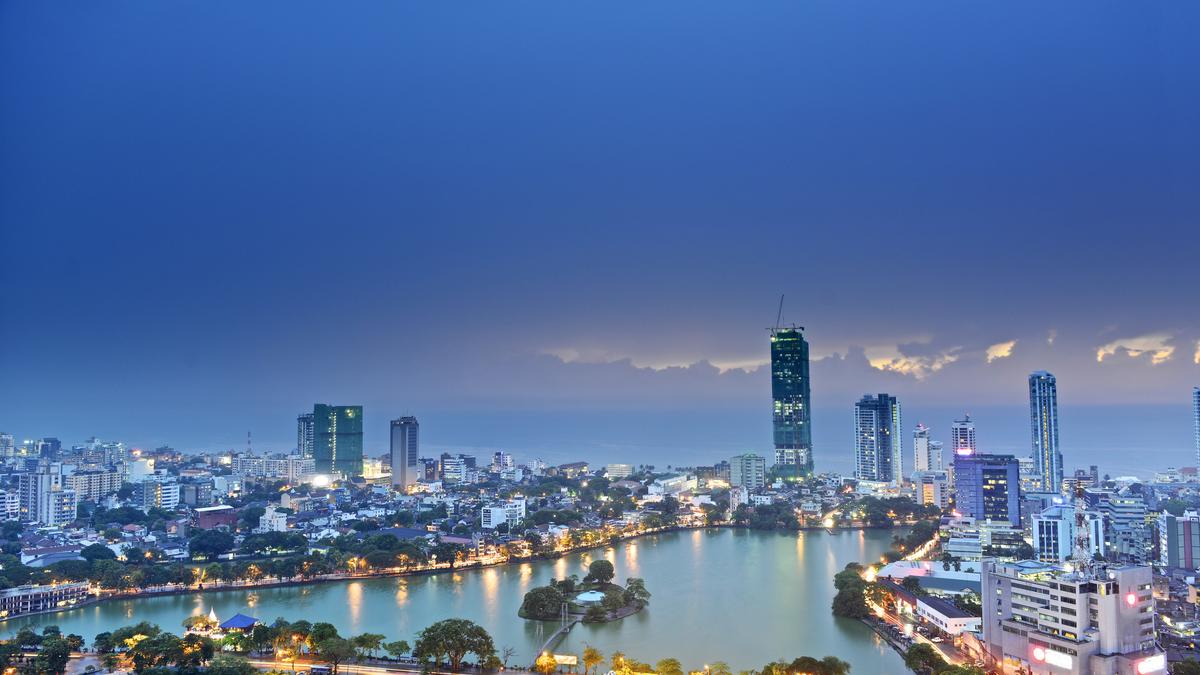
Thulci AluwihareIndia has become the world’s largest destination for Global Capability Centres (GCCs), housing approximately 2,177 centres employing over two million professionals. The next phase of this success, however, may not be contained within the country’s borders.India’s commercial real estate market is experiencing phenomenal growth, and its momentum has started spilling over into neighbouring countries such as Sri Lanka. As major investment destinations mature, it is natural that they begin to reshape the economic geography of their surrounding regions. Companies that establish large operations eventually seek complementary locations for specialised functions, business continuity, and R&D. Rather than diminishing the primary market, these secondary hubs strengthen it.The new entrantColombo in Sri Lanka appears to be approaching precisely that moment. The discussion among Indian companies is no longer around whether they should expand internationally, but where certain functions should be located as their operations become increasingly regional. This should not be mistaken for competition.Colombo is not trying to become the next Bengaluru, Hyderabad or Gurugram. It neither possesses India’s scale nor seeks to replicate it. The opportunity lies in complementing India’s ecosystem through highly specialised operations that benefit from geographic proximity and a progressive regulatory environment. The emergence of smaller, specialised GCCs illustrates this shift.Unlike traditional GCCs employing thousands of people, Nano GCCs focus on AI, product engineering, treasury management, data analytics, cybersecurity and research teams comprising only a few dozen highly skilled professionals. These operations value speed, resilience and connectivity as much as scale.Such a team does not require everything India’s largest cities offer. It requires fast approvals, unrestricted capital mobility, specialised talent with lower attrition and a time zone compatible across India, the Gulf and Europe within a single working day. Colombo sits right at that intersection. Around an hour by flight from Chennai, its strategic location enables seamless regional integration.What is actually movingThe data suggests this evolution is already underway. Businesses approved within Sri Lanka’s only foreign currency-designated Special Economic Zone adjacent to Colombo’s existing CBD represented more than $600 million in committed investment in the first half of 2026 alone, according to Sri Lanka’s Finance Ministry. Indian visitors continue to represent the island country’s largest tourism market, reinforcing the depth of cultural and commercial ties between the two countries.India’s own momentum shows little sign of slowing down. CBRE reported the country’s highest-ever quarterly office absorption of 24.6 million square feet in Q2 2026, driven largely by GCCs, multinationals and technology firms doubling down. As companies commit more deeply to India, they are also looking for complementary locations that can support their growth ambitions whilst diversifying their geographical risk.Regulatory agilityInfrastructure may attract attention, but in practical terms, it’s governance that determines investment decisions. Businesses evaluate locations through operational simplicity: approval speed, regulatory clarity and capital mobility. This is where South Asia’s emerging business destinations are beginning to differentiate themselves. SEZ frameworks enabling 100% foreign ownership, foreign-currency operations, single-window governance, sector-specific tax incentives and long-term (5–10 year) work visas are creating operating environments aligned with globally mobile businesses.History demonstrates that economic success rarely remains confined within national borders. Germany’s industrial expansion reshaped Central Europe. Singapore accelerated Southeast Asia’s integration into global commerce. Dubai evolved alongside the Gulf’s broader economic transformation rather than independently of it. India’s rise is likely to have a similar regional effect.The future of South Asia is unlikely to be defined by competing skylines seeking to outgrow one another. Instead, it is more likely to be a network of interconnected business destinations, each contributing distinct capabilities to a shared South Asian growth story.For Sri Lanka, the opportunity is therefore not to compete with India, but to become indispensable to its continuous success.The writer is deputy managing director of CHEC Port City Colombo (Pvt) Ltd. Published - September 04, 2026 05:30 pm IST
Why Colombo could be India’s next global capability hub
Full Article
Original Source
Read the full article at Thehindu →KhanList aggregates and links to publicly available news content. We do not host full articles from third-party sources. Always verify important information with original sources.